The Symptom
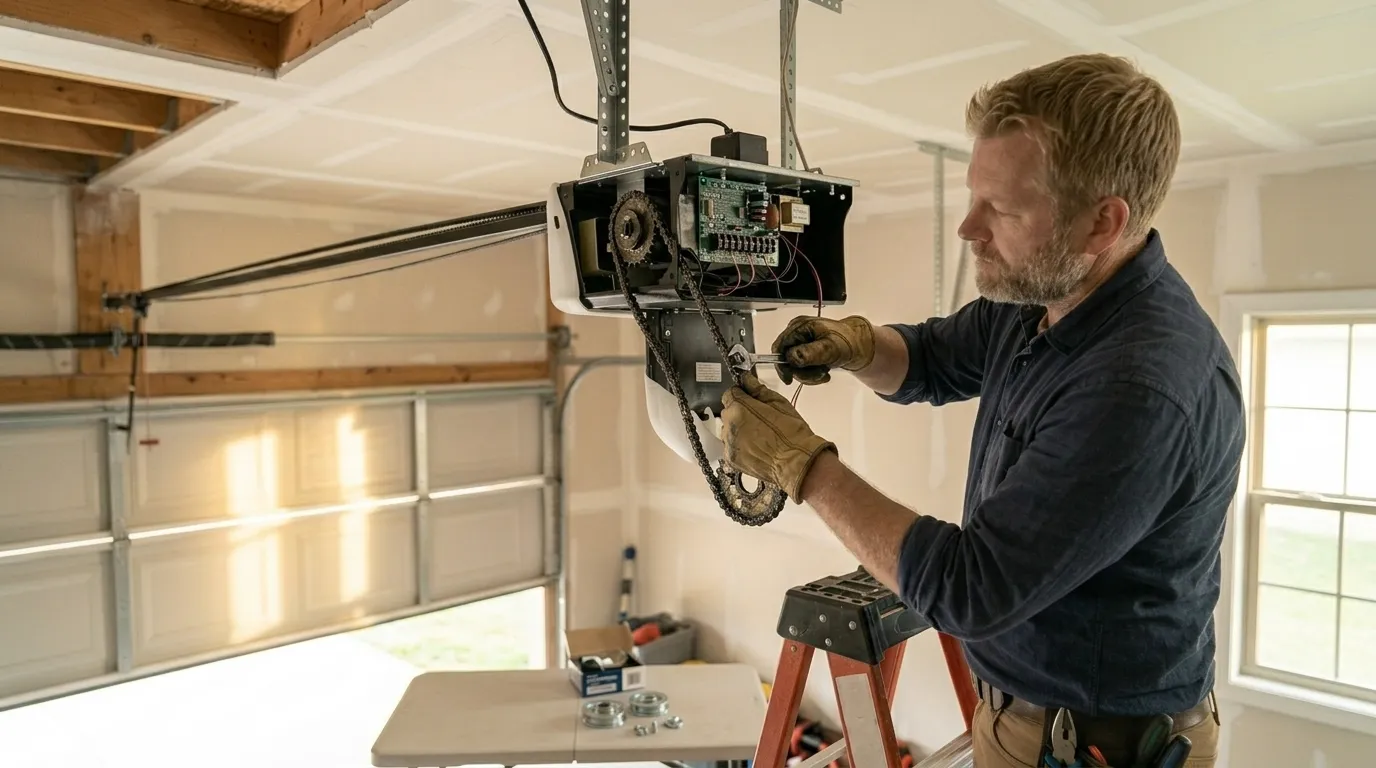
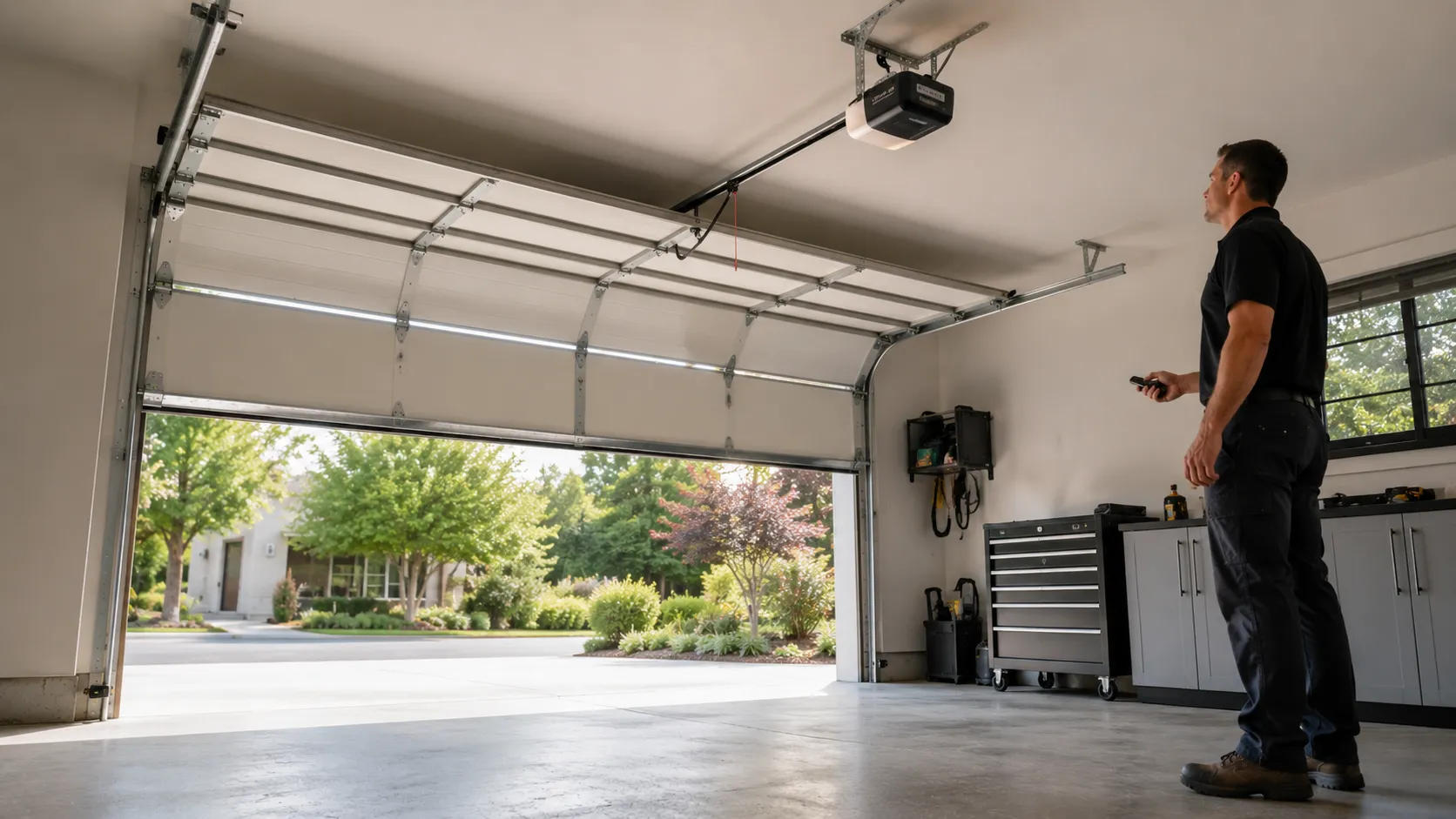
Opener trouble shows up a handful of ways, and most homeowners see one of these before they call: the door doesn't respond to the remote or wall button at all, the light blinks a set number of times and the door won't move, the door starts closing and reverses partway back up, or it opens partway and stalls. Sometimes the opener runs - you hear the motor - but the door doesn't travel, which usually points to the drive mechanism rather than the electronics.
A chirping or grinding sound from the unit, especially right before it fails to respond, is often the last warning before the opener stops working entirely. If your remote works from inside the garage but not from the driveway, that's a different issue than the door not moving at all, and it changes what we bring to the job.
We treat 'the opener stopped working' as a starting point, not a diagnosis. The blinking light code, the point in the travel cycle where it fails, and whether it's intermittent or constant all tell us something before we even open the housing.
What Causes It Around Here
Housing in this part of the Gulf Coast mostly went up between 1964 and 1999, with the median build year sitting around 1979, and that pattern holds across the roughly two dozen named communities in this service area - not just one neighborhood. A house built in that window often still has its original chain-drive opener, or one installed decades ago as a straight swap for the original. Those units predate a lot of the safety-reversal and logic-board standards that came later, so when they fail, they fail in ways newer openers are built to avoid.
The mild temperate climate here doesn't put openers through freeze-thaw stress the way colder regions do, but it does mean sustained humidity, and humidity gets into circuit boards and capacitors over years of exposure in an uninsulated garage. Corrosion on contacts and a swollen capacitor are common failure points we see well before the motor itself wears out.
Put those two things together - an older opener generation that's common across this whole area, sitting in a climate that slowly degrades electronics rather than destroying them outright - and you get the same failure pattern showing up house after house, regardless of which of the local communities the house sits in.