What You Pay
There's no flat number to quote here - cable repair pricing depends on whether it's one cable or a matched pair, whether the drum or the track took damage on the way down, and whether the springs need attention at the same visit. What I can tell you is what shapes the decision in Nokomis specifically: with median household income at $41,333, a lot of homeowners here are weighing a cable-only fix against a fuller hardware refresh, since the door is roughly the same age as the cable that just broke. That's a fair question to ask out loud when the tech is on site - ask whether you're paying to fix the symptom or the root problem.
One honest limitation: we can't give a firm number over the phone. A cable that looks frayed at the bottom roller can be masking a bent track or a seized drum bearing, and pricing that before someone's hands are on the door is a guess, not a quote.
What Causes It Around Here
The climate across this part of the coverage area is mild, which is good news for a cable - no hard freeze-thaw cycling to snap steel strands the way it does up north. But mild and coastal-adjacent still means salt-tinged humidity working on exposed metal year-round, and a cable installed when the house was built in 1978 has had close to five decades of that. Galvanized coating wears thin eventually, and once it does, the strands underneath start rusting from the inside of the coil, which is why a cable can look fine right up until it isn't.
The other common cause on houses from this era is a drum that's never been lubricated or re-seated. When the drum binds even slightly, the cable takes uneven load on every open-close cycle, and that uneven wear is what produces the fray pattern we see most on original-hardware doors in this stretch of the service area.
The DIY Question
Don't do this one yourself. A garage door cable runs under spring tension, and on a torsion or extension system that's decades old, the failure point isn't always where it looks like it is. People get hurt loosening a drum bolt on a door that still has load on the opposite cable, because the whole assembly can whip. If the door's already down and one cable's clearly snapped, the safest move is to leave the door where it sits, unplug the opener so nobody tries to run it, and call it in.
Where a homeowner can reasonably help themselves: keeping the tracks and rollers clear of debris, and listening for a grinding or popping sound before it becomes a snapped cable. That's about the ceiling of what's safe to handle without the right bars and clamps.
What the Fix Involves
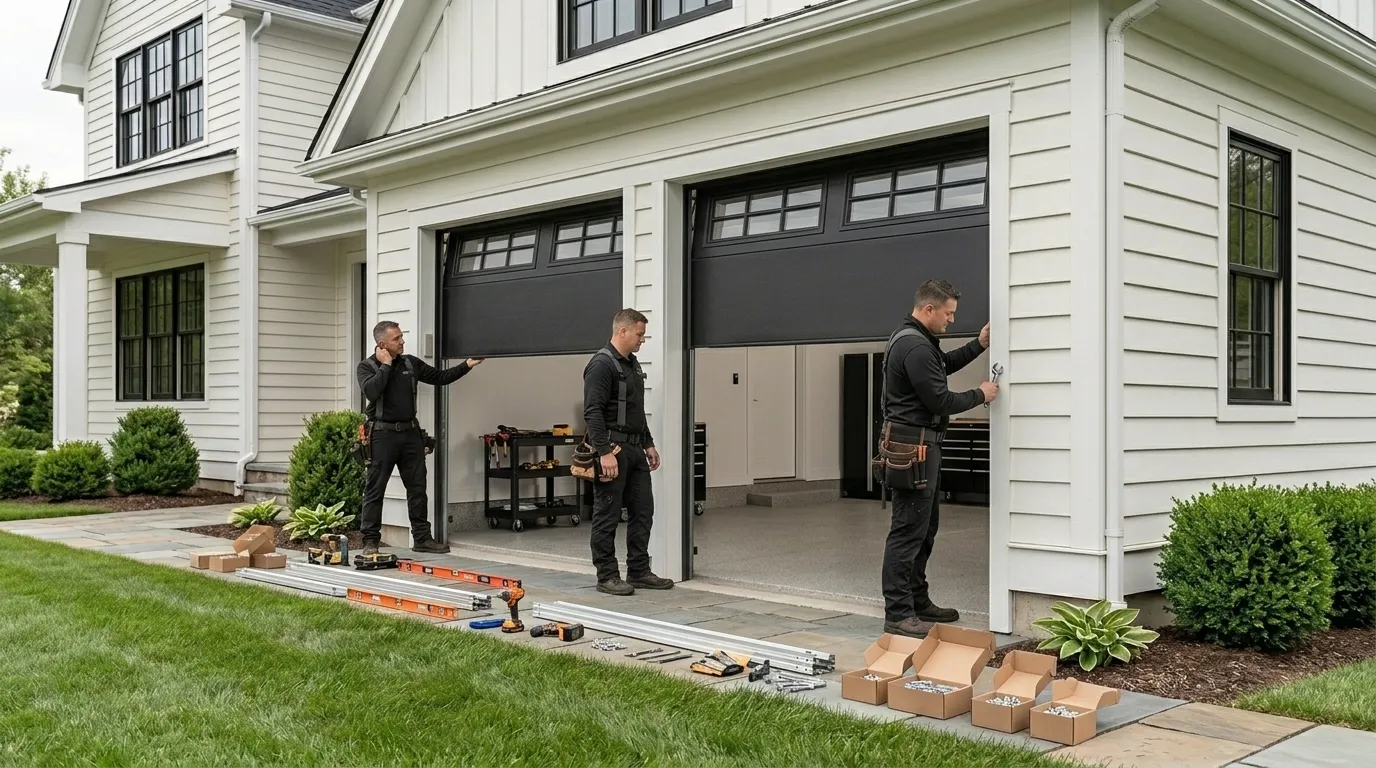
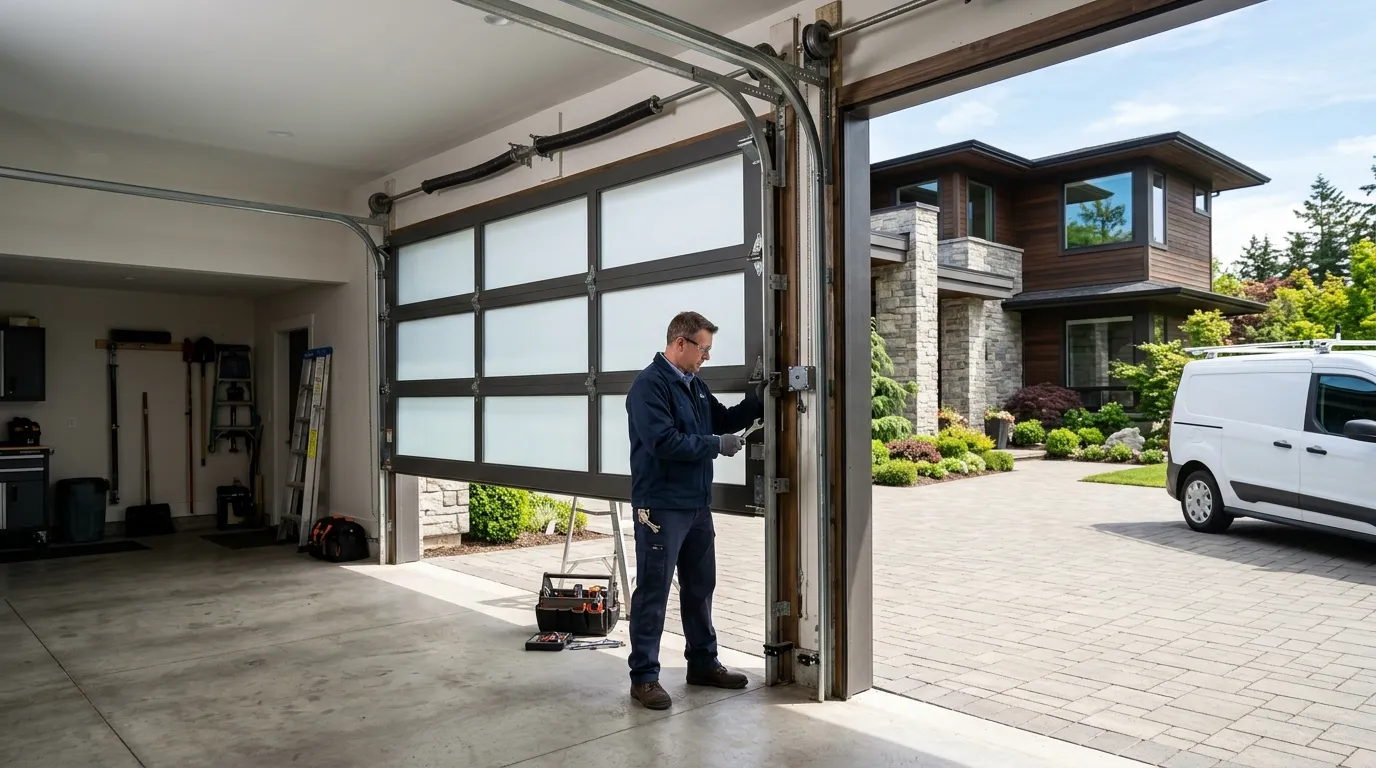
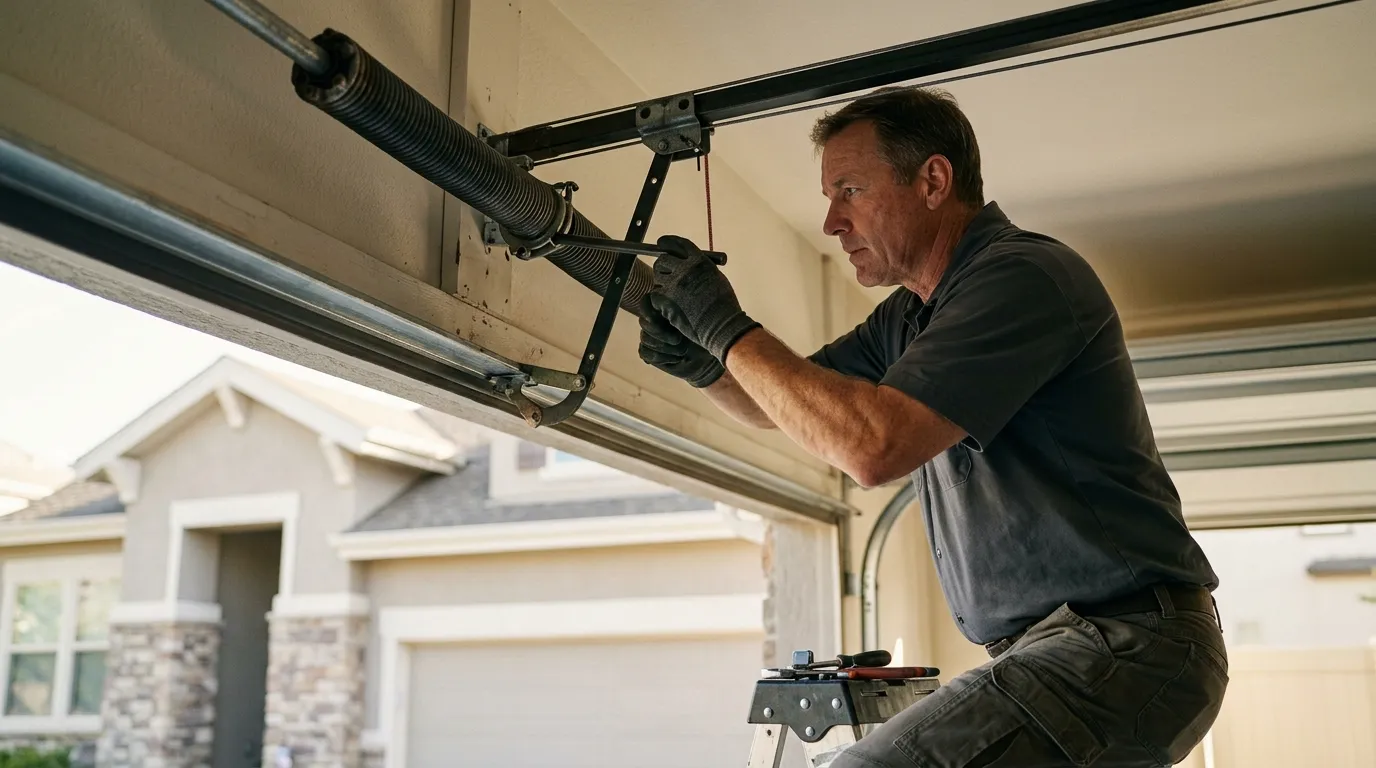
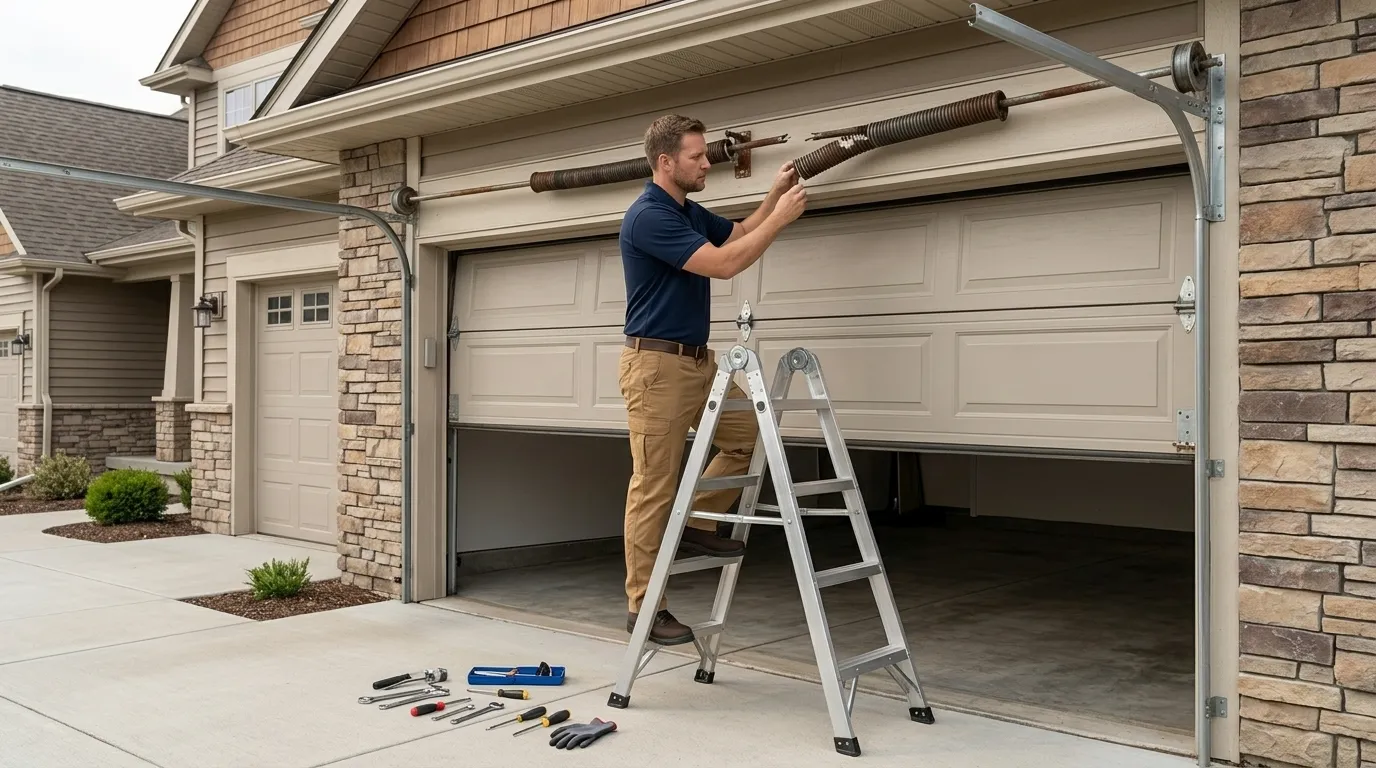
The tech releases spring tension with winding bars first - that's non-negotiable on any door this age, since the spring's holding force the cable used to help carry. Once tension's off, the old cable comes off the drum and the bottom bracket, and we check the drum grooves and the track alignment before anything new goes on. On a 1978-era door, this is also the point where a cracked drum or a rusted bottom bracket shows up, since it's been carrying the same hardware since the house was built.
New cable goes on matched to the drum size - not universal, since the wrong gauge cable seats wrong and wears fast. We re-tension, run the door through a full cycle, and check both sides settle even. If the spring itself is showing the same age-related wear as the cable, we'll say so before closing the ticket, rather than let a second failure happen a month later.
See our Venice-area page for this service for how the same job runs across the rest of the coverage area, or check the Nokomis area page for what else we cover nearby.