What Causes It Around Here
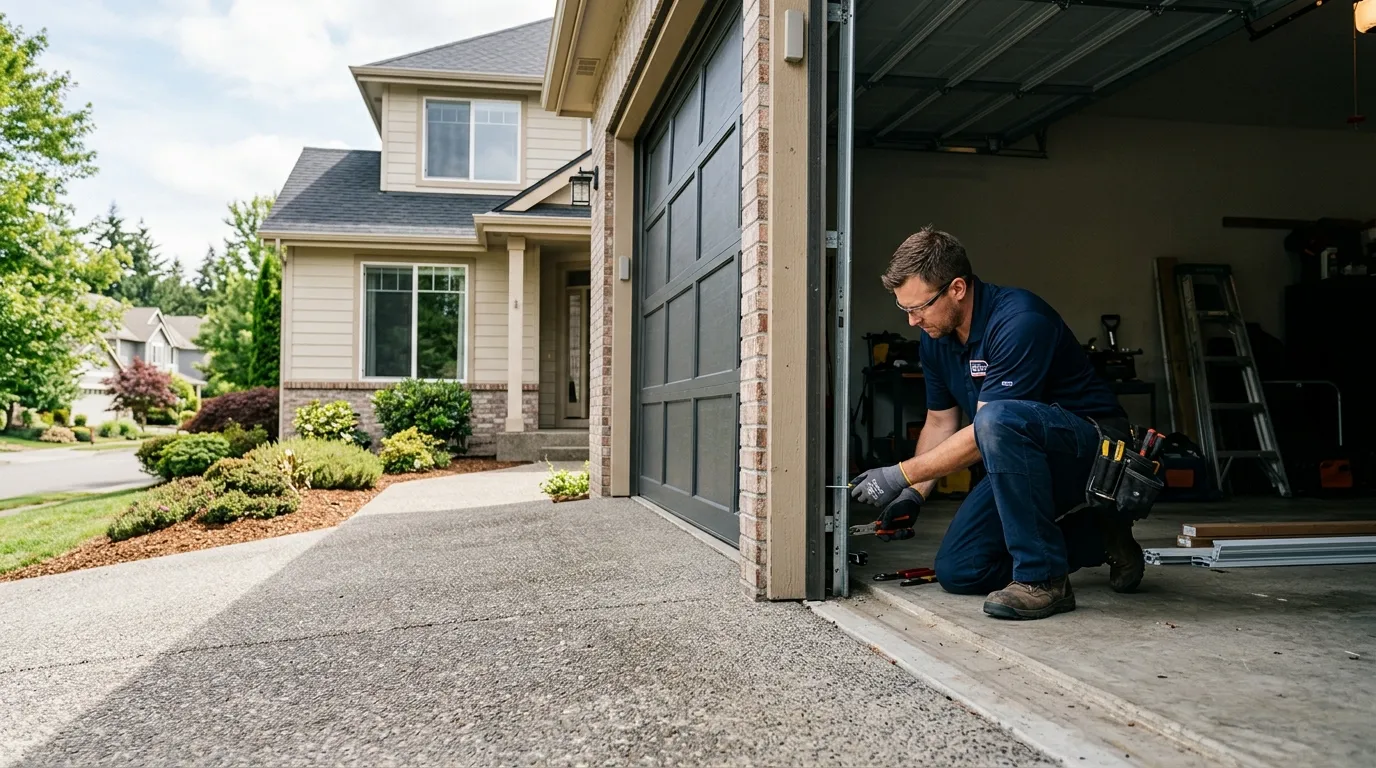
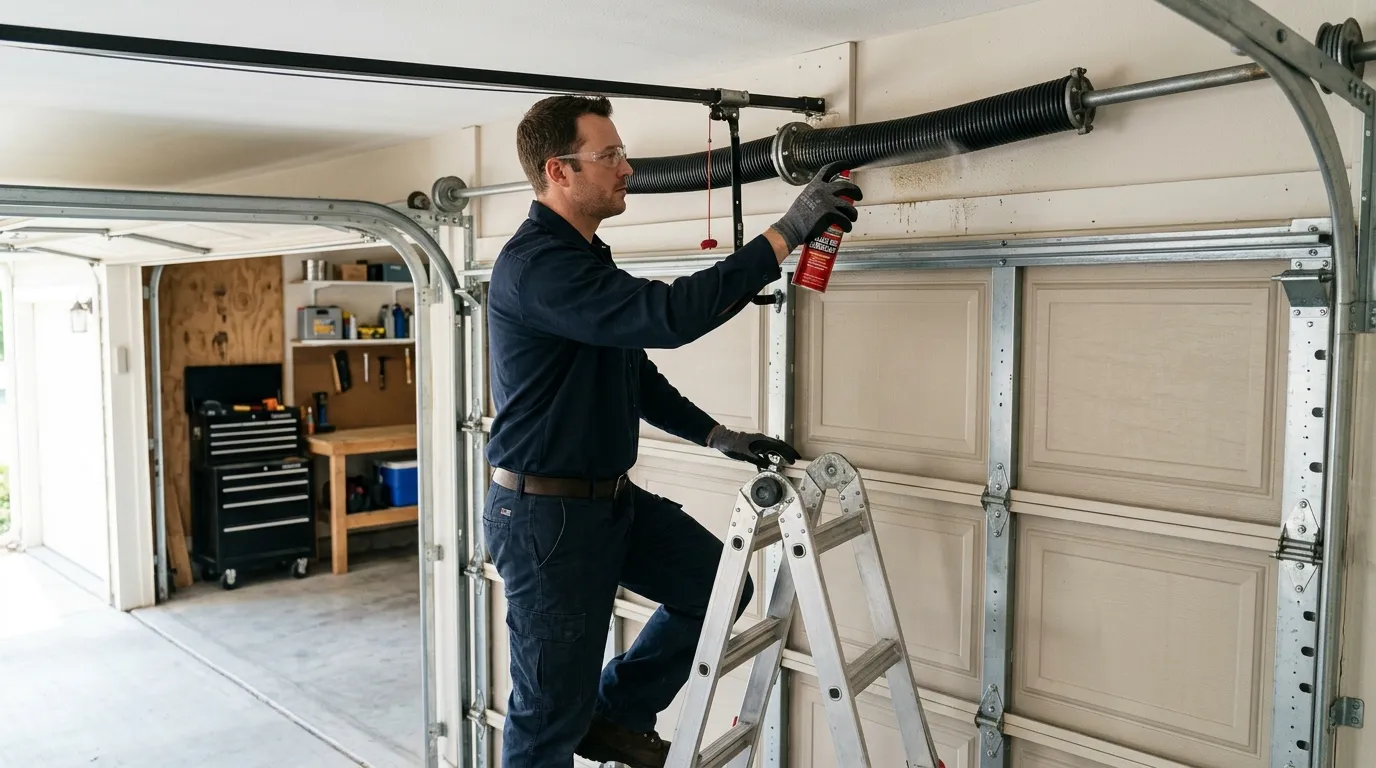
South Venice's housing mostly dates to around 1985, noticeably later than the 1964-1999 spread and 1960s-70s core seen across the rest of the service area. That means most doors here are steel sectional units on torsion or extension springs from the mid-80s onward - not the older wood or one-piece doors you'd find further into the older parts of the territory. The failure pattern that shows up is spring fatigue and roller wear on hardware that's now 35-plus years old, plus corrosion on springs and hinges from the mild, humid coastal air sitting on unpainted steel year-round. Chain-drive openers from that era also wear out their gear sets around this age, which is a different failure than what you'd see on a house built ten years earlier or later. None of this is dramatic weather damage - it's steady wear on original-era hardware that's simply reached its mileage.
What the Fix Involves
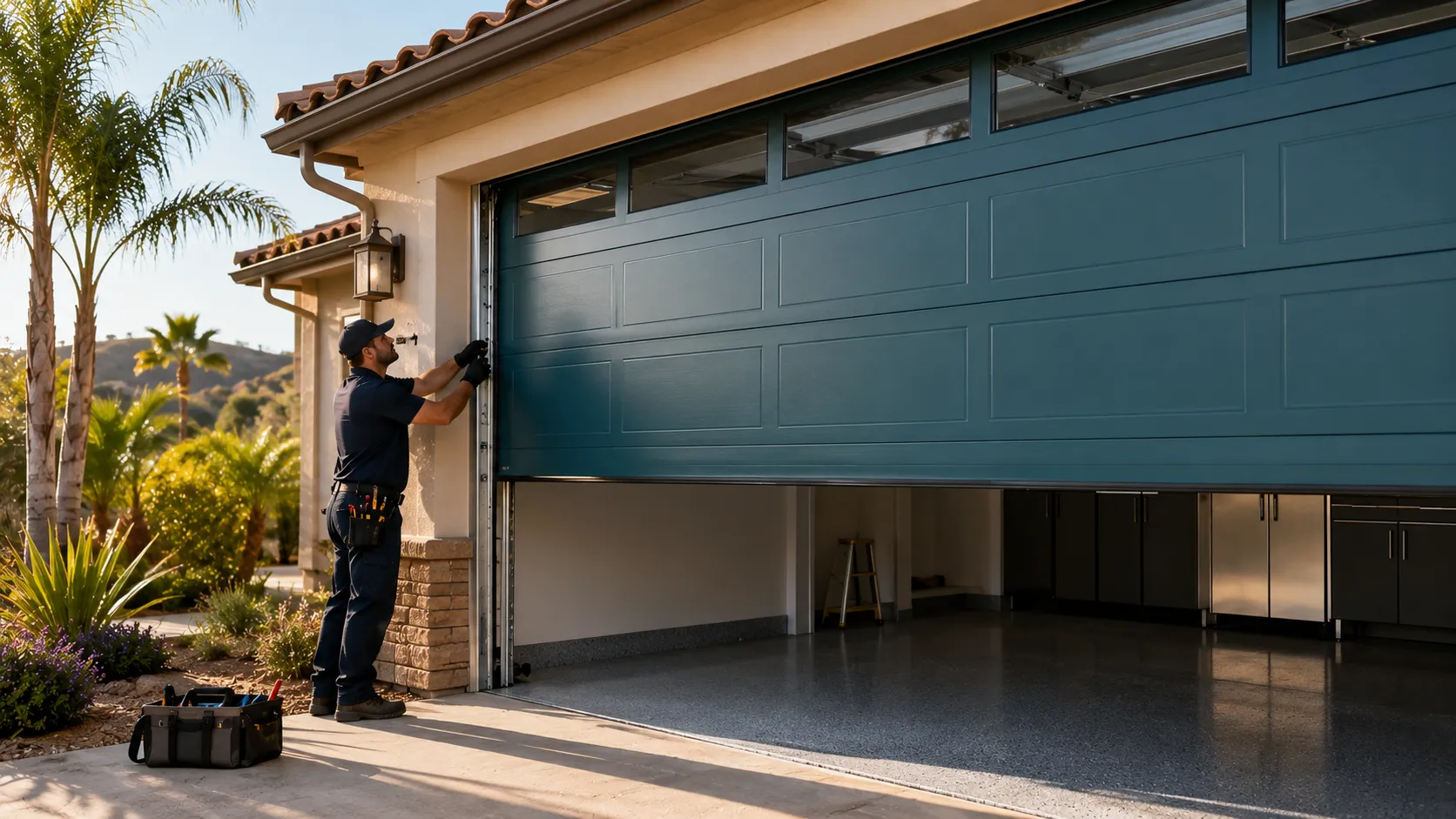
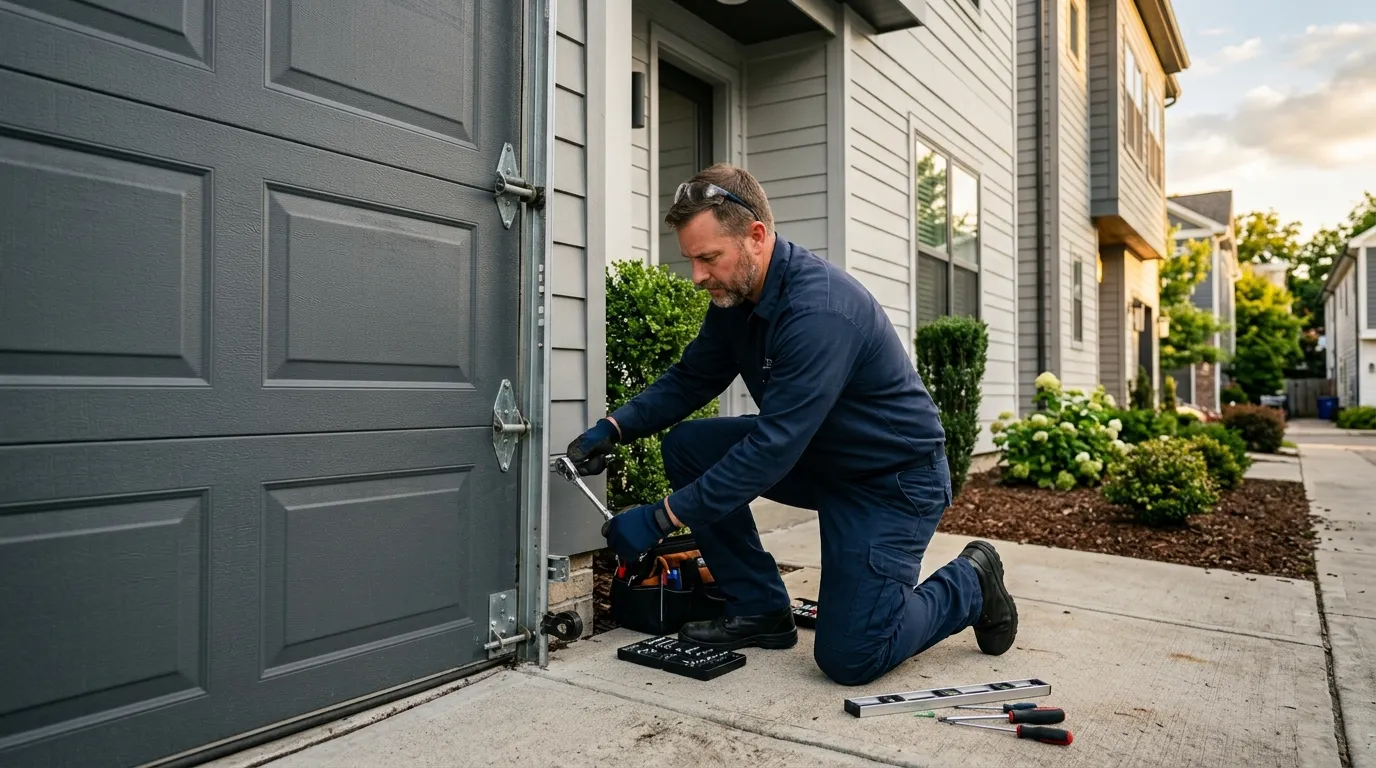
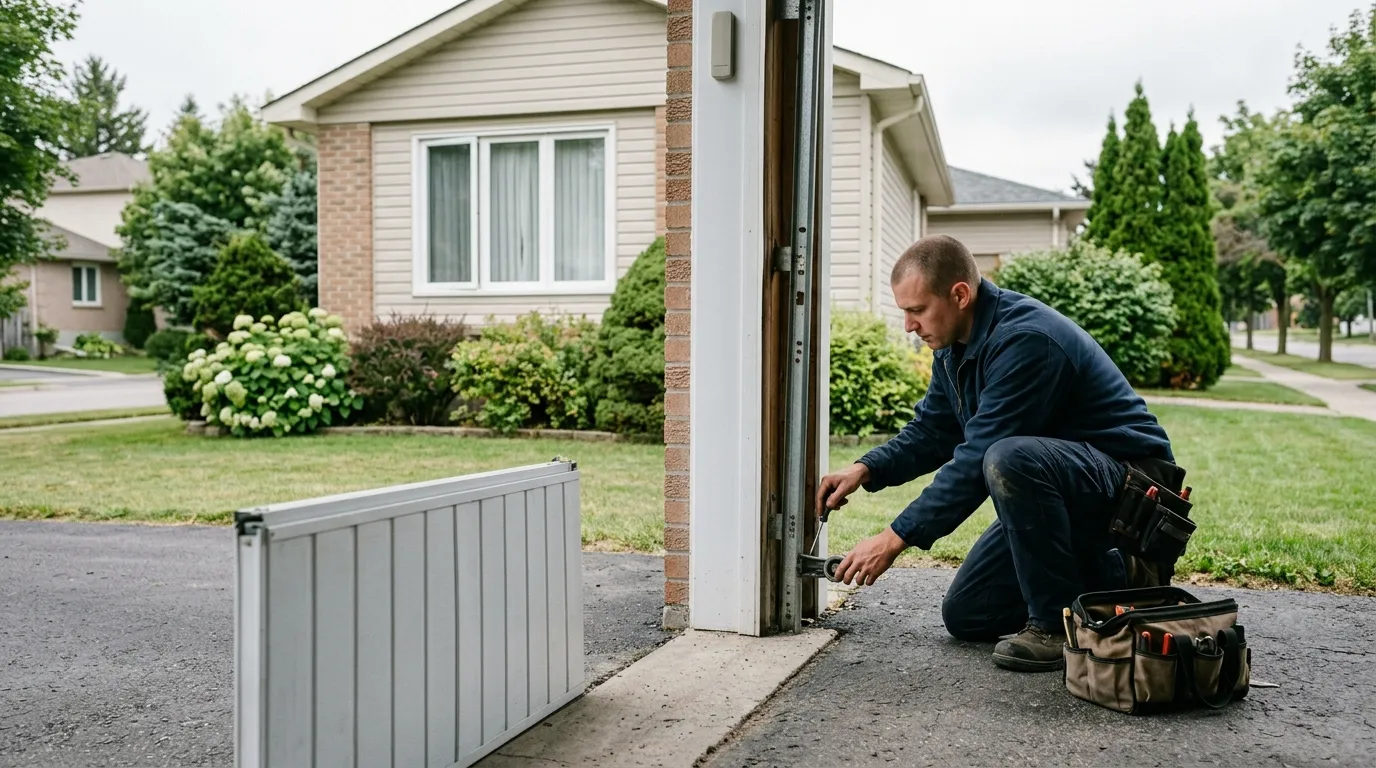
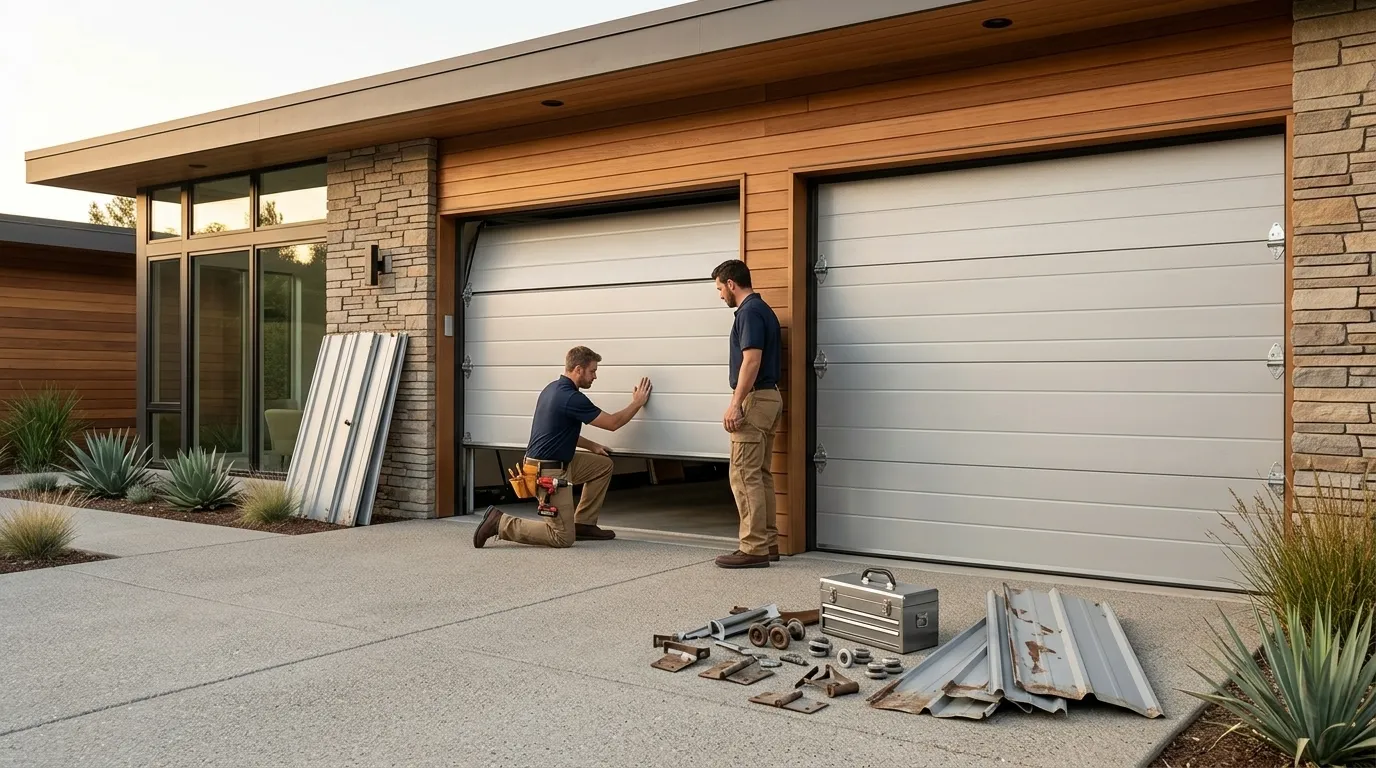
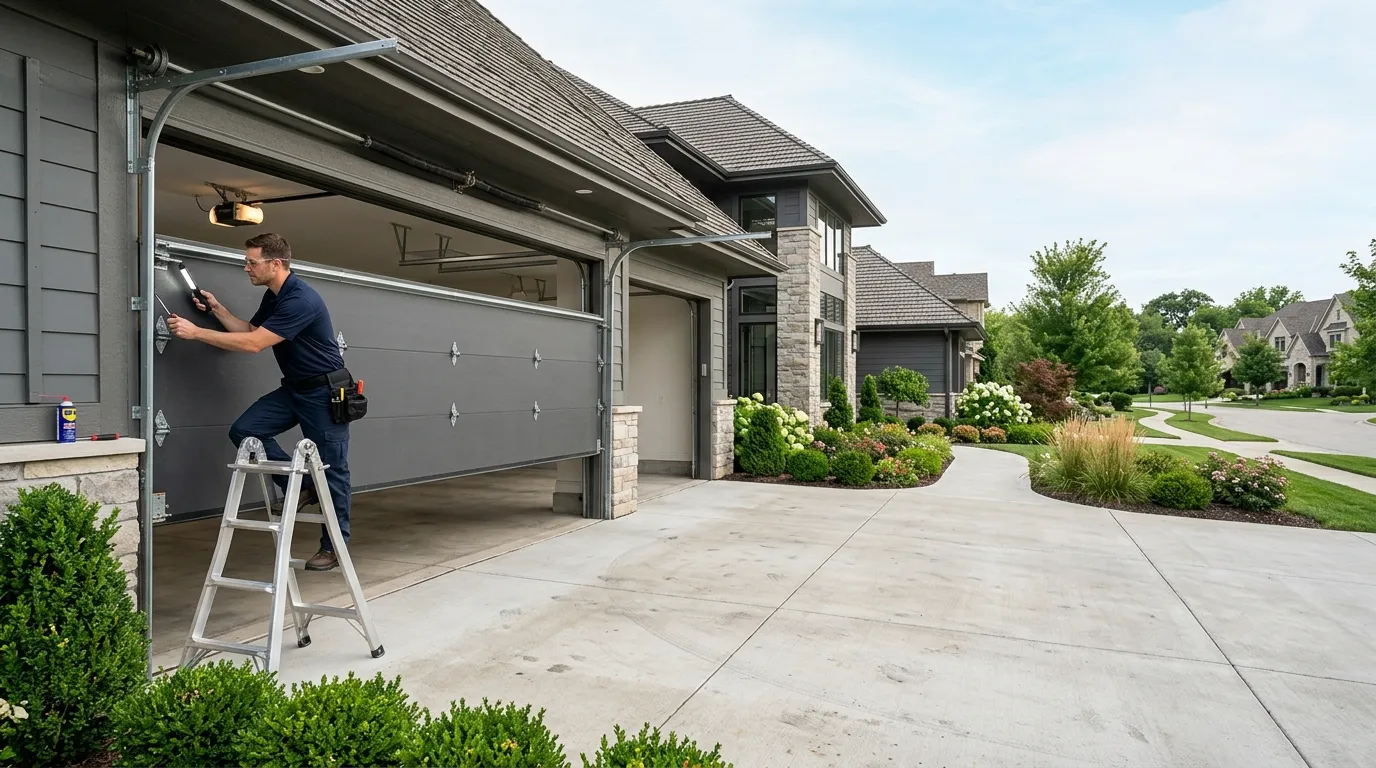
On a standard steel sectional door from this build era, most repairs come down to the torsion spring assembly, the rollers, or the cables - the three parts that take the daily cycling load. If the spring's original, it gets replaced in a matched pair sized to the door's weight, not just swapped one at a time. Rollers on a door this age are usually the older steel-wheel type, which we replace with nylon rollers that run quieter and don't need the same lubrication schedule. If the opener is the original chain-drive unit, we check the gear kit before recommending a full replacement - a worn gear kit is a cheaper fix than a new opener, and we'll say so even though it's the smaller job. What we won't do is patch a door whose section panels are rusted through at the bottom; at that point replacement is the honest answer, not another repair.