Garage Door Service for South Venice's 1980s Housing Stock
South Venice's homes cluster around 1985, six years newer than the wider Venice area median. That build date shapes which springs, openers, and tracks we see on every call here.
South Venice sits about 5 miles from our shop in Venice, which is close enough that a call here doesn't turn into a half-day trip. We don't quote a response time for South Venice specifically because that number depends on the day's schedule, not the town, but the distance itself means we're not driving across the county to get to you.
What actually determines how long a job takes once we're on-site is the hardware, and that's where South Venice differs from some of the older pockets in the wider service area. The median home here was built around 1985, which is a full six years newer than the 1979 median across the broader Venice service territory. That gap matters: a 1985 door and opener setup is usually more straightforward to diagnose and part out than the earlier torsion and drive hardware still hanging in 1960s tracts elsewhere in the area, simply because more of the original components are still catalogued.
A straightforward spring or opener call is usually a same-visit fix. Anything involving a bent track or a door that's been forced off its rollers takes longer to get right, and we won't rush that part regardless of the drive time to get there.
What Causes It Around Here
With a median build year of 1985, most South Venice garages are running hardware that's now 35 to 40 years old. That's well past the rated cycle life of the original torsion springs, and it's around the point where the first-generation chain-drive openers that shipped with houses of that era start failing outright rather than just running rough.
Across the roughly 7,449 households in South Venice, a good number never had the opener swapped since the house was built. That's not unusual, but it means when something finally goes, it's often the whole drive unit and not just a part of it.
South Venice falls in the same mild temperate climate band as the rest of the service area, so we're not dealing with freeze-thaw cracking on cables or hardware. What we do see is humidity working steadily on unlubricated springs and steel tracks over four decades, which shows up as rust pitting on the winding cones and stiff, gritty rollers rather than sudden breaks from cold.
What the Fix Involves
For a door from the 1985 era, the fix usually starts with the springs. Original torsion springs on houses of that vintage were sized for the door weight at install, and after this many years the steel fatigues even if it hasn't snapped yet - we check wind tension and cone condition before we touch anything else.
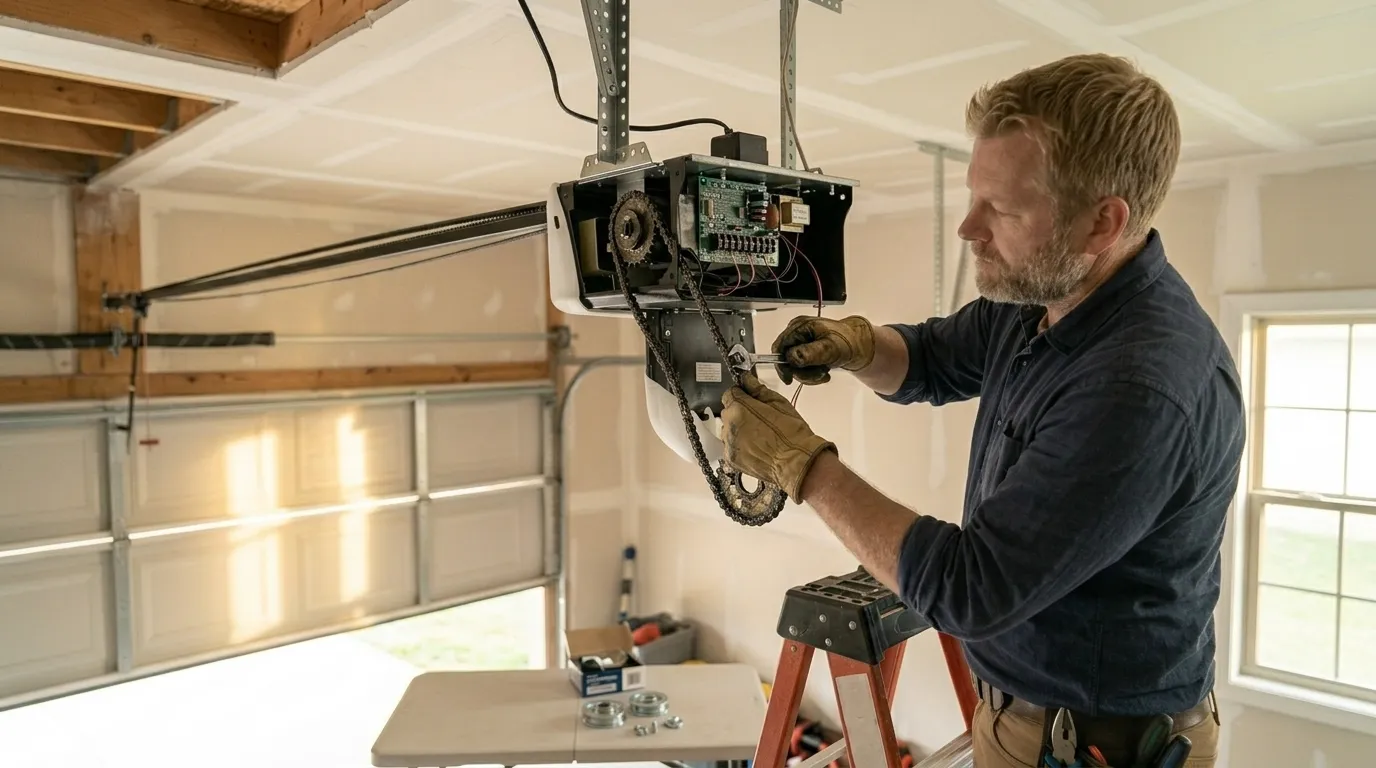
If the opener is the original chain-drive unit, parts for it are getting harder to source. We'll tell you honestly when a repair isn't worth chasing down obsolete gears and a full opener swap makes more financial sense than nursing along a 40-year-old drive.
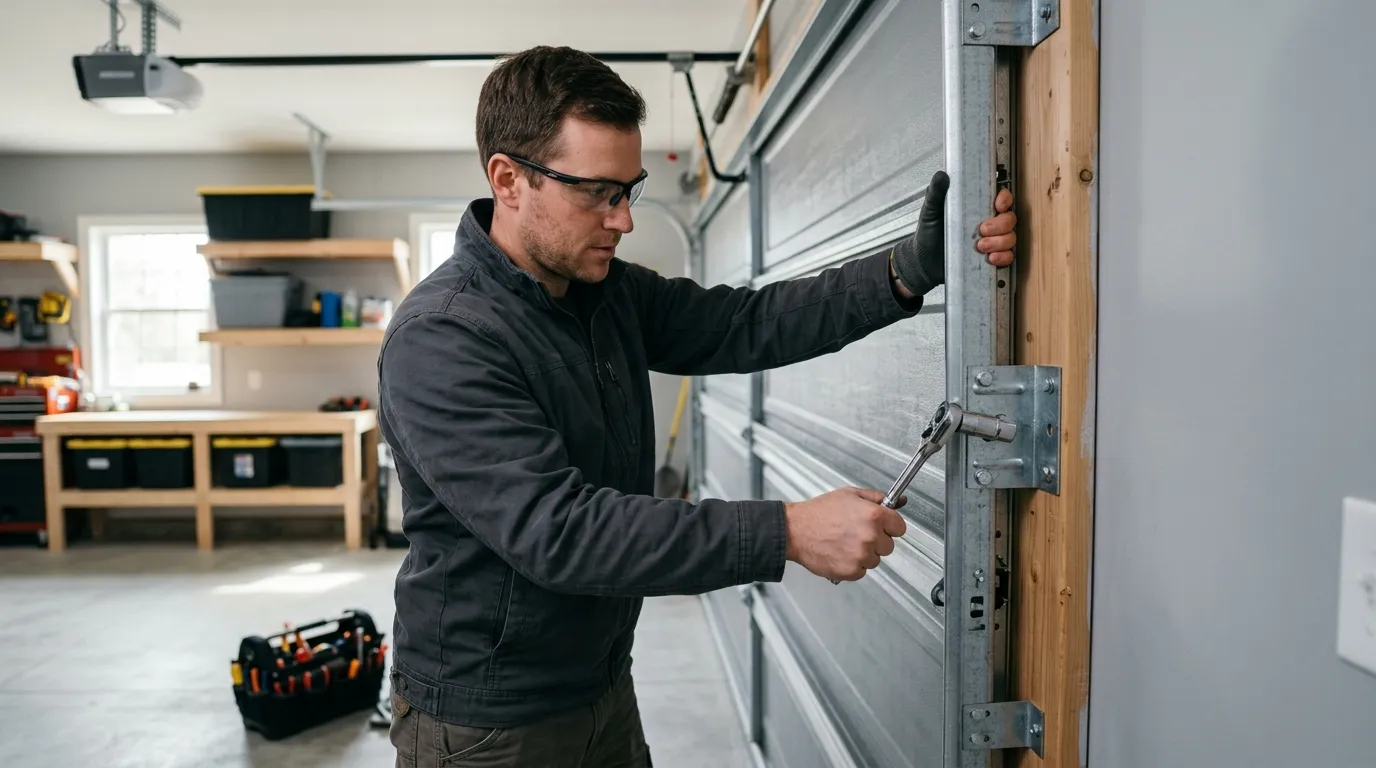
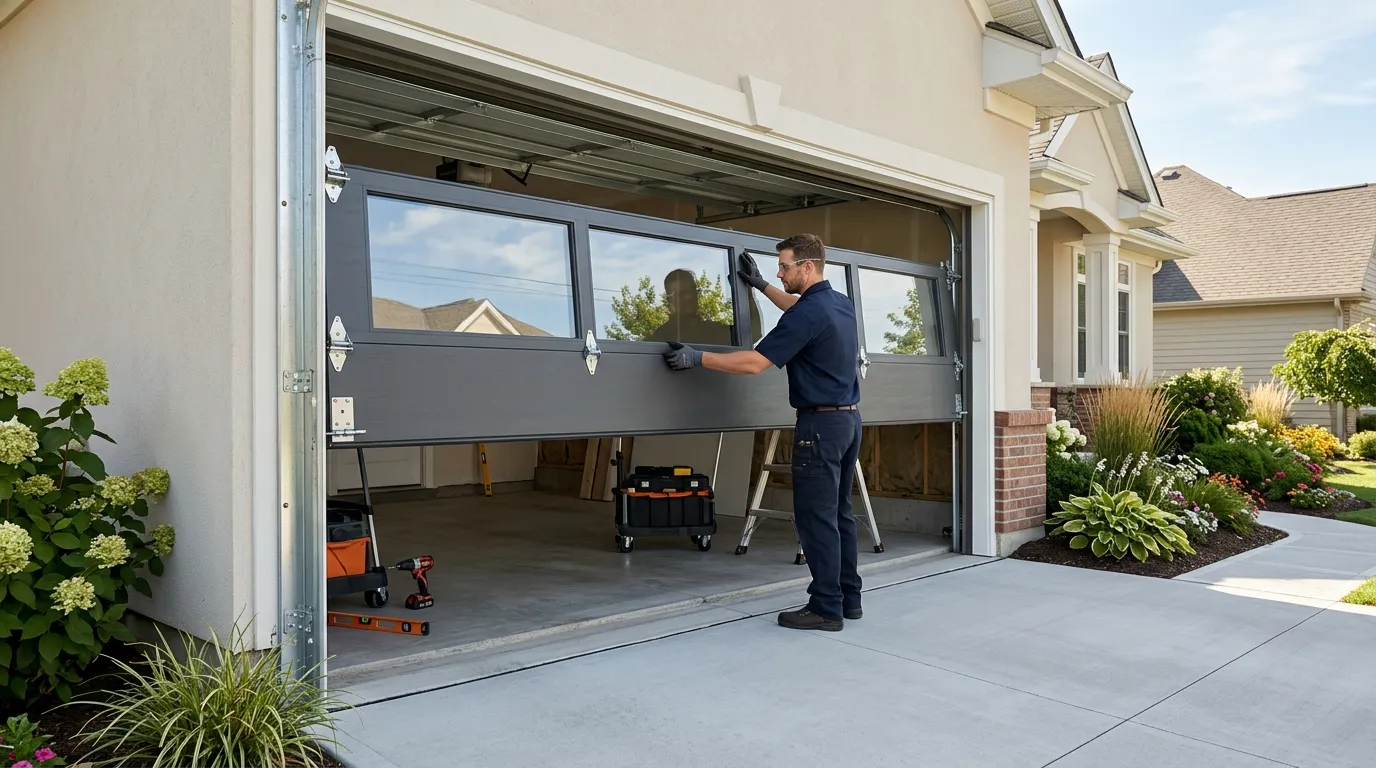
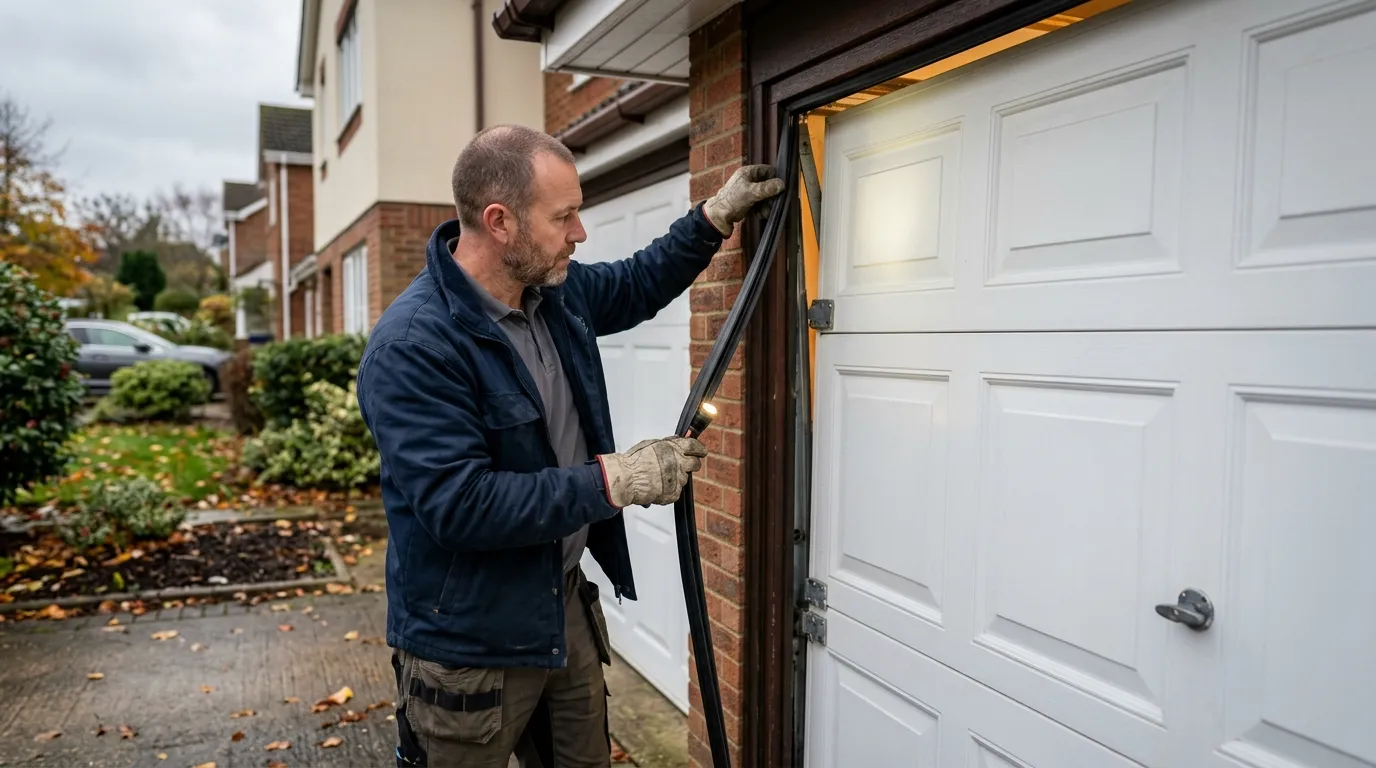
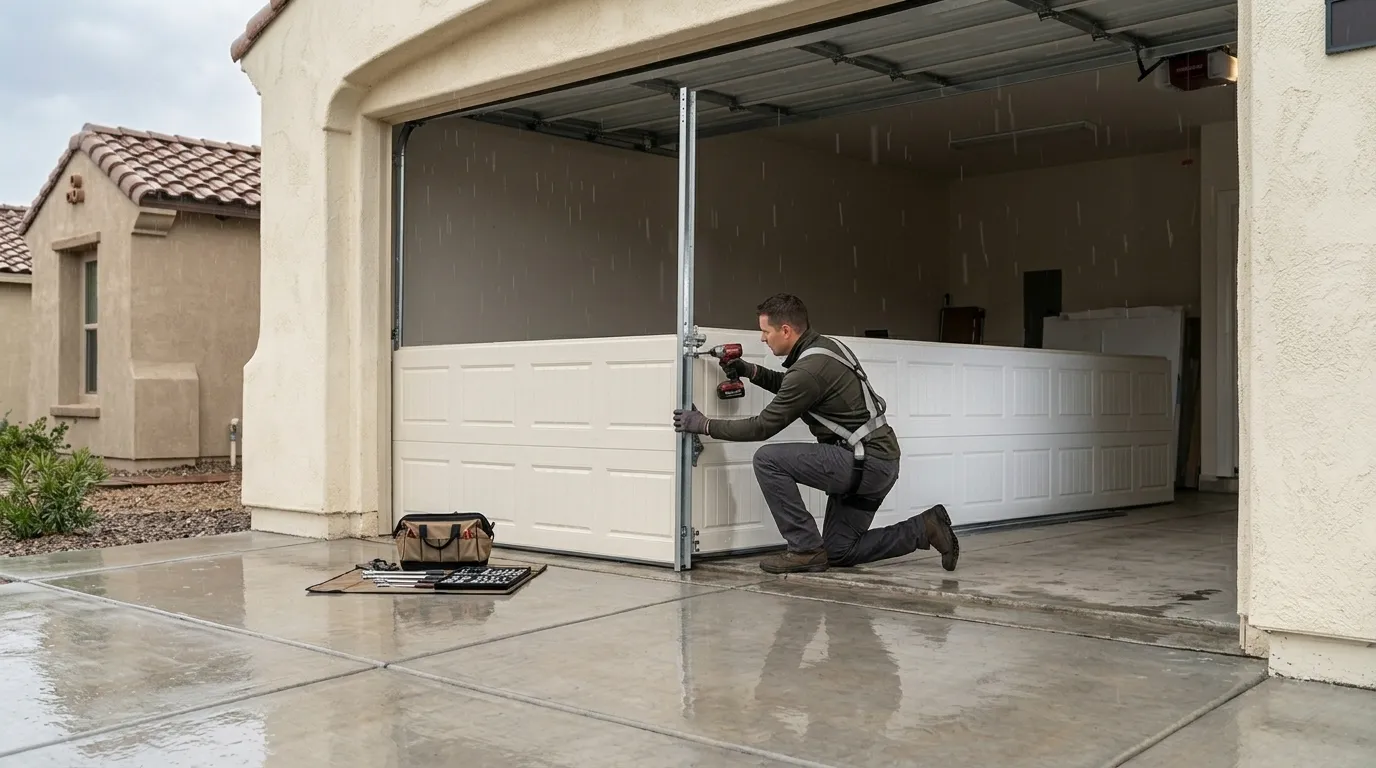
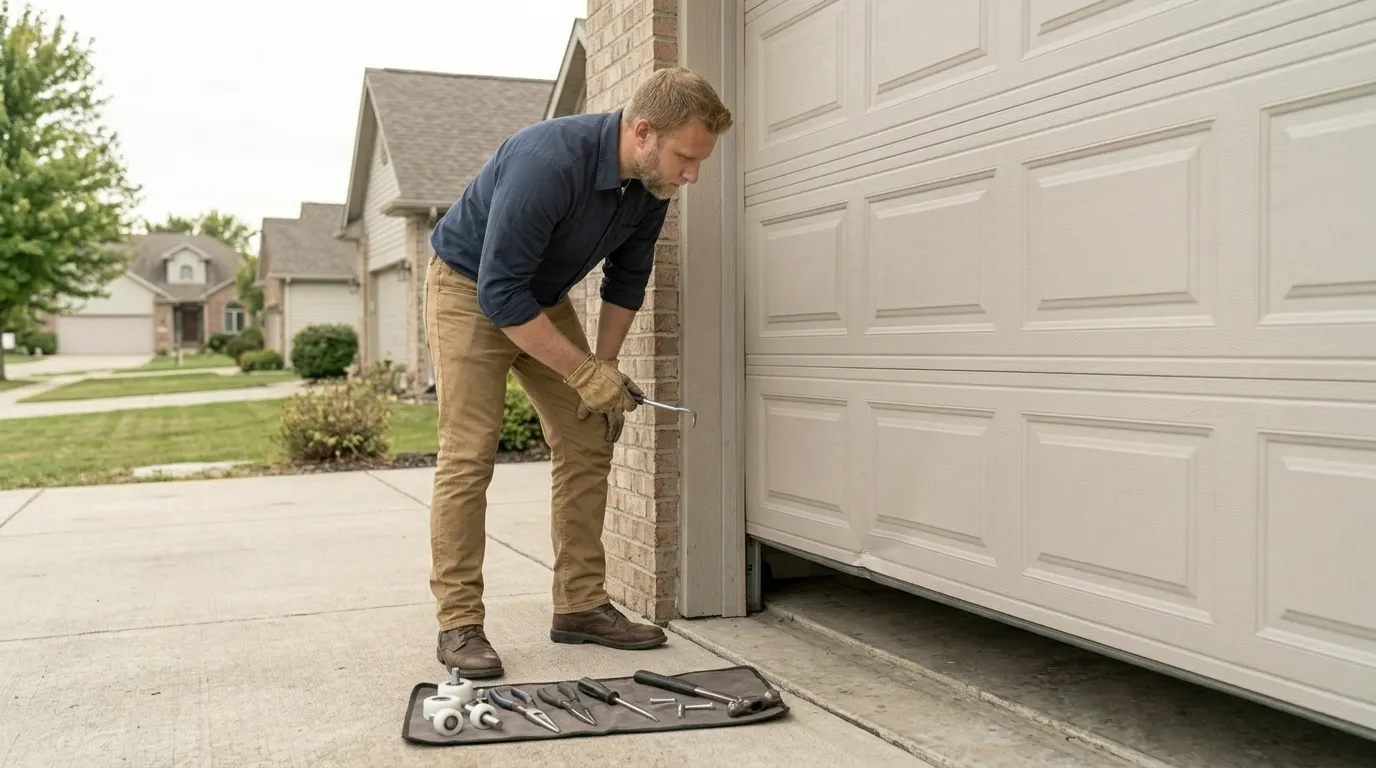
Track and roller work on houses this age is usually straightforward - realigning bent track or swapping worn rollers doesn't require touching the door panels themselves. We inspect the cables and drums at the same time, since original galvanized cable from a 1985 install is well past the point where we'd want to leave it in service on a heavy door.
The Symptom
The complaint we hear most from South Venice calls is an opener that grinds, stutters, or reverses partway up. On a house from this era, that's almost always the opener's drive gear giving out or a torsion spring that's lost enough tension that the opener is straining to lift weight it was never built to carry alone.
A second common one is a door that looks fine sitting shut but shudders or drops unevenly when it moves. That points to uneven spring wind or a cable starting to fray on one side, both of which are common once original hardware crosses the 35-year mark.
We don't recommend running a door with a visibly gapped or unwound torsion spring, even for a day. It's one of the few parts on a garage door that can cause real injury if it lets go under tension, and on houses this age it's usually closer to failure than the owner realizes.
How it works
From “it’s stuck” to “it’s fixed”
01
Tell us what’s wrong
Describe the symptom - won’t open, loud bang, opener runs but the door won’t move.
02
On-site diagnosis
A technician tests the door under power and by hand and finds what actually failed.
03
Clear, up-front plan
You get the fix that’s needed and what drives the cost - before any work starts.
04
Repaired & tested
The repair is done, the door is set true and tested, and the work area left clean.
Serving Venice, FL - tell us what your door’s doing and we’ll take it from there.
No. We run out of Venice, about 5 miles away, and cover South Venice from there. We don't have a branch or depot in South Venice itself, so any response time we quote is for the specific day, not a standing local guarantee.
Is my 1980s garage door opener worth repairing or should I replace it?
Depends on what's failed. If it's a worn drive gear or a bad capacitor, repair usually makes sense. If the whole gear housing has stripped or parts for that model are no longer made, which happens with a lot of original 1980s chain-drive units, replacement is usually the more honest answer.
Why do South Venice doors seem to need spring work more than newer neighborhoods?
Housing age. South Venice's median build year is around 1985, so a large share of the original torsion springs installed then are now 35 to 40 years past install. Springs have a rated cycle life, and most in that age range are near or past it regardless of how well they've been maintained.
Ready to get your garage door sorted?
Tell us what it’s doing and where you are in Venice - we’ll take it from there.