The DIY Question
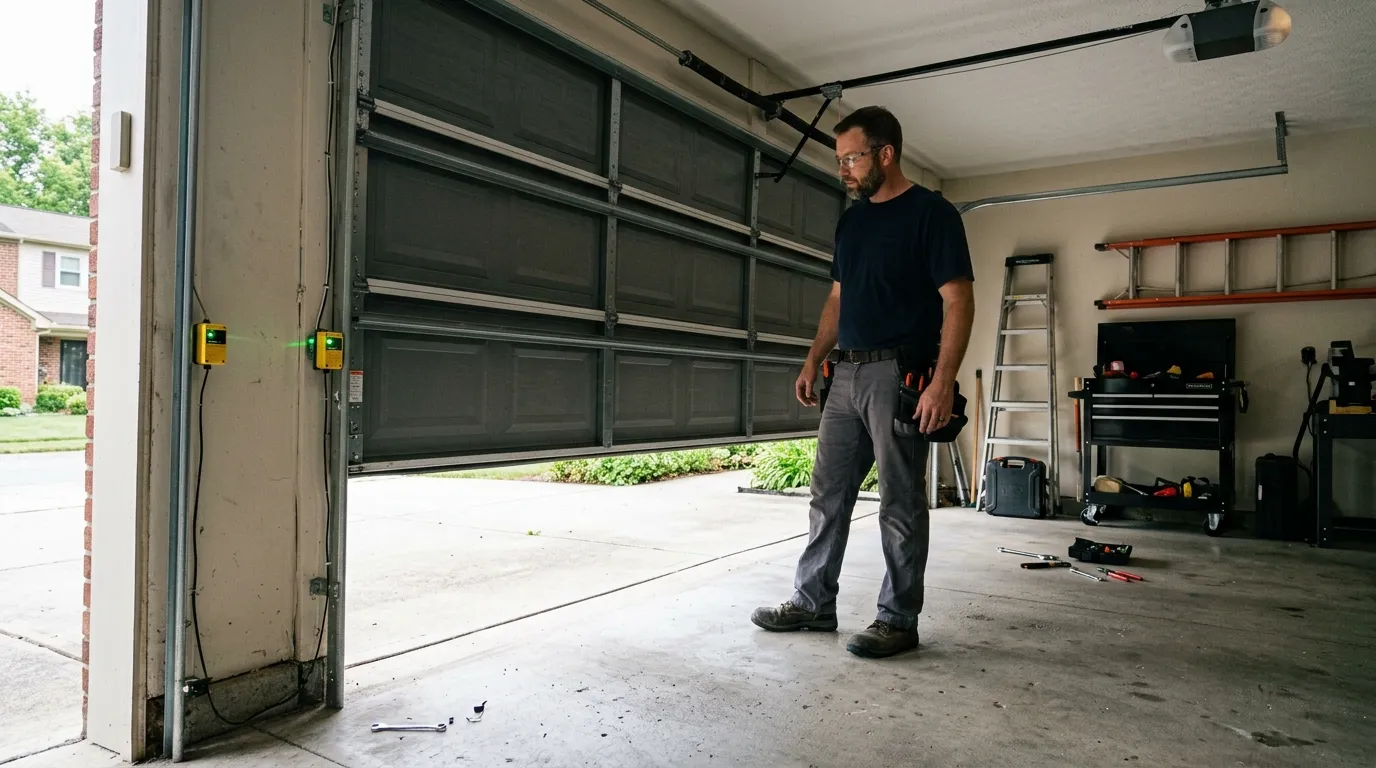
A business owner can and should do the daily-use checks: watching the curtain track down its rails without a hitch, listening for a new grind in the chain hoist, checking that the bottom bar seats flush on the slab. That much is free and it catches problems before they become closed-for-the-morning problems.
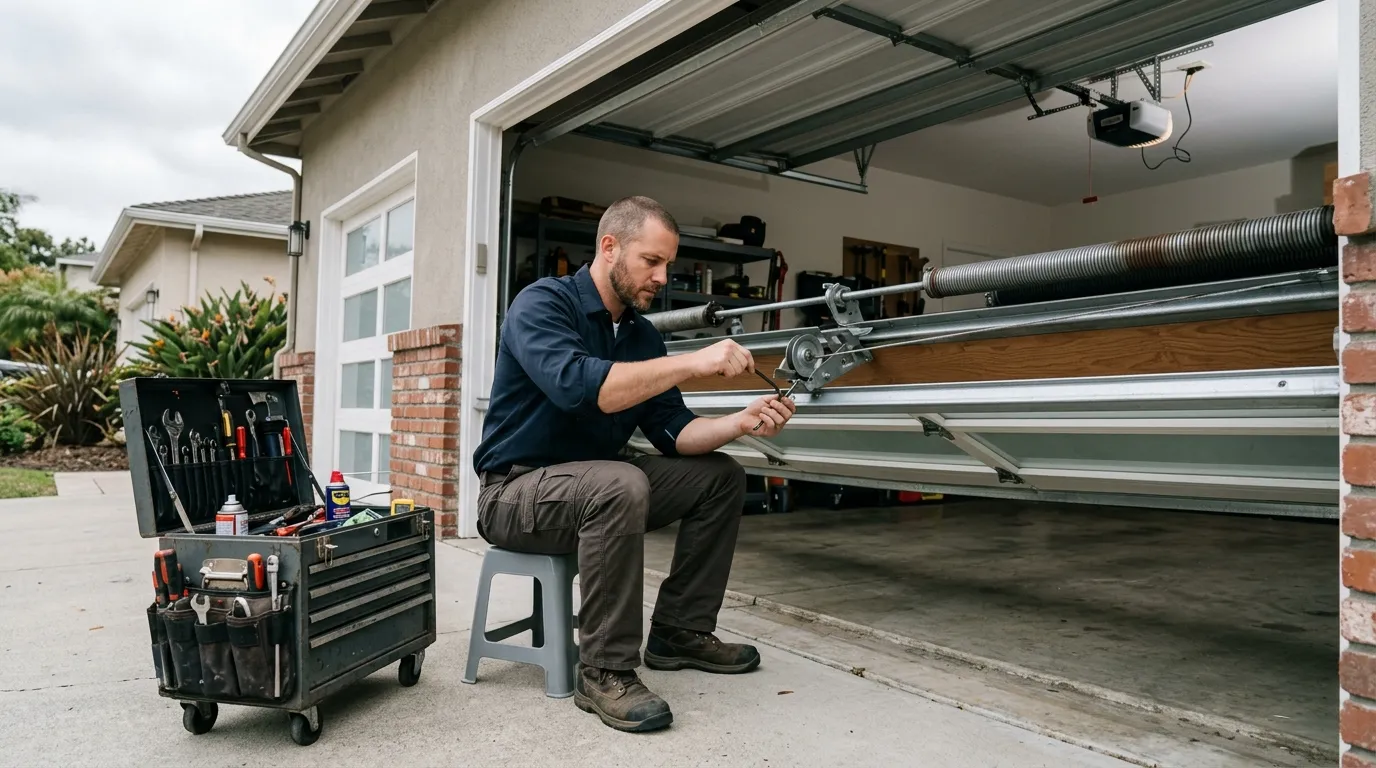
What you shouldn't touch is the torsion spring or the drum assembly on a commercial curtain door. These springs carry a lot more stored tension than a residential double door, and a spring or cable failure on a rolling steel door can put someone in the hospital. We also won't pretend this is a same-day fix in every case - a torsion spring or a hoist part matched to 1968-era hardware sometimes has to be sourced or fabricated to match, and that can mean a wait we're honest about up front rather than a promise we can't keep.
If your building is one of the light-industrial or service-bay units from that original Venice Gardens build-out, tell us that when you call. It changes which springs and track hardware we bring on the truck from Venice, and it saves a second trip.
Where This Job Goes Sideways
The repair goes wrong most often when someone treats a commercial rolling steel door like a bigger residential door. The torsion calculation is different, the drum-to-spring ratio is different, and a spring rated for a lighter curtain will either underperform - leaving the hoist to do work it wasn't built for - or overshoot and slam the door on its own weight.
The other place this goes sideways is the track and jamb. On buildings from the 1968 wave here, the guide rail brackets are often lag-bolted straight into block or masonry that's shifted slightly over five-plus decades. Swap in a new spring and hoist without checking that the rail is still plumb, and you've fixed the part that broke while leaving the part that caused it to break.
We won't quote a spring-and-hoist job over the phone sight unseen on a building this age. The service area runs 61,549 households and 37,668 owner-occupied houses with a $77,359 median income, and a Venice Gardens median closer to $71,000 means most jobs here are repair-and-keep-running rather than full replacement - which makes getting the fix right the first time matter more, not less.