Garage door repair for Venice Gardens homes built around 1968, 3 miles from our Venice shop. Original hardware, torsion springs, and openers we know well.
Venice Gardens sits about three miles up the road from our Venice shop, close enough that a same-day call here doesn't mean a truck sitting in traffic for an hour - it means we can actually look at the door, diagnose it, and if the part's on the truck, fix it before we leave. That drive matters less for the trip itself and more for what we bring: because we're in and out of this pocket of the county often, we carry the springs and rollers that fit what's actually on these garages, not a generic assortment.
Most houses in Venice Gardens went up around 1968, which puts this neighborhood on the early edge of the 1964-1999 building wave that shaped this whole part of the county. That means steel doors on torsion springs sized for the lighter panel weights of that era, openers that have usually been swapped once or twice already, and track hardware that's been repainted more times than it's been replaced. The mild coastal climate here doesn't crack panels or freeze springs the way a harder climate would, but it does let salt air and humidity work slowly on unprotected fasteners and bare metal brackets year after year, and that's the failure we see most - not sudden, just steady.
The DIY Question
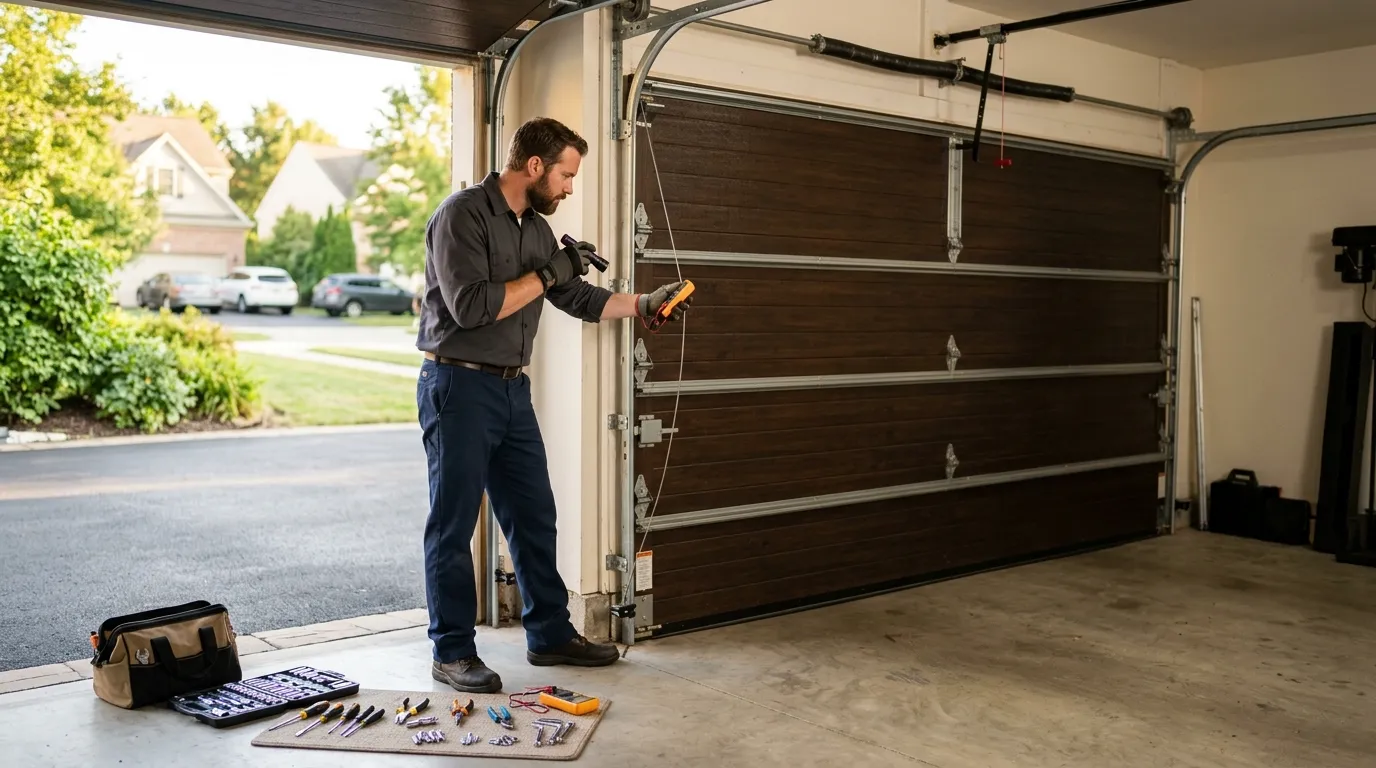
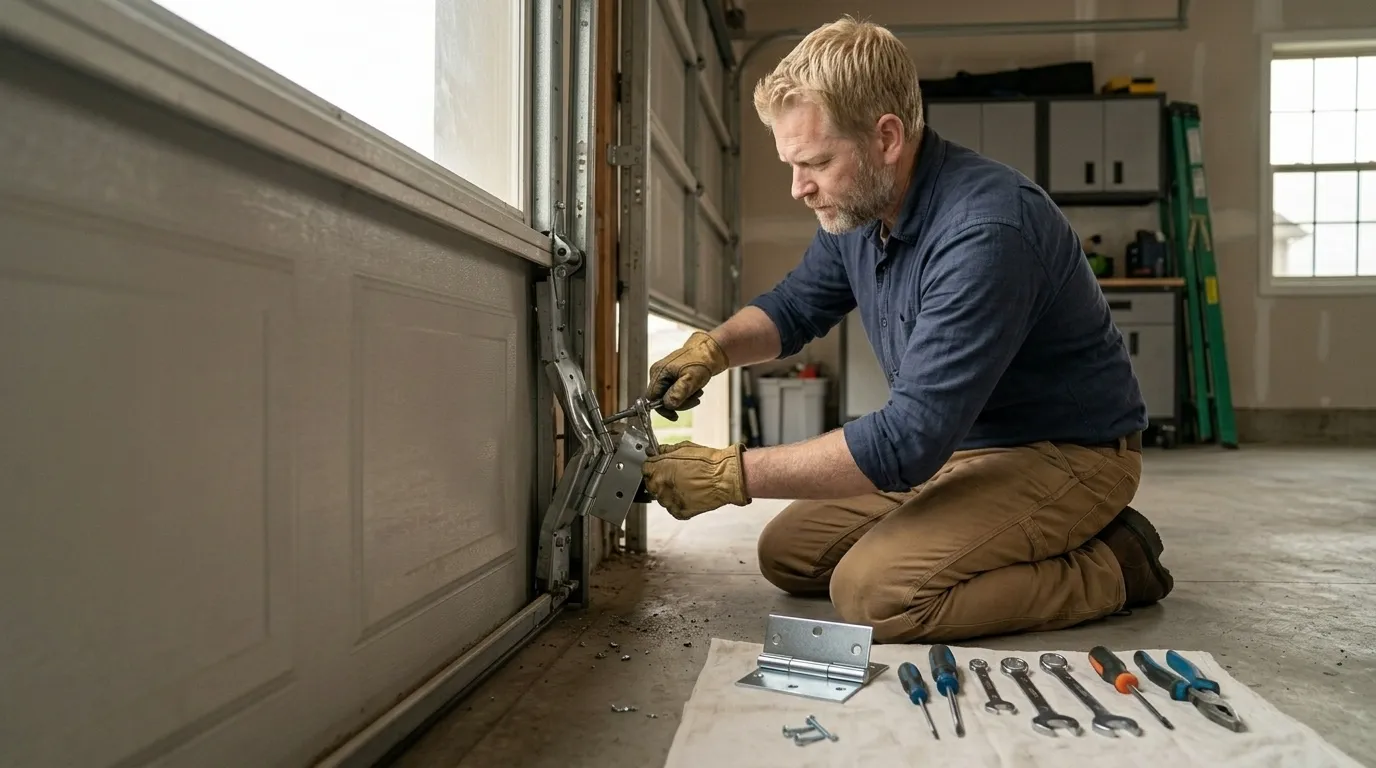
A lot of what goes wrong on a 1968-era door is stuff you can look at yourself before calling anyone. Check the metal bracket holding each end of the torsion spring - if it's bent or the spring cone looks cracked, stop there and call, because that spring is under enough tension to break a wrist. Loose roller brackets, a track that's pulled slightly away from the frame, or a chalky white buildup on hinges are all things you can tighten or clean without tools you don't already own.
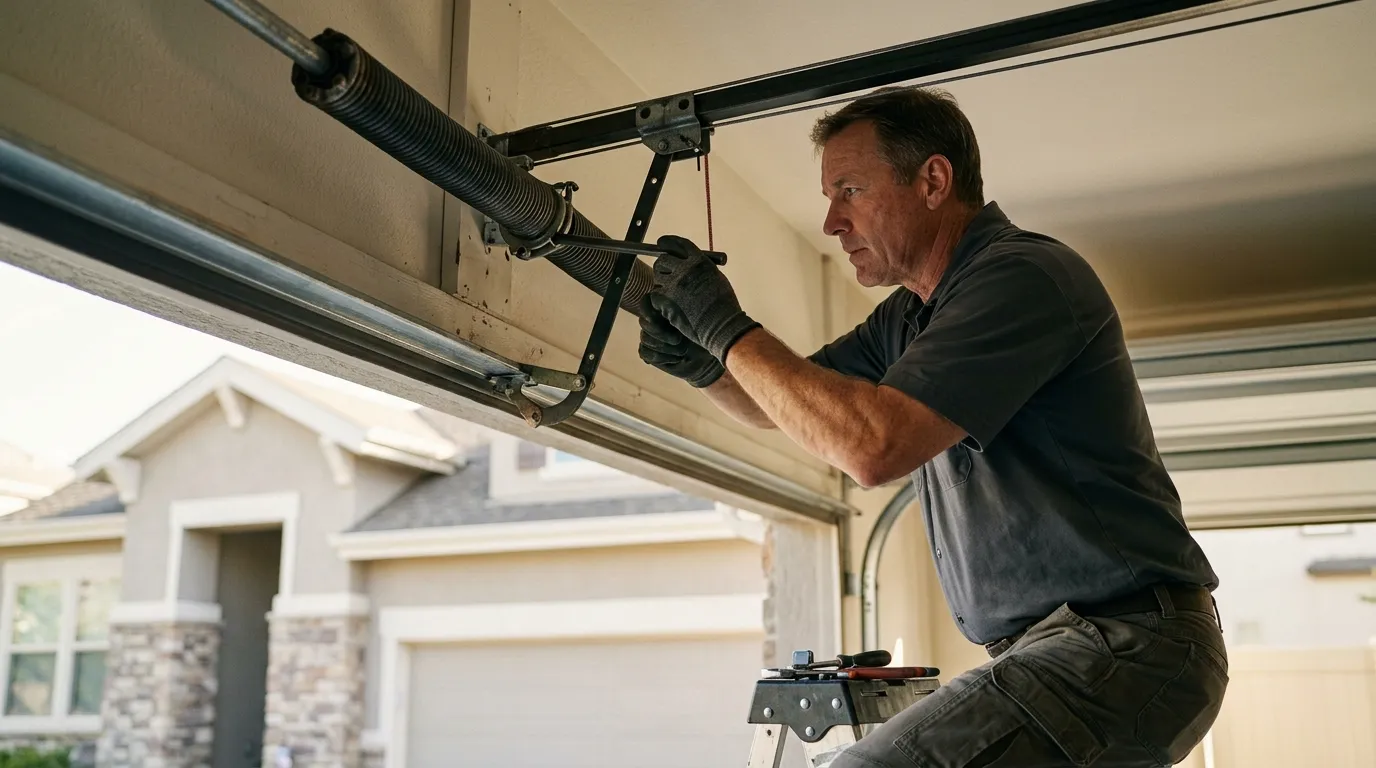
What you shouldn't touch is the spring itself, and on doors this age, we'd also leave the cable drums alone - the winding cones on older torsion setups aren't always the same size as what's sold at the hardware store today, and a mismatched part under load is how people get hurt. If the door won't open at all and the opener is straining or clicking, don't keep hitting the button. That's usually a spring that's already gone, and running the opener against it just burns out the motor next.
Where This Job Goes Sideways
The job that looks simple and isn't, out here, is opener replacement on an original 1968 door. The opener bracket was often mounted to framing that's shifted a little over five decades, so a new unit doesn't always bolt up square to the old holes, and forcing it means the door binds on the track within a few months. We check that alignment before we quote the job, not after.
The other one is torsion spring replacement on a door that's never been touched. If the drum, the shaft, and the spring were all installed together in the 60s, they've worn as a set, and swapping just the spring can leave a shaft that's slightly out of round grinding against new hardware. Sometimes the honest answer is that the whole assembly needs replacing, not just the failed part, and we'll tell you that even when the smaller fix would be the easier sale.
The Symptom
If your door is heavy to lift by hand, drops fast in the last foot of travel, or the opener runs but the door barely moves, that's a spring problem, and on a house from 1968 it's almost always the original torsion spring finally giving out after decades of cycling. If instead the door shudders, drifts sideways, or you hear a grinding sound near one of the tracks, that's usually a roller or bracket that's worked loose from all those years of salt-air corrosion on the fasteners.
A door that opens fine but won't close, or reverses partway down, points at the opener's sensors or its limit settings rather than the door itself - common on units that were added later and never quite matched to the original hardware. We can usually tell which one you've got from a phone description, but we'd rather look at it than guess over the phone.
How it works
From “it’s stuck” to “it’s fixed”
01
Tell us what’s wrong
Describe the symptom - won’t open, loud bang, opener runs but the door won’t move.
02
On-site diagnosis
A technician tests the door under power and by hand and finds what actually failed.
03
Clear, up-front plan
You get the fix that’s needed and what drives the cost - before any work starts.
04
Repaired & tested
The repair is done, the door is set true and tested, and the work area left clean.
Serving Venice, FL - tell us what your door’s doing and we’ll take it from there.
How far out is Venice Gardens from your shop, and does that affect scheduling?
Venice Gardens is about three miles from our Venice location, close enough that it doesn't change how we schedule calls here compared to Venice itself. We just make sure the truck is stocked for the older torsion hardware common in this neighborhood before heading out.
Are Venice Gardens garage doors different from newer parts of the service area?
Many Venice Gardens homes date to around 1968, on the early end of the area's main building wave. That means steel doors on torsion springs sized for lighter, older panels, and openers that have usually been replaced at least once since the house was built.
Can I replace just the opener without touching the door hardware?
Sometimes, but on original 1968-era doors the mounting bracket has often shifted with the framing over the decades. We check that the new opener will sit square to the track before we quote the job, because forcing a misaligned mount causes binding down the line.
Why does my spring keep failing when nothing else seems wrong?
On houses this age, the spring, drum, and shaft usually installed together and wore as a set. Replacing only the spring can leave a slightly worn shaft grinding against new hardware, so sometimes the whole assembly needs attention, not just the broken part.
Ready to get your garage door sorted?
Tell us what it’s doing and where you are in Venice - we’ll take it from there.