Garage Door Maintenance for Venice Gardens' 1968-Era Homes
Venice Gardens homes date to around 1968, three miles from Venice. Original hardware from that build year is still common. Here's what maintenance actually needs to catch.
Most houses in Venice Gardens went up around 1968, which puts this neighborhood on the early edge of the wider service area's 1964-1999 build window. That matters for one reason: a lot of the garage door hardware installed the year a house was framed is still hanging in the opening today. Nobody swaps a bracket or a hinge unless it breaks, so if a house here hasn't had a spring failure or an opener replacement, there's a real chance the rollers, the end bearings, and even the original torsion spring are pushing 55 years of service.
That kind of age doesn't announce itself. Steel doesn't creak like wood. A spring wound in 1968 can look fine right up until the day it lets go, usually while someone is standing under the door. The mild temperate climate this area sits in is easier on a garage door than the freeze-thaw cycles further north - there's no ice splitting a track or metal contracting hard enough to snap a bracket overnight - but heat and salt air still work on lubrication and metal fatigue year-round, just slower and quieter. Slower doesn't mean never. It means the failure shows up as wear nobody caught, not as a dramatic crack.
The 1,410 households in Venice Gardens are almost entirely single-family, and with a median income of $71,000, a lot of owners are the type who'd rather have a spring checked twice than replace a door once.
The DIY Question
You can lubricate hinges and rollers yourself, and you should - it's five minutes with a spray can and it's the single best thing an owner does between visits. What you shouldn't do on a house this age is touch the torsion spring. A spring that's original to a 1968 build has had over five decades to fatigue, and fatigued steel doesn't give a warning before it lets go. The tension in a wound torsion spring is enough to break a wrist or worse, and there's no way to eyeball how much life is left in one.
Same goes for the cables. If you see fraying, rust, or a cable that's visibly stretched, that's not a tightening job - that's a replacement, and it's not a safe one to do standing on a stepladder with the door half up.
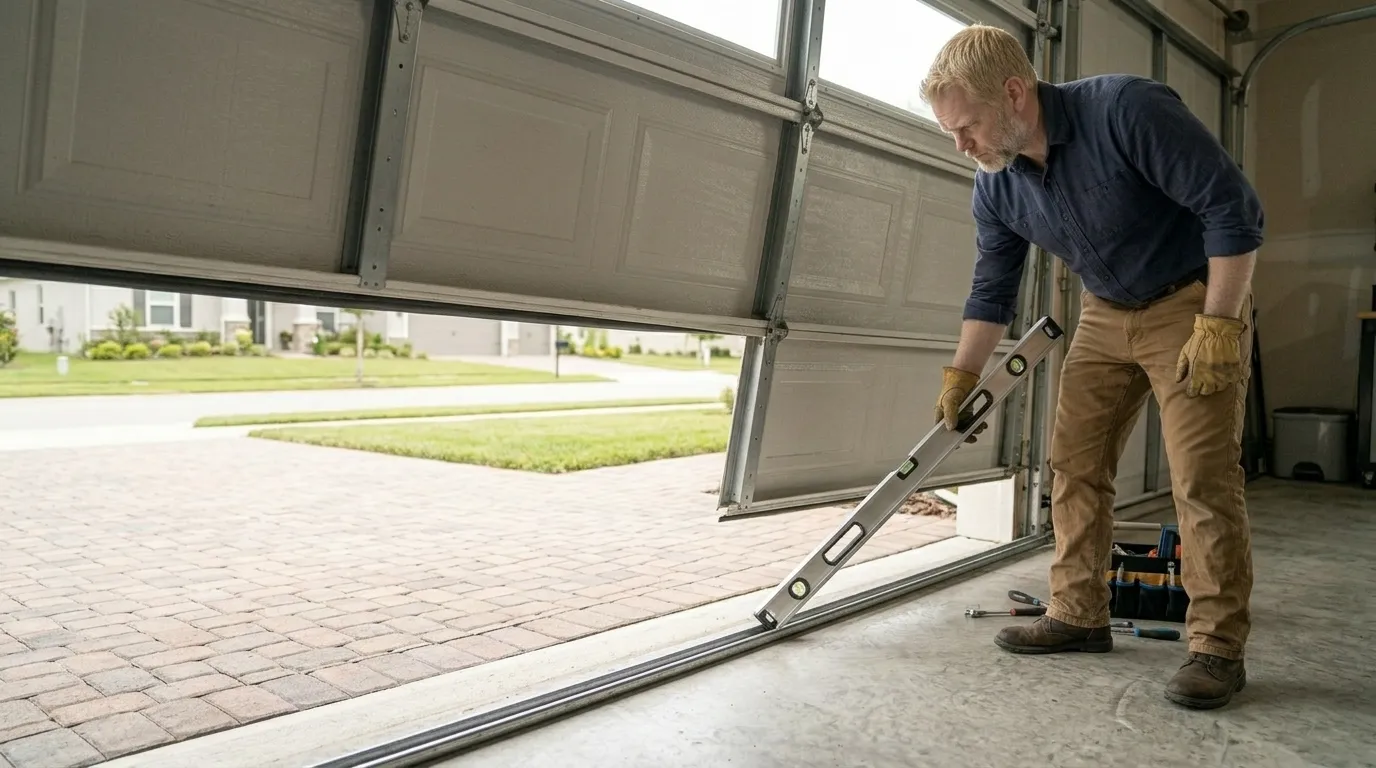
What's worth doing yourself: check that the door reverses when it hits resistance, listen for new grinding or popping sounds, and look at the bottom seal for cracking. Those are all things you can see without touching anything under tension. If something's off, that's the point to call, not the point to start disassembling a spring system that's older than most cars on the road.
Where This Job Goes Sideways
The most common mistake on a Venice Gardens maintenance call isn't skipping it - it's assuming a quiet door is a healthy door. A door that opens and closes smoothly can still be running on a spring that's one cycle away from snapping, especially in a house this old where the spring has never been replaced. Maintenance on hardware from 1968 isn't about fixing something broken. It's about finding what's about to break before it does.
The other place this goes wrong is treating every noise the same way. A squeak is usually a dry hinge. A thump on the way down is often a worn roller. But a sharp bang, or a door that suddenly feels heavier to lift by hand, points at spring tension - and that's not a lubrication problem, it's a load-bearing one.
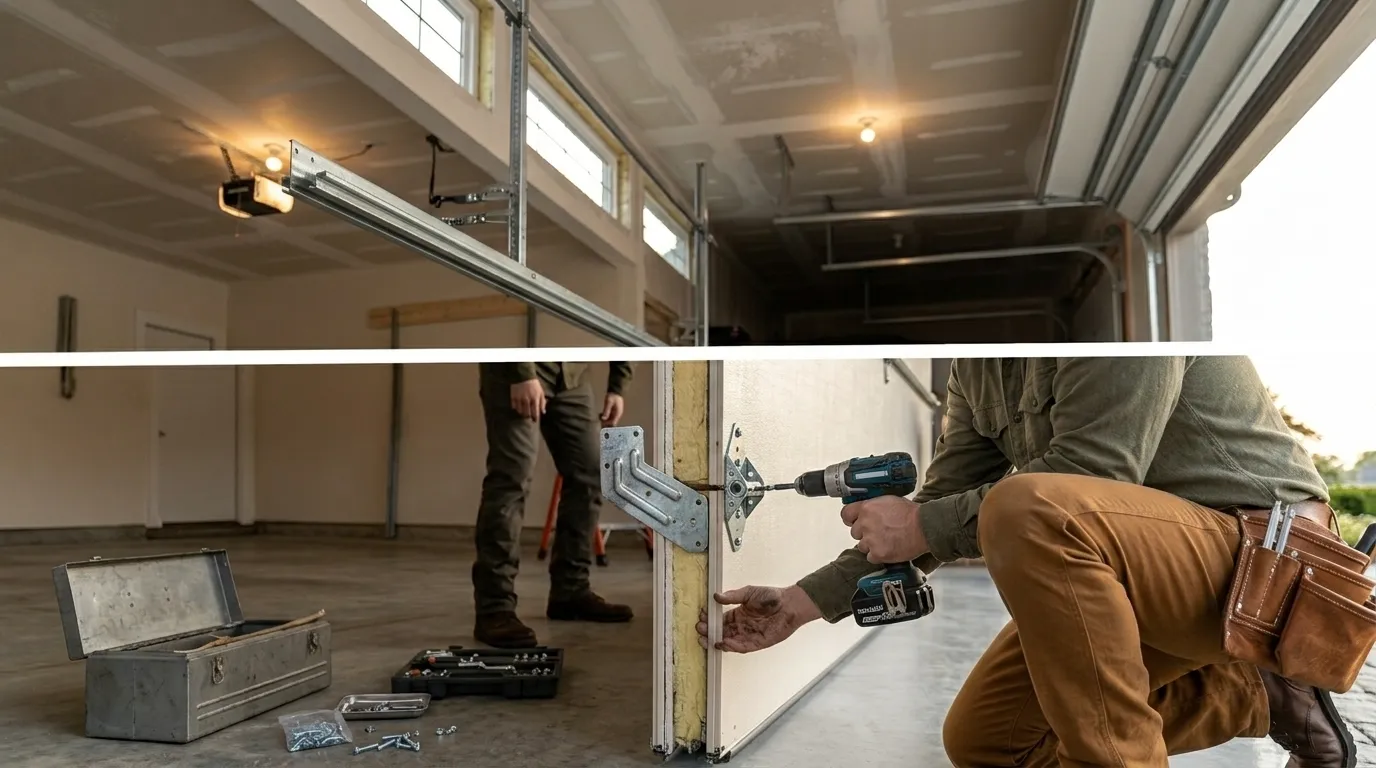
We'll be straight about the limits here too: if the drum, shaft, or bottom brackets are original and showing corrosion, a maintenance visit turns into a parts conversation, not a five-minute tune-up. That's not upselling - it's the honest outcome of hardware this old, and it's worth knowing going in rather than being surprised at the door.
The Symptom
The clearest sign something original from 1968 needs attention is a door that's gotten noticeably harder to lift by hand, or one where the opener strains and slows partway through the cycle. That's the spring losing its ability to counterbalance the door's weight - and on a house this age, it's less a question of if than when.
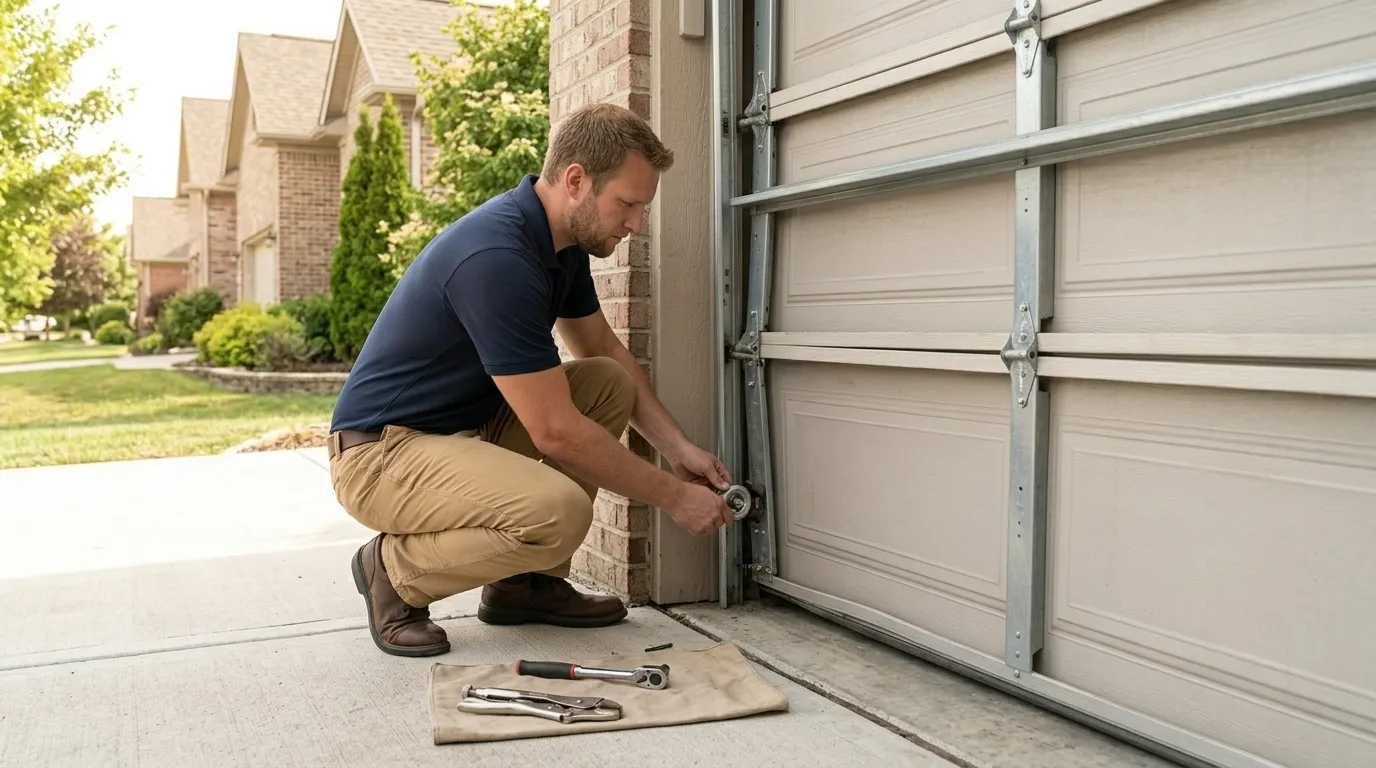
A second sign: rollers that clunk instead of roll, especially on the vertical section of track. Original steel rollers wear a flat spot over decades, and once that happens they don't turn smoothly, they hop. That's a wear pattern you don't see on newer nylon rollers, which is part of why it shows up more in a neighborhood built around 1968 than in newer construction closer to Venice.
If either of those symptoms shows up, it's worth a look before the door is used daily under that strain. We come out from Venice, about three miles away, to handle these - no separate branch here, just the same crew covering Venice Gardens as part of the wider Venice service area.
How it works
From “it’s stuck” to “it’s fixed”
01
Tell us what’s wrong
Describe the symptom - won’t open, loud bang, opener runs but the door won’t move.
02
On-site diagnosis
A technician tests the door under power and by hand and finds what actually failed.
03
Clear, up-front plan
You get the fix that’s needed and what drives the cost - before any work starts.
04
Repaired & tested
The repair is done, the door is set true and tested, and the work area left clean.
Serving Venice, FL - tell us what your door’s doing and we’ll take it from there.
How old is the garage door hardware in most Venice Gardens homes?
Most houses in Venice Gardens were built around 1968, and if the door hasn't failed or been replaced, there's a good chance the original torsion spring, rollers, and brackets are still in place. That's over five decades of wear on hardware that was never designed to last that long without service.
Does the mild Venice-area climate mean less maintenance is needed?
It means fewer sudden failures from freeze-thaw cracking, but not less maintenance overall. Heat and humidity still dry out lubrication and fatigue metal over time - it just happens more gradually here than in colder climates, which can make it easier to miss until a spring finally gives out.
Should I replace an original 1968 spring even if it hasn't broken?
If it's original and has never been serviced, it's worth having someone check the wind and tension rather than waiting for it to fail. A spring that's fatigued can snap without warning, and on a door this old, replacement is often the safer call than trying to keep the original running.
Do you have a branch in Venice Gardens?
No - Venice Garage Door Pros covers Venice Gardens from our base in Venice, about three miles away. We don't operate a separate depot in the neighborhood, but it's a short trip and a regular part of our service area.
Ready to get your garage door sorted?
Tell us what it’s doing and where you are in Venice - we’ll take it from there.