Opener Repair for Venice Gardens' 1968-Era Garages
Venice Gardens homes date to 1968, older than most of the service area, which means chain-drive openers and gear sets that fail differently than newer units. We come from Venice, three miles out.
Most houses in Venice Gardens went up around 1968, which puts this neighborhood ahead of the broader service area's median build year of 1979. That gap matters for openers. A house built in the late 1960s either still has its original chain-drive unit, worn down after decades of use, or a first-generation replacement installed sometime in the 80s or 90s before belt drives and modern circuit boards were common. Chain drives from that era rely on steel gears inside the motor housing, and those gears strip with age, especially once the chain has stretched and started binding instead of running clean. You'll also see original drive rail sag on houses that never had the rail resupported when the opener was swapped once already. The mild climate here doesn't stress rubber seals and belts the way extreme heat or cold would elsewhere, so the failures we see in Venice Gardens are less about weather and more about straightforward mechanical age: worn gears, dried-out lubricant on the rail, and logic boards that have simply outlived their expected service life. None of that is unique to any one house on the block. It's a function of when the neighborhood was built, and it shows up on a large share of the doors we look at here.
The DIY Question
Before you call anyone, check the easy stuff. Swap the remote batteries. Check that the wall switch has power and the breaker hasn't tripped. Look at the two safety sensors near the floor on each side of the track and make sure nothing is blocking the beam between them, and that they're actually aimed at each other rather than knocked sideways. Those three things account for a real share of no-move complaints and cost you nothing to rule out.
What you shouldn't do is open the motor housing on an opener from the 1960s or 70s vintage still running in some of these homes. The gear sets and wiring inside aren't like anything sold today, and if you strip a gear trying to inspect it, you've turned a repair into a full replacement. Same goes for adjusting the force or travel limits on an old unit without knowing what you're doing - get that wrong and the door can slam down on something, or on someone. If the basics check out and the opener still won't run the door, that's a call, not a project.
Where This Job Goes Sideways
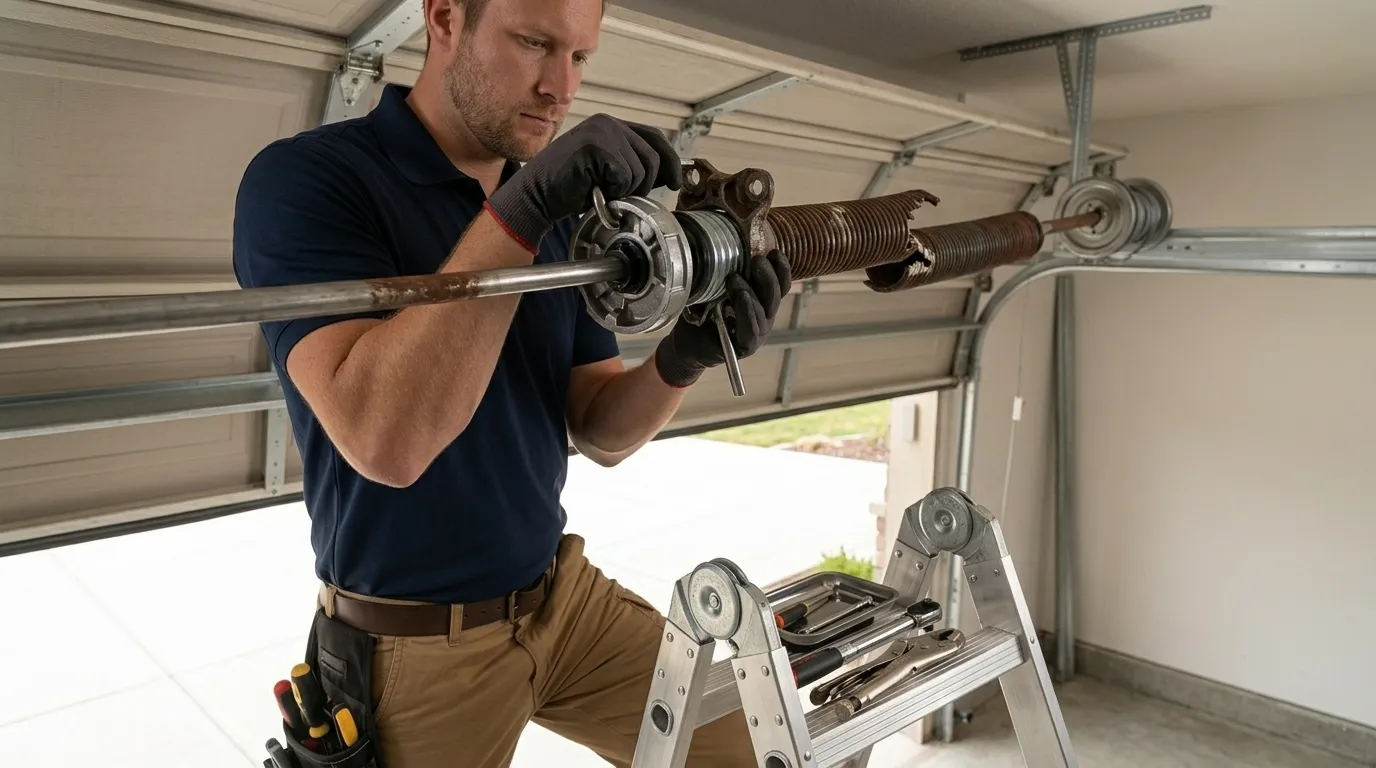
The most common mistake we see is someone replacing the opener when the actual problem is the spring. If the door is heavy to lift by hand with the opener disconnected, the opener isn't your problem - a new motor will just try, strain, and eventually fail against the same bad spring. That's money spent on the wrong part.
The other way this goes sideways is specific to the older housing stock here. A chain-drive unit installed when these houses were newer, or in a first-generation swap decades later, often runs a logic board that's long out of production. When that board dies, we can't always source an exact replacement, and rebuilding around obsolete parts usually costs more than a new opener with a current warranty. We'll tell you straight when that's the case rather than chase a board nobody makes anymore. It's not the answer people want, but it's the honest one, and it saves a second trip.
The Symptom
The pattern we hear most from Venice Gardens calls: the opener hums or clicks but the door doesn't move, or it moves partway and reverses on its own. On the older gear-driven units common to this neighborhood's 1968 build year, that usually means the internal gear has stripped - you'll often smell a faint burnt-plastic odor near the motor housing if that's the case. A door that opens fine but won't close, stopping and reversing near the ground, almost always points to the safety sensors: dirty lenses, a knocked-loose bracket, or a wire nicked somewhere along the track. If the opener runs completely silent, no hum at all, check the breaker and outlet before assuming the motor is dead. We travel the three miles out from our Venice location for these calls regularly, and this exact combination of symptoms tied to older gear-drive hardware is one of the more common jobs we run in this particular part of the service area.
How it works
From “it’s stuck” to “it’s fixed”
01
Tell us what’s wrong
Describe the symptom - won’t open, loud bang, opener runs but the door won’t move.
02
On-site diagnosis
A technician tests the door under power and by hand and finds what actually failed.
03
Clear, up-front plan
You get the fix that’s needed and what drives the cost - before any work starts.
04
Repaired & tested
The repair is done, the door is set true and tested, and the work area left clean.
Serving Venice, FL - tell us what your door’s doing and we’ll take it from there.
Why does my opener from the 1970s keep stripping gears?
Steel gear sets in openers from that era wear down after decades of cycling, and once the chain has stretched even slightly, it puts uneven load on the gear teeth. Combine that with dried original lubricant and it's a matter of time. Once a gear strips, the motor runs but the trolley doesn't move - replacing just the gear kit sometimes works, but on a unit that old we'll tell you honestly if a new opener is the better spend.
Is it worth repairing an opener from when my house was built in 1968?
Depends what's failed. A stripped gear or a bad capacitor is often a fair repair. A dead logic board usually isn't, since boards for units that old are frequently out of production. We'd rather tell you that up front than bill you for chasing a part we can't reliably source.
How far out is Venice Gardens from your shop?
About three miles from Venice. We run calls out to this neighborhood regularly, particularly opener jobs tied to the older gear-drive hardware common in houses built around 1968.
My door reverses right before it closes - is that the opener?
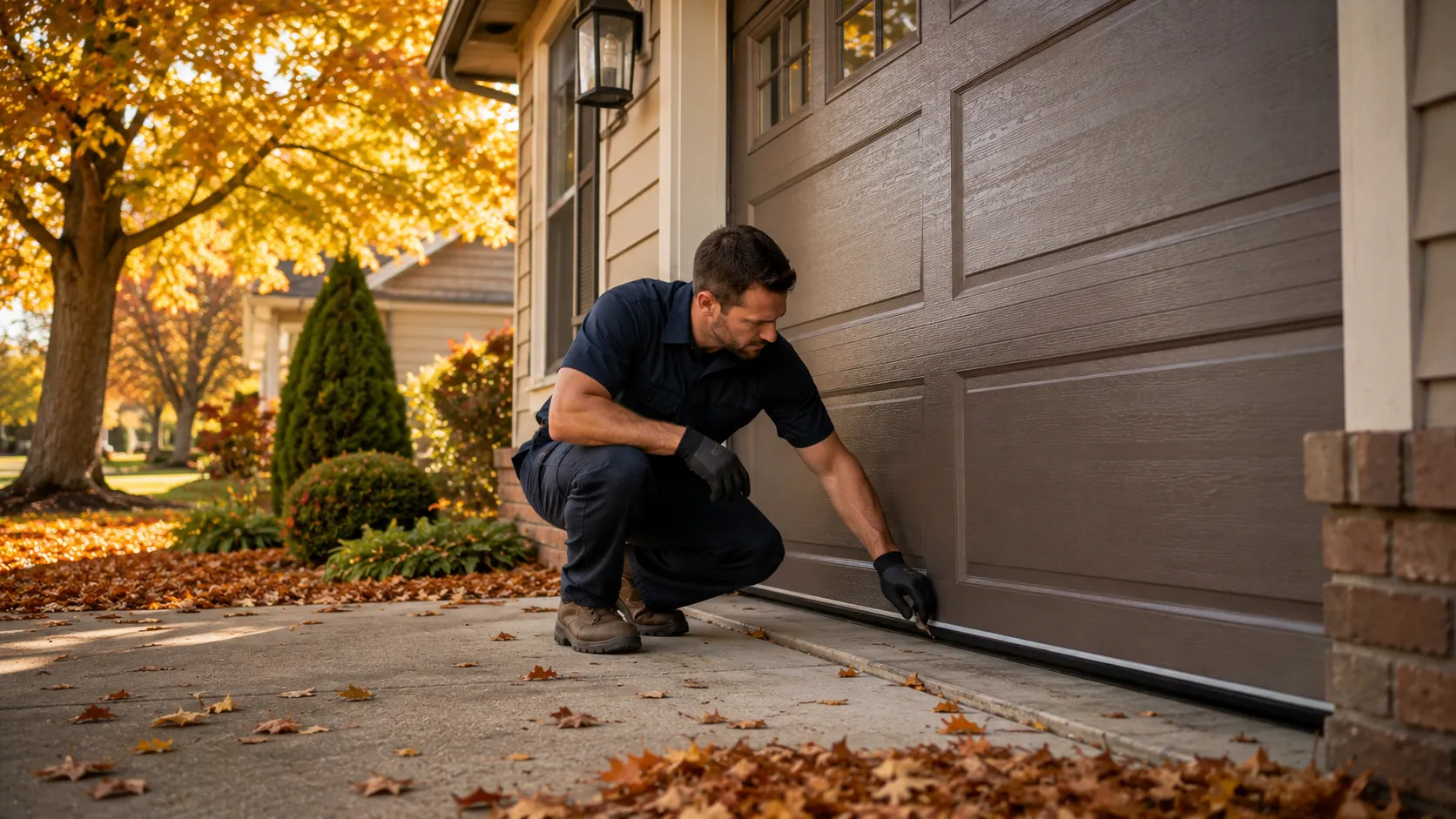
Usually not the motor itself. That behavior almost always traces back to the safety sensors near the floor - dirty lenses, a bracket that's been bumped out of alignment, or a nicked sensor wire along the track. Check those before assuming you need a new opener.
Ready to get your garage door sorted?
Tell us what it’s doing and where you are in Venice - we’ll take it from there.