Laurel's commercial buildings mostly date to the early 1980s, meaning original torsion springs and cable drums are still in play. Here's what that means for a repair call.
Laurel's commercial buildings mostly went up in the same wave as the houses around them, and the area's own median build year lands at 1983, a few years past the 1979 median for the wider Venice service territory. Walk into most of the small offices, storage bays, and light-industrial units here and the door is likely the one that went in when the building was framed: a steel sectional door on torsion springs sized for a 1980s-era header, riding a cable drum and roller setup nobody has updated since. That's the door we plan for before we leave the shop. The truck carries torsion springs cut to those older door heights, drums and cables matched to that hardware generation, and chain-drive gear kits for the openers that are still original. Laurel sits four miles inland from Venice, close enough that the drive is short, but the building stock we find here runs closer to a decade older than what's near the coast around Venice itself. That gap matters more than the mileage does - it's the difference between a five-minute parts match and a special order.
Where This Job Goes Sideways
A torsion spring that's been carrying a commercial door's weight since 1983 doesn't fail cleanly. It fatigues, and Florida's mild temperate climate means the failure mode here is usually rust at the spring coils and the mounting bracket rather than a sudden snap from a hard freeze. On a commercial door that's heavier than a residential one and cycles more times a day, a weakened spring often shows up first as an opener straining to lift a door that used to move smooth - owners call about a noisy or slow opener when the real problem is the spring underneath it. The other place this goes sideways is the track. Original steel track from the early 1980s doesn't flex the way newer track does, and if a forklift or a delivery pallet has ever clipped it, the bend can be years old and slowly walking the rollers out of alignment. By the time it binds hard enough to call about, the fix usually isn't a track adjustment - the track itself has to come off.
What the Fix Involves
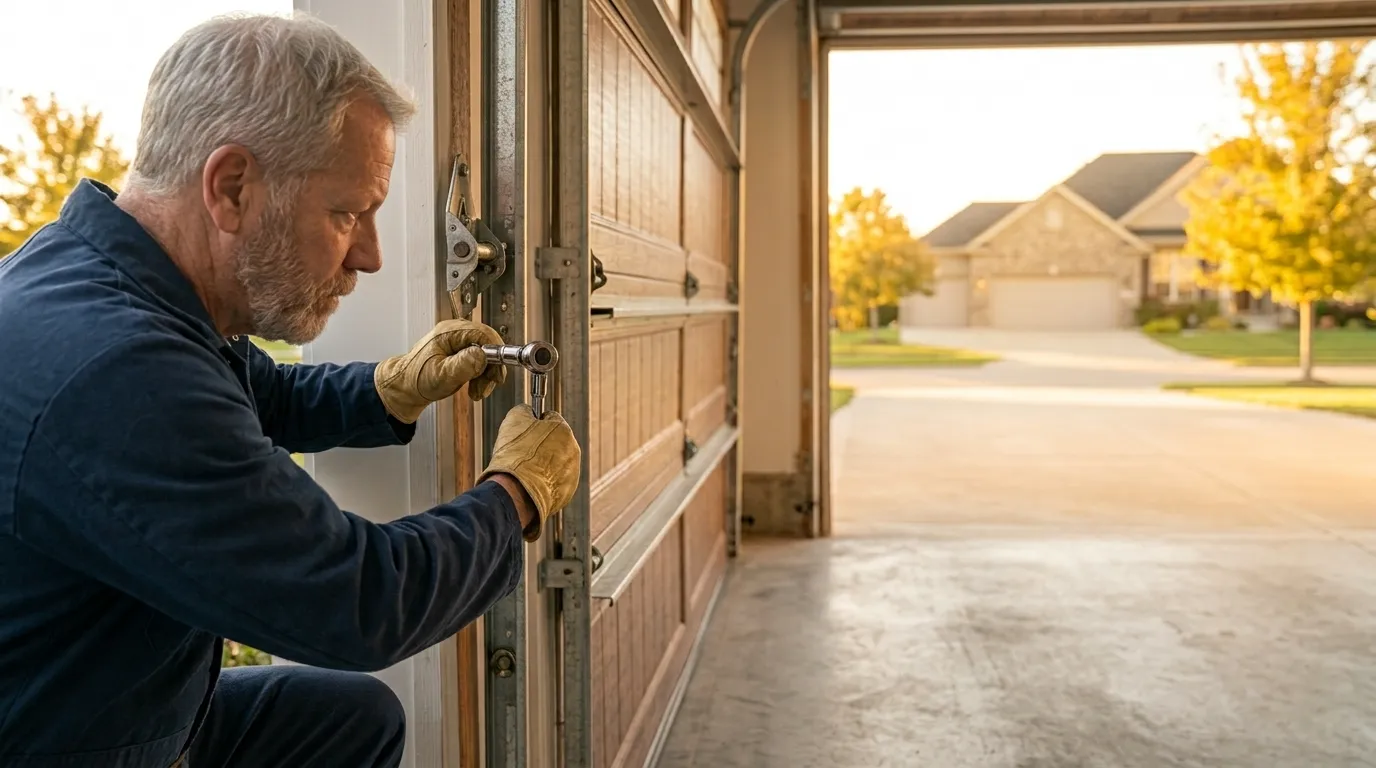
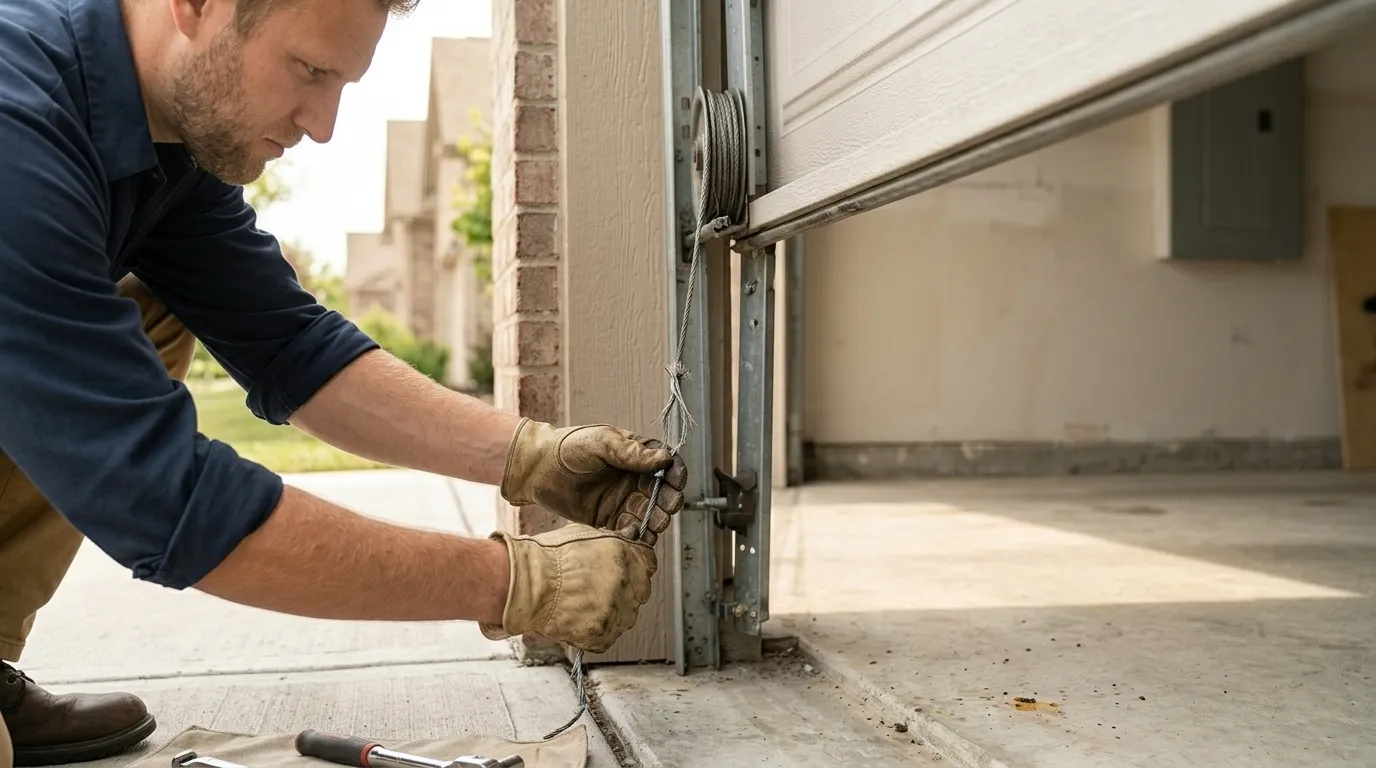
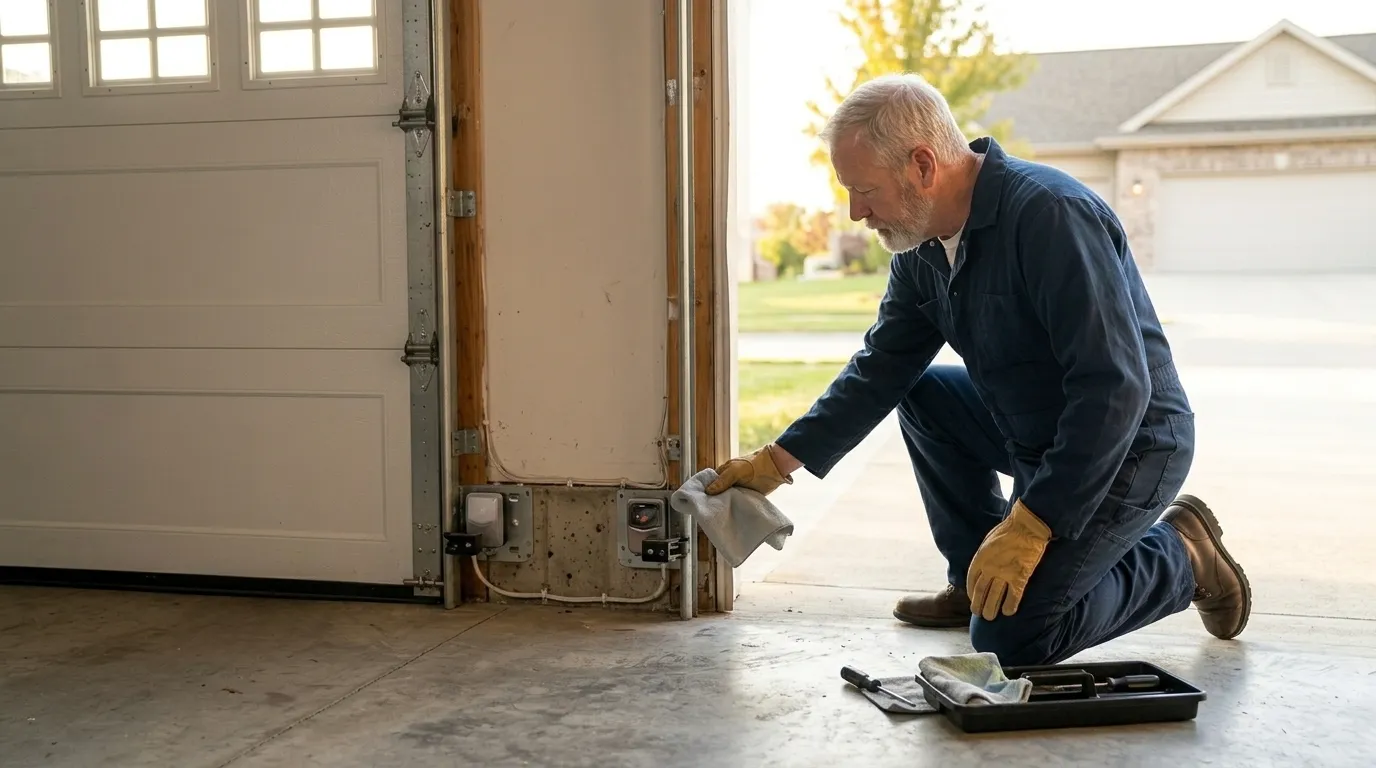
On a door this old, the repair starts with matching the spring wire size and wind to what's actually on the shaft, not what a general parts chart says a door that size should use - torsion springs from 1983 aren't always what a modern door of the same width ships with. If the drums or cable have any fraying, they get replaced at the same time; running new springs on old cable is a shortcut that costs a second visit. If the opener is original, we test the gear set and the capacitor before swapping the whole unit - a gear kit is a fraction of the cost of a new opener and often gets a 1980s unit another several years of service. Track gets checked for flex and bow along its full run, not just at the bend you can see. On a commercial door, we also check the bottom seal and weatherstripping, since a door that's been resealed piecemeal over decades can be losing more conditioned air than the owner realizes.
The DIY Question
A commercial door's torsion spring holds a lot more stored force than a residential one, and unwinding or rewinding it without the right bars is how people end up in the emergency room, not just how they end up with a bent door. That part of the job isn't a homeowner project, full stop. What an owner can reasonably check: whether the track bolts are loose, whether the bottom seal is cracked, whether the opener's safety sensors are aligned and the eyes are clean. Those are five-minute checks that catch a chunk of nuisance calls before they become a service visit. Where we'd tell you honestly to stop: any door with an original 1983-era torsion spring that's showing rust at the coils. At that age, the spring has usually outlived its rated cycle count anyway, and the smart move is a full spring replacement rather than trying to nurse the old one along - that's not a sales pitch, it's just where the failure math lands on a door this old.
How it works
From “it’s stuck” to “it’s fixed”
01
Tell us what’s wrong
Describe the symptom - won’t open, loud bang, opener runs but the door won’t move.
02
On-site diagnosis
A technician tests the door under power and by hand and finds what actually failed.
03
Clear, up-front plan
You get the fix that’s needed and what drives the cost - before any work starts.
04
Repaired & tested
The repair is done, the door is set true and tested, and the work area left clean.
Serving Venice, FL - tell us what your door’s doing and we’ll take it from there.
Are commercial garage doors in Laurel still running original hardware?
A lot of them are. The area's commercial buildings mostly date to the early 1980s, and torsion springs, cable drums, and chain-drive openers from that era don't get replaced until something fails. If your building hasn't had a door service call in a while, assume the spring and opener gear are original until proven otherwise.
How far is Laurel from your Venice location?
About four miles. It's a short drive, but the building stock we find in Laurel tends to be a bit older than what's closer to Venice itself, which changes what parts we bring on the first trip.
Why does a commercial door opener strain instead of the spring just breaking?
In this climate, springs usually fail slowly through fatigue and coil rust rather than snapping outright. The opener ends up compensating for a weakening spring, so a straining or noisy opener is often a spring problem wearing a different symptom.
Should I replace an original torsion spring or wait until it breaks?
On a door built around 1983, the spring has likely outlived its rated cycle count already. Waiting for it to fail outright on a heavier commercial door risks a jammed door mid-cycle, which is worse for your operation than scheduling the replacement on your own timeline.
Ready to get your garage door sorted?
Tell us what it’s doing and where you are in Venice - we’ll take it from there.