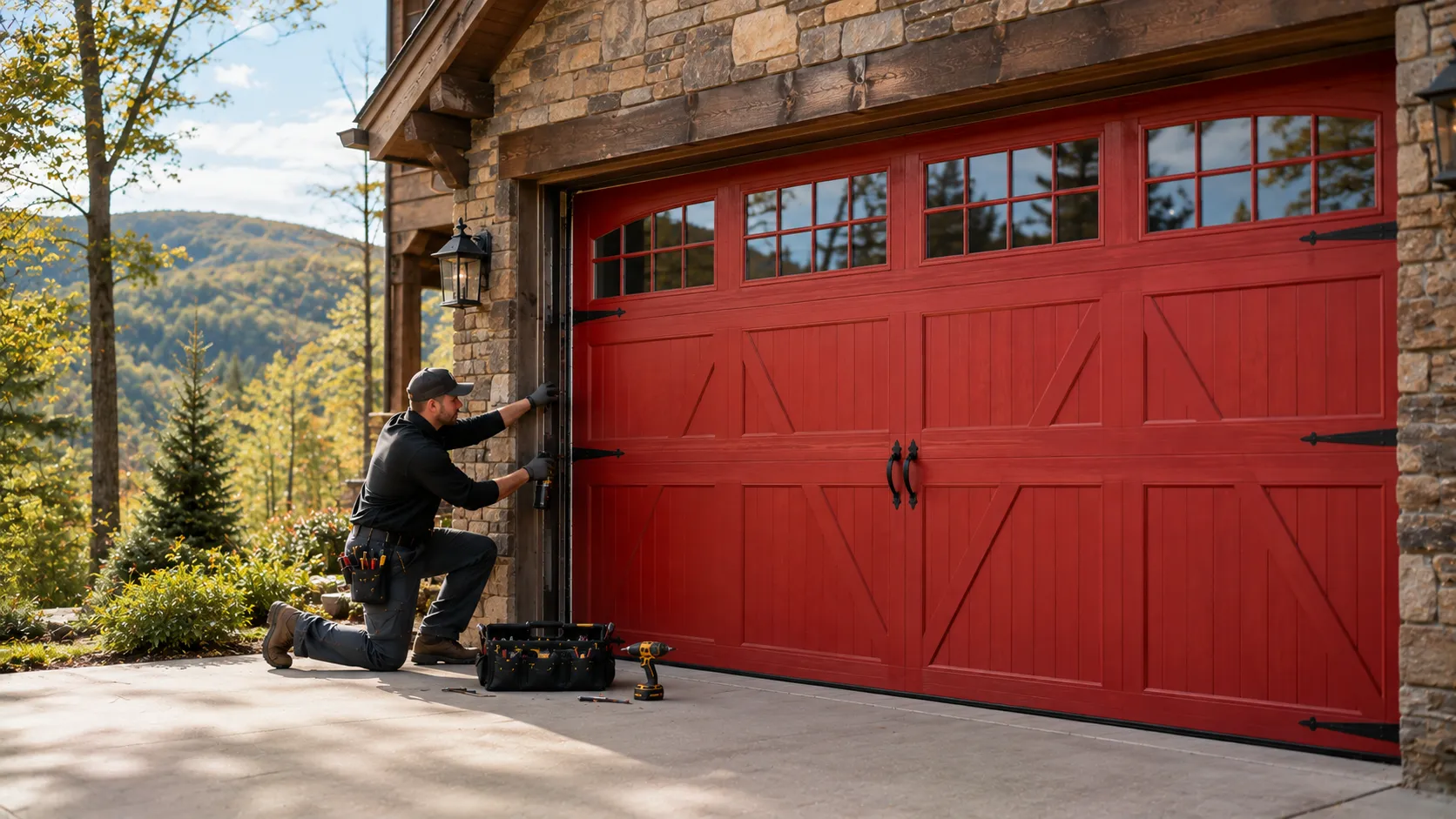
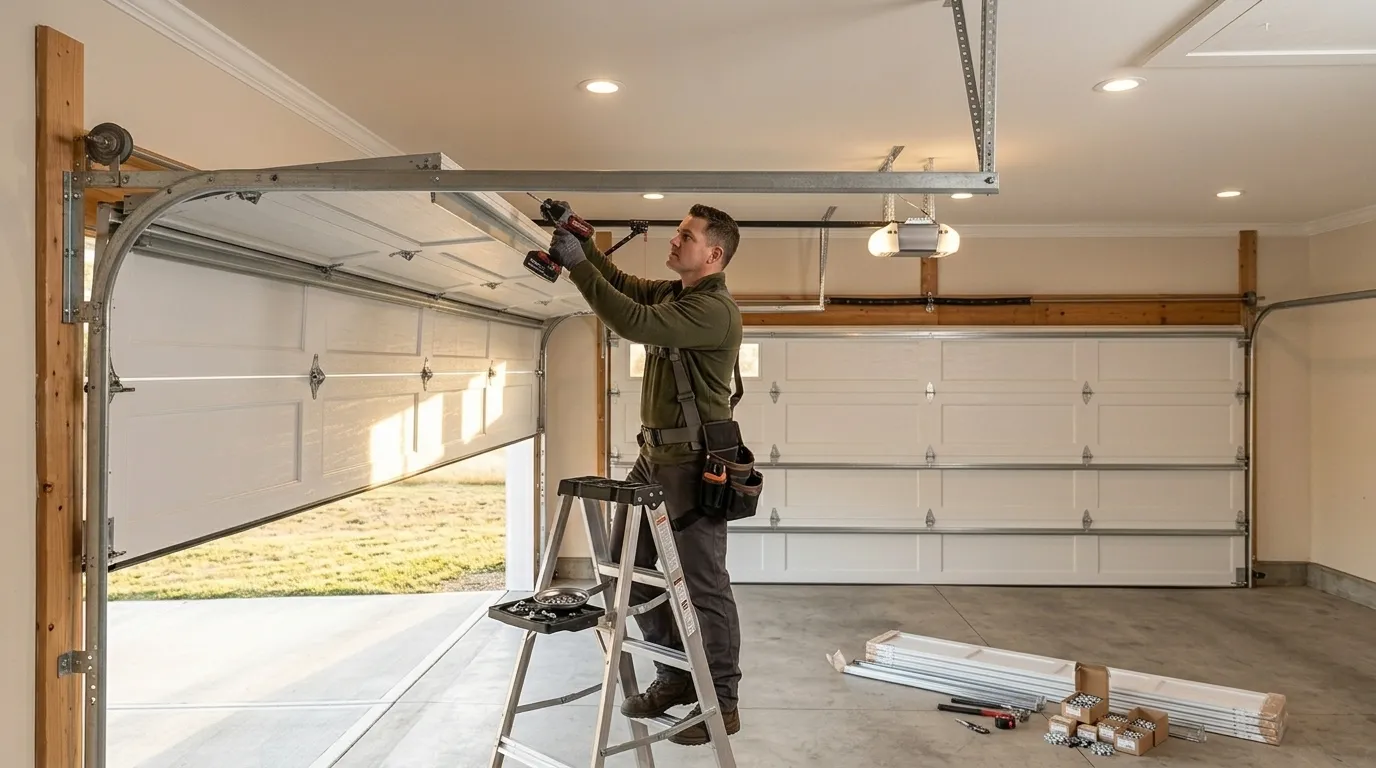
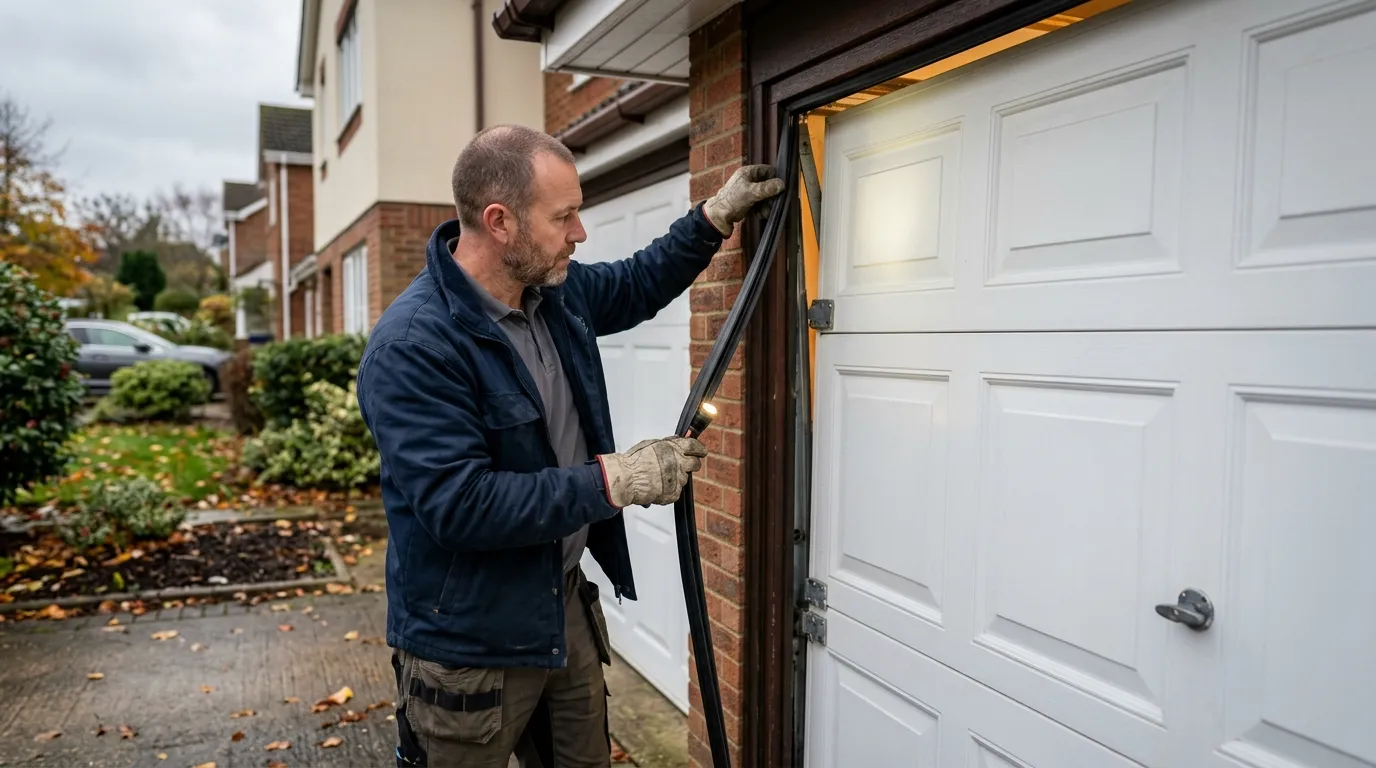
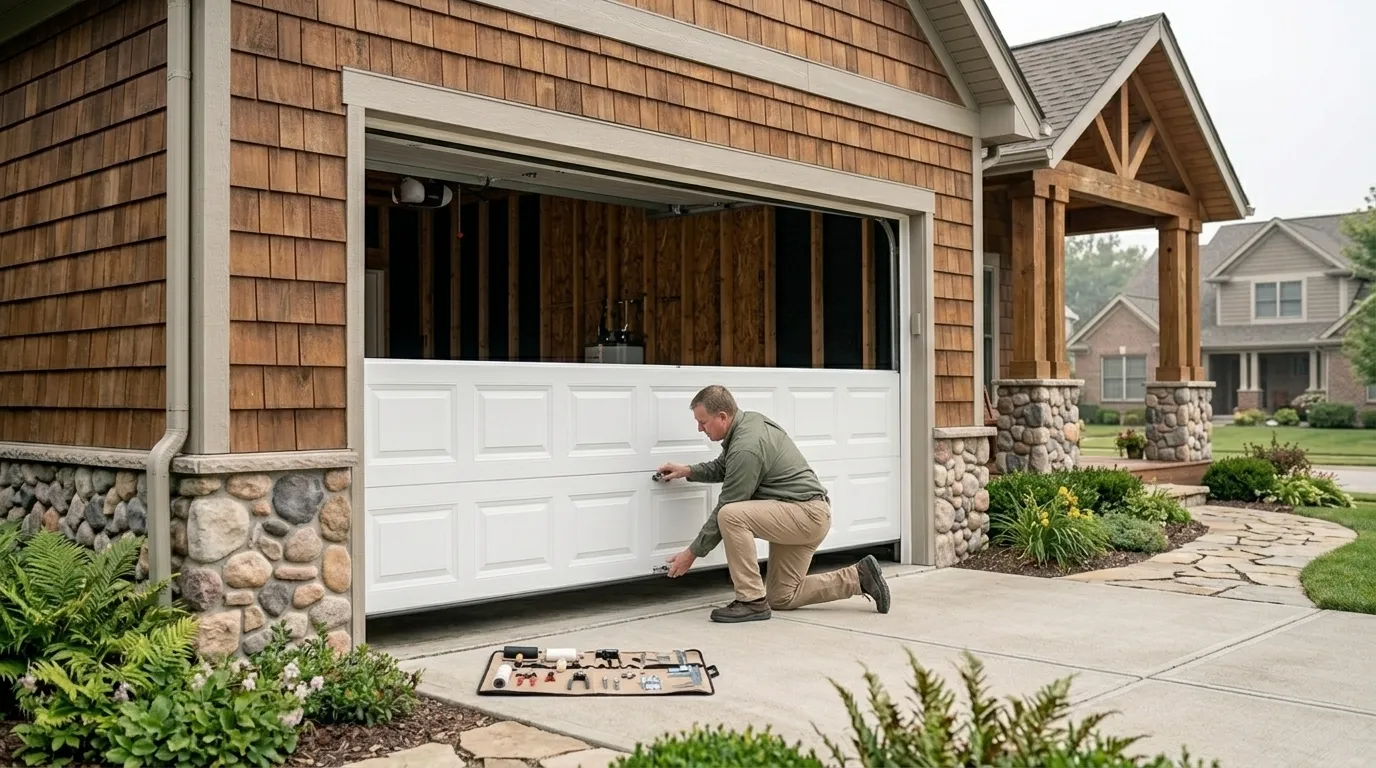
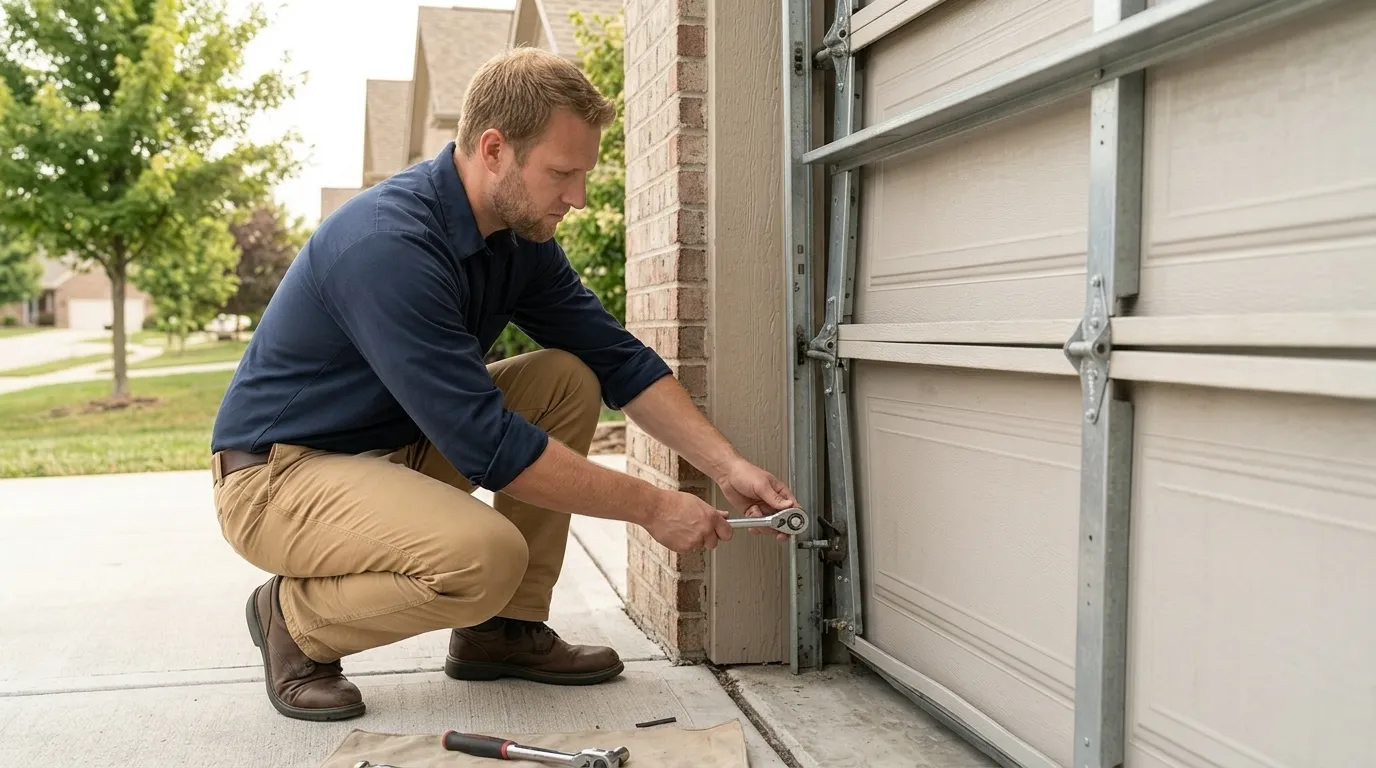
Most garage doors in Laurel went in when the house did, and the median build year here is 1983 - a decade or so newer than a lot of the neighborhoods we cover out of Venice. That matters because a door from that period is usually a steel sectional, non-insulated or lightly insulated, hung on torsion springs sized for a lighter panel than what gets sold today. The tracks are often the narrower gauge that was standard before doors got heavier. We carry torsion springs in the sizes that fit that era, standard-lift cable, and the roller and hinge hardware that wears out on doors that have been cycling for close to forty years. What we don't carry on every truck is obsolete opener circuit boards - if the door still has its original chain-drive opener from 1983, the board itself may be a special-order part, and we'll tell you that up front instead of promising a same-day swap. Laurel is about four miles from our Venice base, so parts availability isn't a same-day guarantee if something needs ordering - it's a scheduling conversation, not a truck-stock problem.
Where This Job Goes Sideways
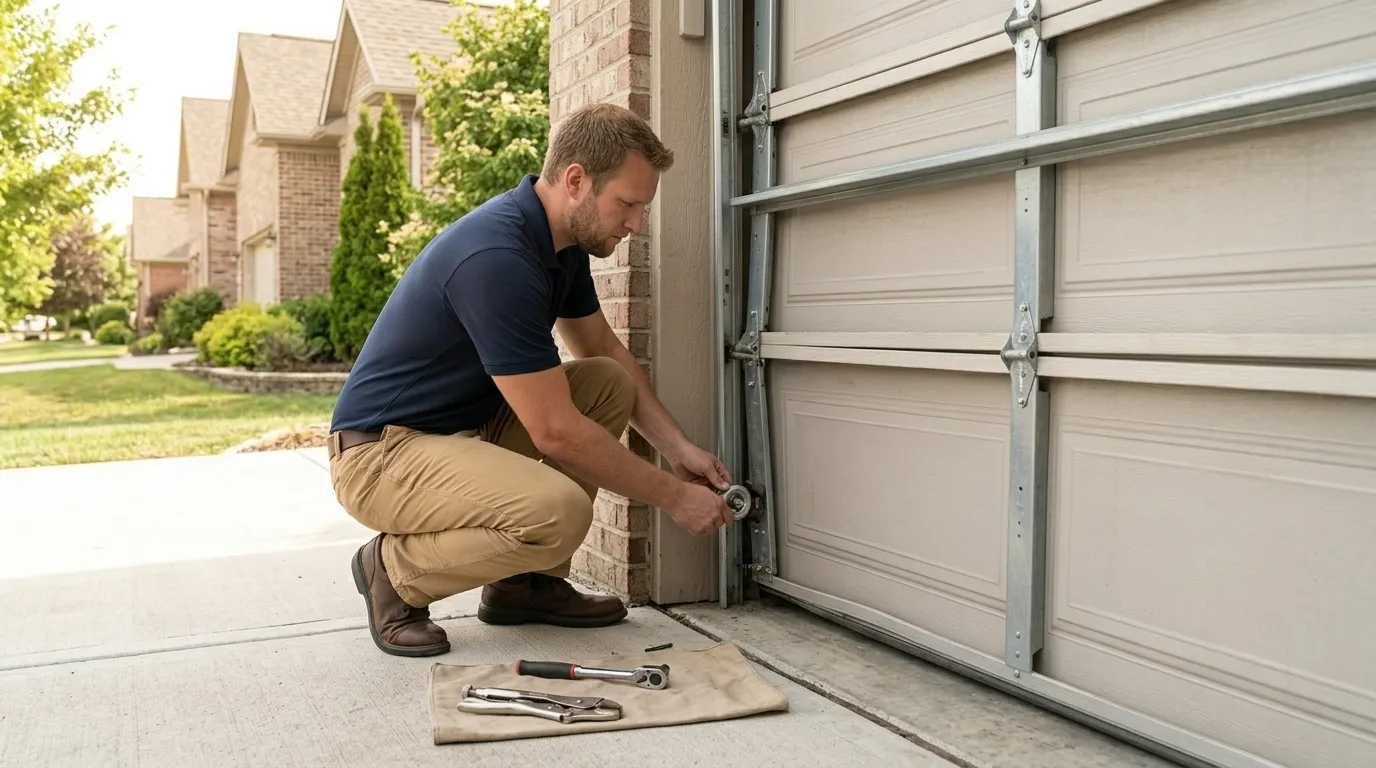
A door built in 1983 has had four decades in a mild, temperate coastal climate - not brutal heat, not hard freezes, but steady humidity that works on unsealed steel and unlubricated hinges year-round rather than in one bad season. The failure pattern we see on Laurel maintenance calls is springs that have gone soft rather than snapped clean, because the metal fatigues slowly under consistent moderate cycling instead of one dramatic temperature swing. The other spot it goes sideways is the bottom bracket and end hinges, where condensation sits longest, and where a homeowner doing a visual check from inside the garage won't see the pitting until a cable starts to fray. On a household budget in Laurel, where median income runs meaningfully above the wider Venice-area figure, we sometimes get asked to replace instead of maintain - and there are doors from this era where that's the right call, but a lot of them just need the spring, cable, and hinge set brought back to spec.
What the Fix Involves
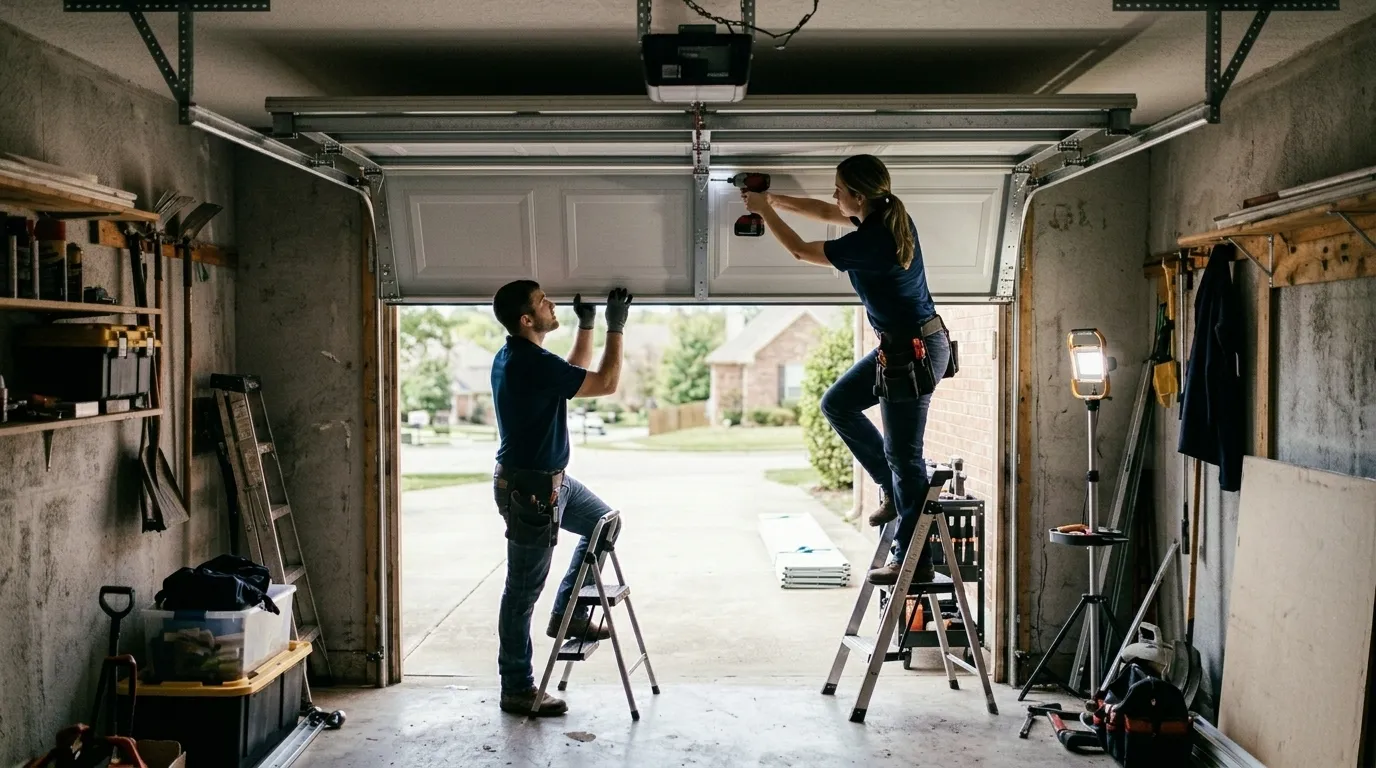
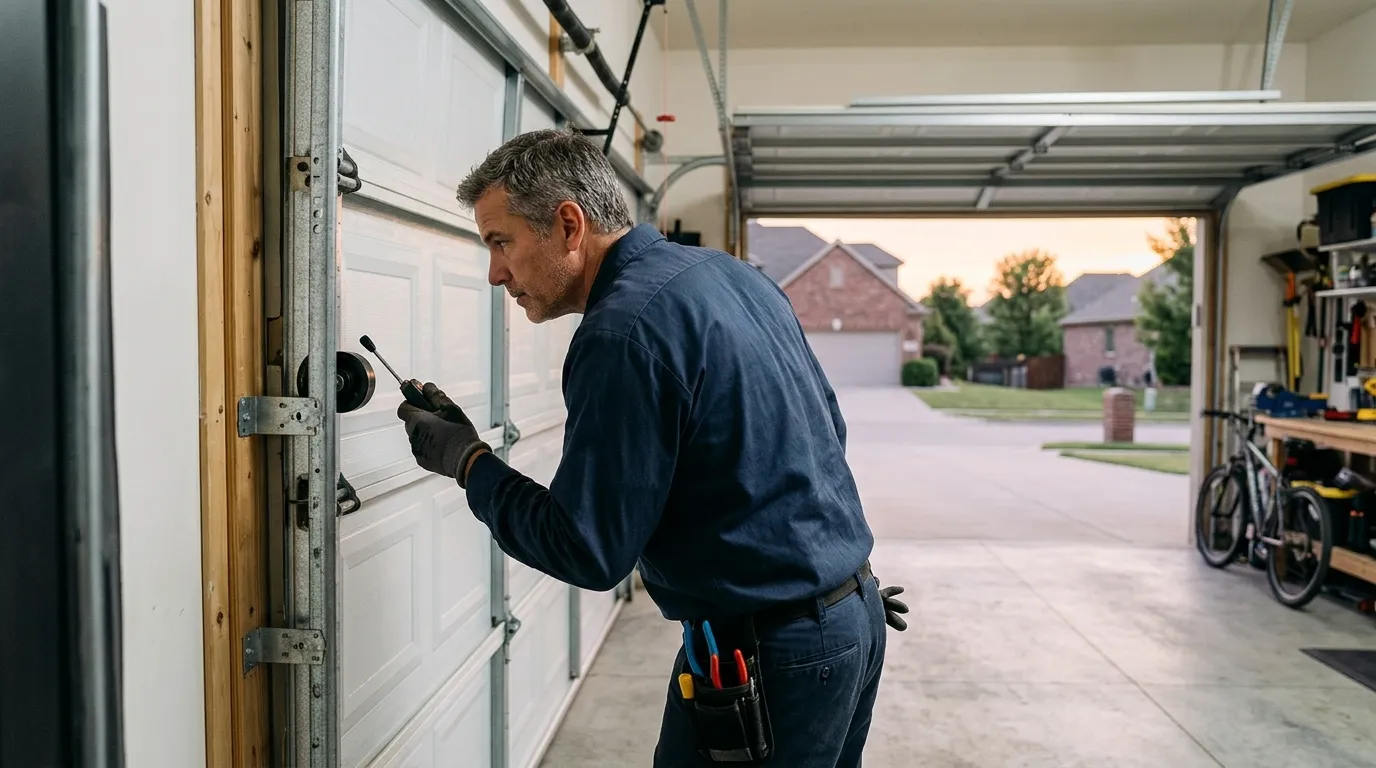
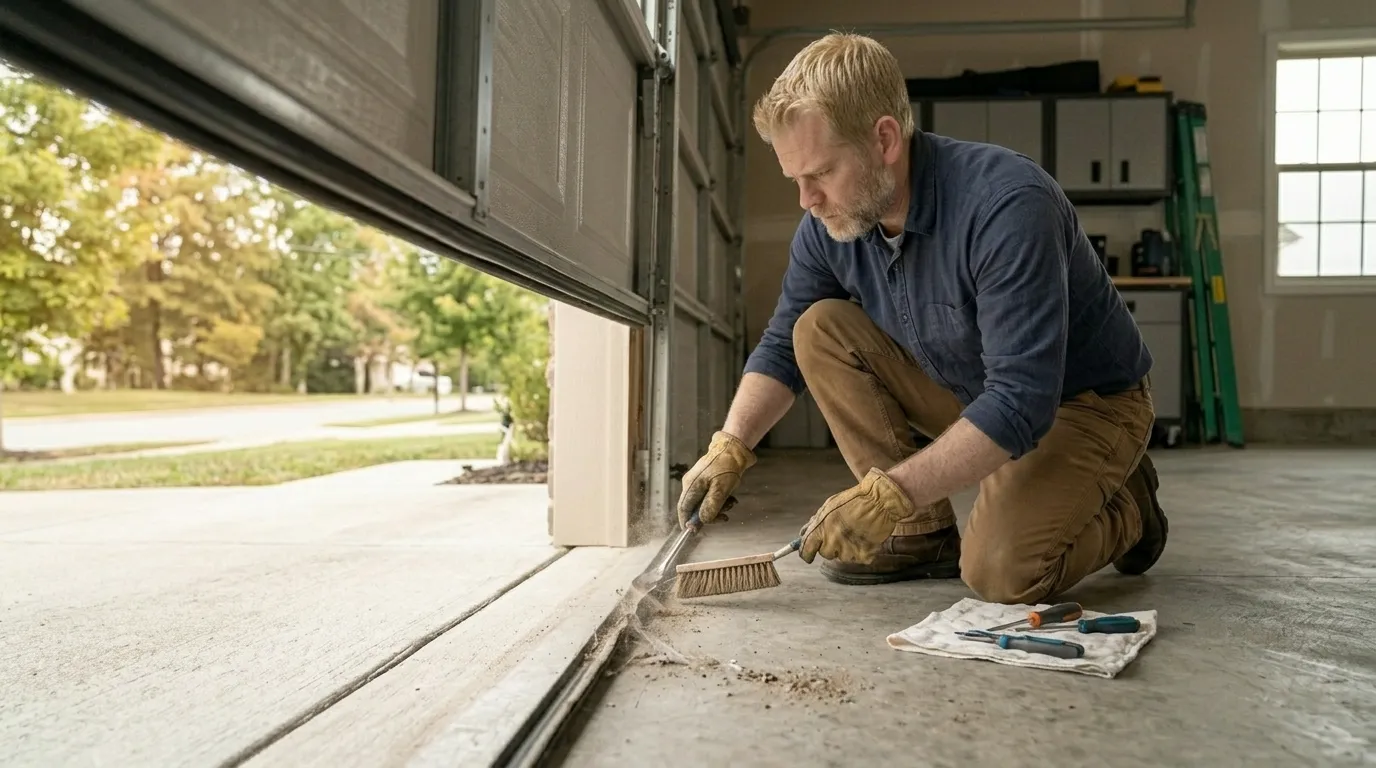
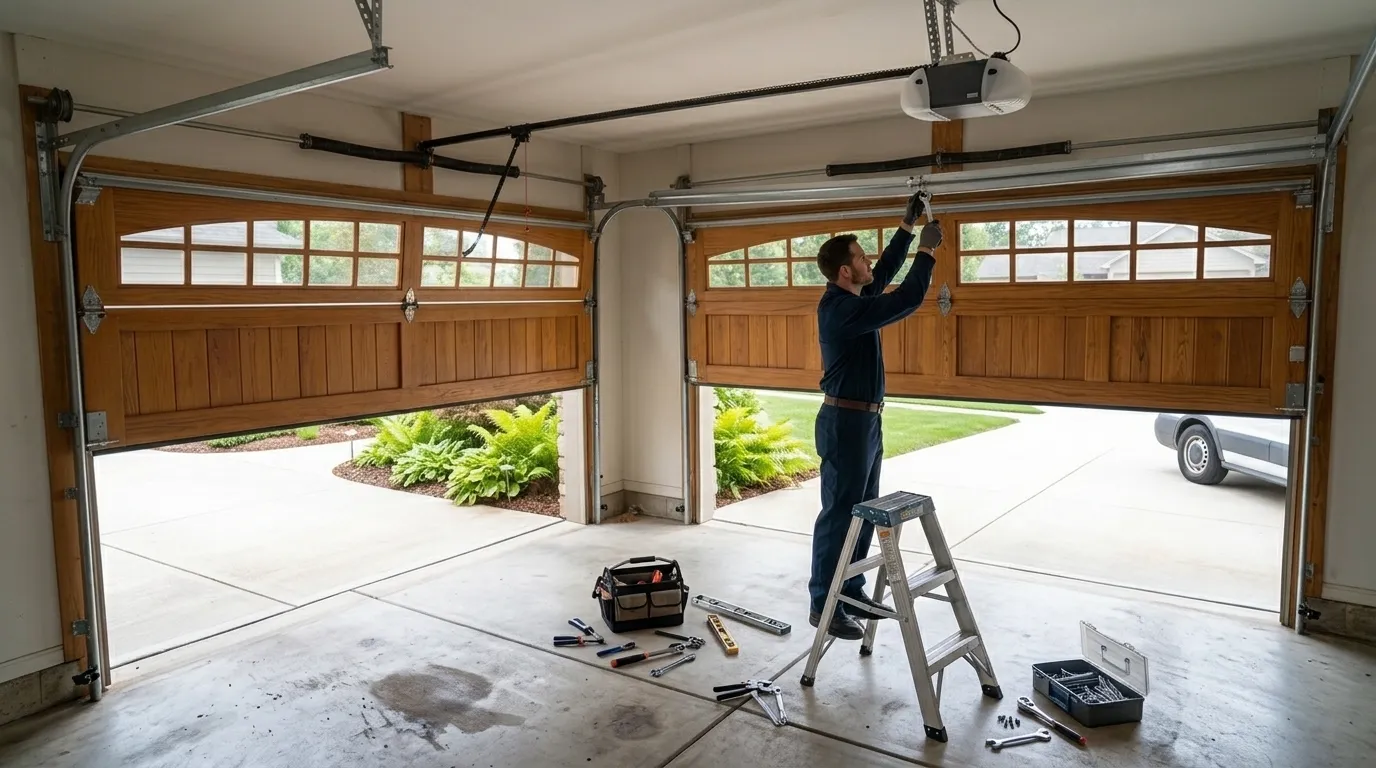
A maintenance visit on a 1983-era Laurel door starts with the springs - checking wind count and tension against what the door actually weighs now, since a panel that's had a new opener or added insulation over the years may no longer match its original spring rating. We lubricate the rollers, hinges, and torsion bar bearing plates, tighten the lag bolts on the track brackets (these back out over decades of vibration more than people expect), and check the bottom seal, which on an unshielded steel door from this period has usually hardened and cracked from UV exposure even without direct sun most of the day. We test the auto-reverse safety function and balance the door by hand - a door in balance shouldn't move more than a foot or two before staying put when disconnected from the opener. If a cable shows fraying or a spring is close to its wind-cycle limit, we replace it during the same visit rather than leaving it for a second call. What we don't do on a maintenance visit is a full opener rebuild - if the motor itself is failing, that's a separate conversation.
The DIY Question
Lubricating hinges and rollers with the right product is a reasonable homeowner task, and if you're up for it, do it twice a year rather than let it slide for five. What's not a DIY job on a door this old is anything involving the torsion spring - the wind tension on a spring sized for a 1980s steel door can still put someone in the ER if the winding bars slip, and springs at this age are more likely to let go without warning than a newer one. We also wouldn't recommend a homeowner try to re-tension or replace a bottom bracket, since it's under cable load and a slip there can whip the cable hard. If your Laurel door still has its original opener from the early 1980s, don't try to force a new safety sensor kit onto an old circuit board yourself - that's a mismatch we see cause more problems than it solves. Check our <a href="/areas/area/laurel/">Laurel area page</a> for what else we cover nearby, or see the full <a href="/garage-door-maintenance-venice-fl">Venice maintenance page</a> for what a standard visit includes.
How it works
From “it’s stuck” to “it’s fixed”
01
Tell us what’s wrong
Describe the symptom - won’t open, loud bang, opener runs but the door won’t move.
02
On-site diagnosis
A technician tests the door under power and by hand and finds what actually failed.
03
Clear, up-front plan
You get the fix that’s needed and what drives the cost - before any work starts.
04
Repaired & tested
The repair is done, the door is set true and tested, and the work area left clean.
Serving Venice, FL - tell us what your door’s doing and we’ll take it from there.
About four miles. We travel to Laurel regularly as part of our Venice-based service area, but we don't keep a separate branch or stock there, so any special-order part still routes through Venice first.
Why does my 1980s door in Laurel need spring service more than a newer one might?
Torsion springs fatigue with cycle count and time, not just dramatic weather. A spring installed around 1983 has had roughly forty years of steady cycling in a humid coastal climate, which tends to soften the metal gradually rather than cause a sudden clean break.
Is my original opener from that era still fixable?
Sometimes, but the circuit boards for openers from the early-to-mid 1980s aren't something we keep on the truck, and they can be special-order parts. We'll check it on site and tell you honestly whether repair or replacement makes more sense.
Can I just lubricate the door myself and skip a service call?
Lubricating hinges and rollers yourself is fine and worth doing twice a year. But spring tension, bottom bracket condition, and cable wear on a door this old need a hands-on check - those are the parts most likely to fail without visible warning.
Ready to get your garage door sorted?
Tell us what it’s doing and where you are in Venice - we’ll take it from there.