Where This Job Goes Sideways
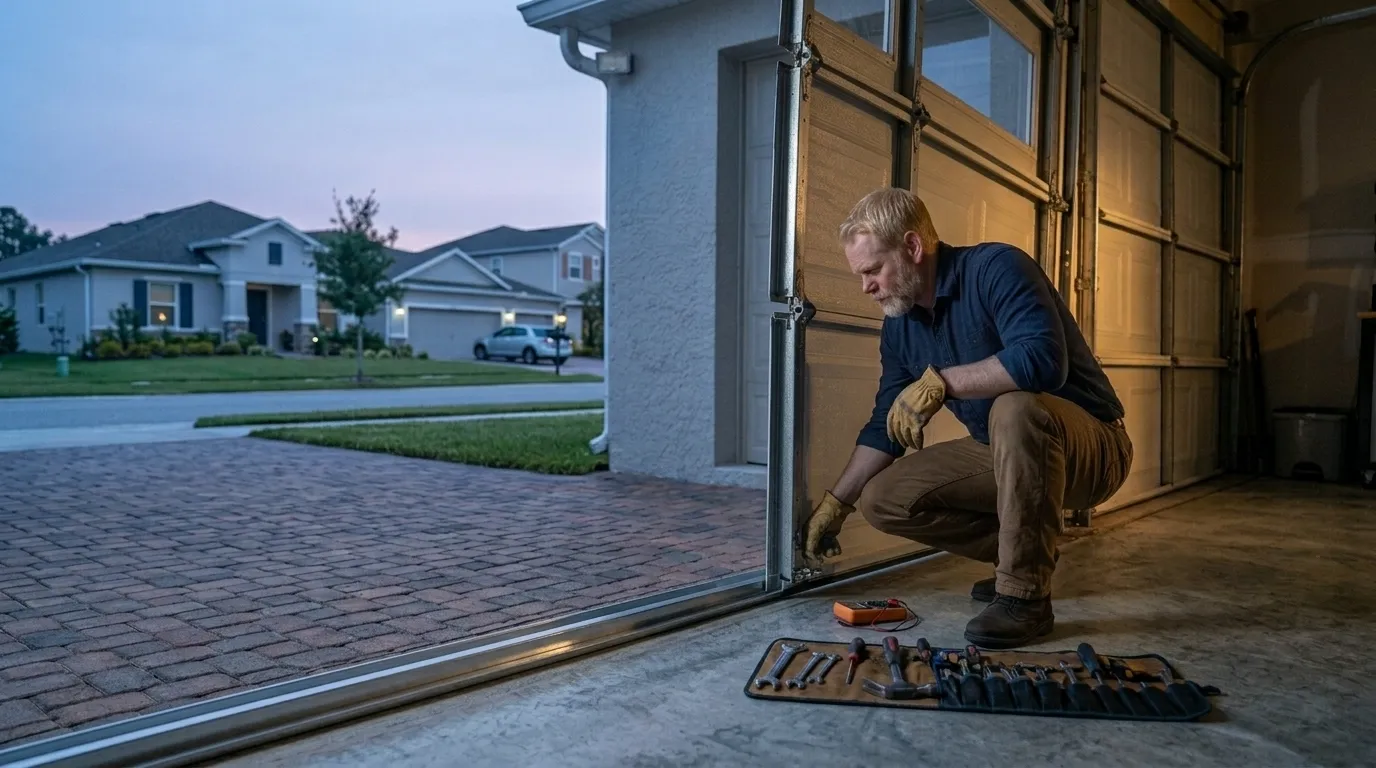
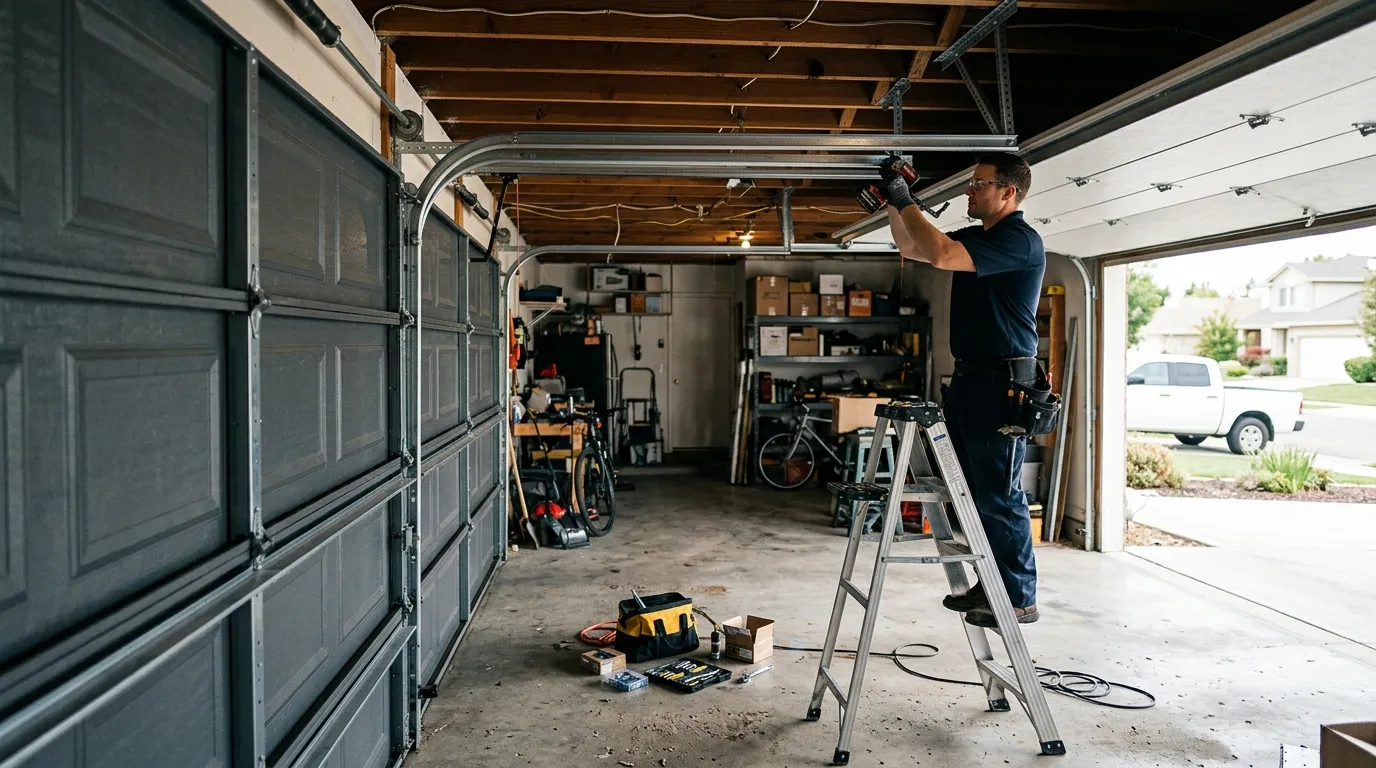
The most common miss on a Laurel call is treating a dead opener as a motor problem when it's actually the wall button or the sensor wiring. Houses from the early 80s often have the original low-voltage wire run to the safety sensors, and thirty-plus years of garage heat and humidity - even in this mild band - dries out the insulation at the staple points. The door won't close, the customer assumes the motor's shot, and the motor's fine. Another one: a chain-drive unit that's been re-tensioned by hand one too many times, so the carriage binds on the rail and the gears inside strip trying to push through it. That reads as "opener failure" but it's really a track and hardware problem wearing an opener's symptoms. We check the simple stuff first because on houses this age, the simple stuff is usually the actual cause.
What the Fix Involves
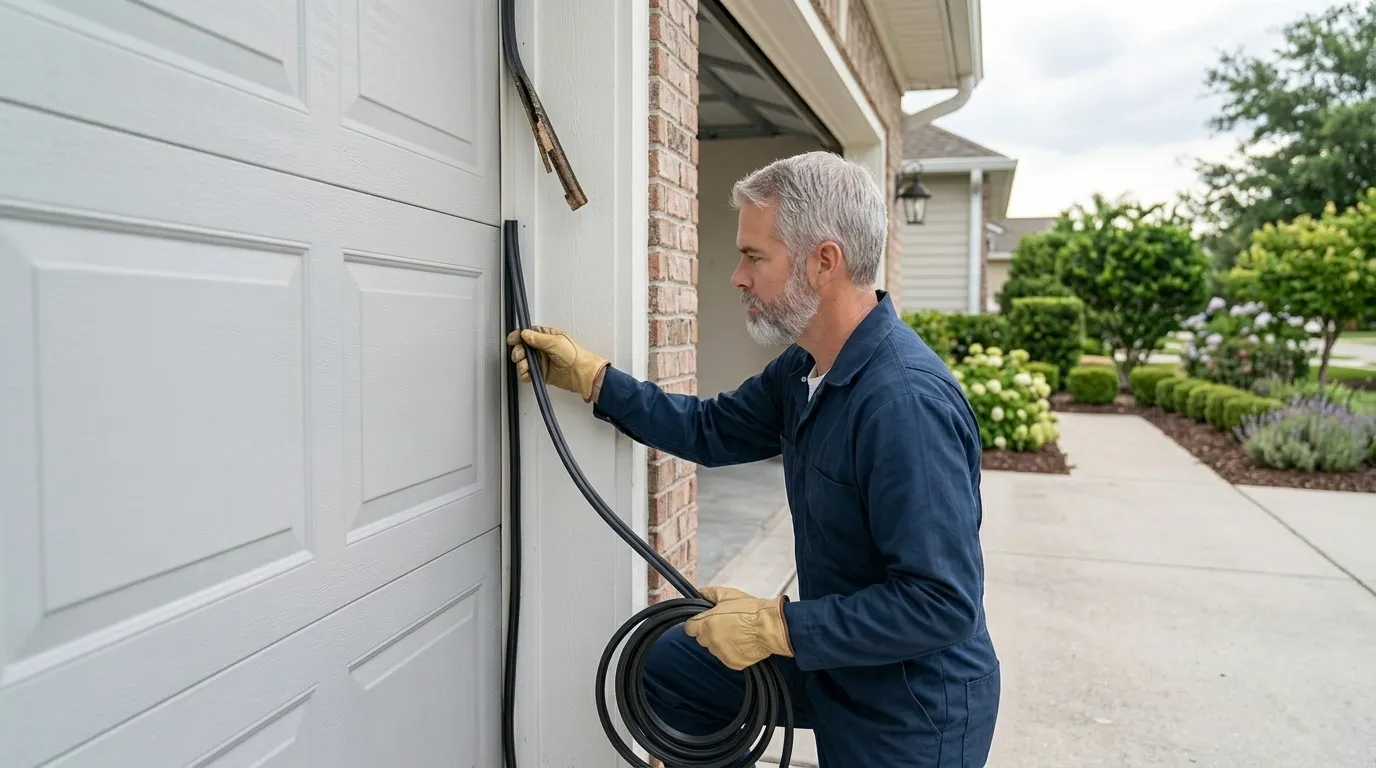
Once we know whether it's the board, the sensors, the drive gear, or the wiring, the fix is usually one of those, not all of them. A board swap means matching the logic board to the drive type already on your rail - we don't push a full unit replacement when the motor and rail are sound. Sensor wiring gets replaced run to run, not just spliced, since a splice in Florida humidity fails again within a season or two. If the chain or belt itself is stretched or slipping teeth, that's a drive kit, not a full opener. We size labor and parts to what's actually broken, which on a household income base like Laurel's ($89,282 median) usually means people would rather pay for the right part once than get talked into a new unit they didn't need. Where full replacement does make sense is when the motor housing itself has failed or the unit predates the parts we can still source - at that point we say so plainly instead of chasing a repair that won't hold.