Laurel homes run newer than the rest of the Venice service area, and household income here changes the repair-or-replace math. See what that means for your door.
The math starts with money, not springs. Laurel's median household income runs $89,282, well above the $77,359 median across the rest of the service area we cover from Venice. That gap matters because it moves the point where replacing a door beats patching it. A homeowner at the area-wide median often has to stretch for a full replacement and will ask us to nurse a door through one more repair. A Laurel household at its own median usually doesn't have to make that trade - if a torsion spring failure lines up with a door that's already dented, out of square, or running a dead opener, replacement is the call we make honestly instead of the one we upsell.
On the parts side, Laurel's housing stock runs newer than what we see elsewhere in the territory - median build year 1983, four years past the 1979 median for the broader service area. That means fewer of the old one-piece doors on side-mount torsion bars and more standard sectional doors on extension or torsion springs sized for the openers sold through the 80s and 90s. We carry stock for that generation because it's what most Laurel driveways actually have.
Where This Job Goes Sideways
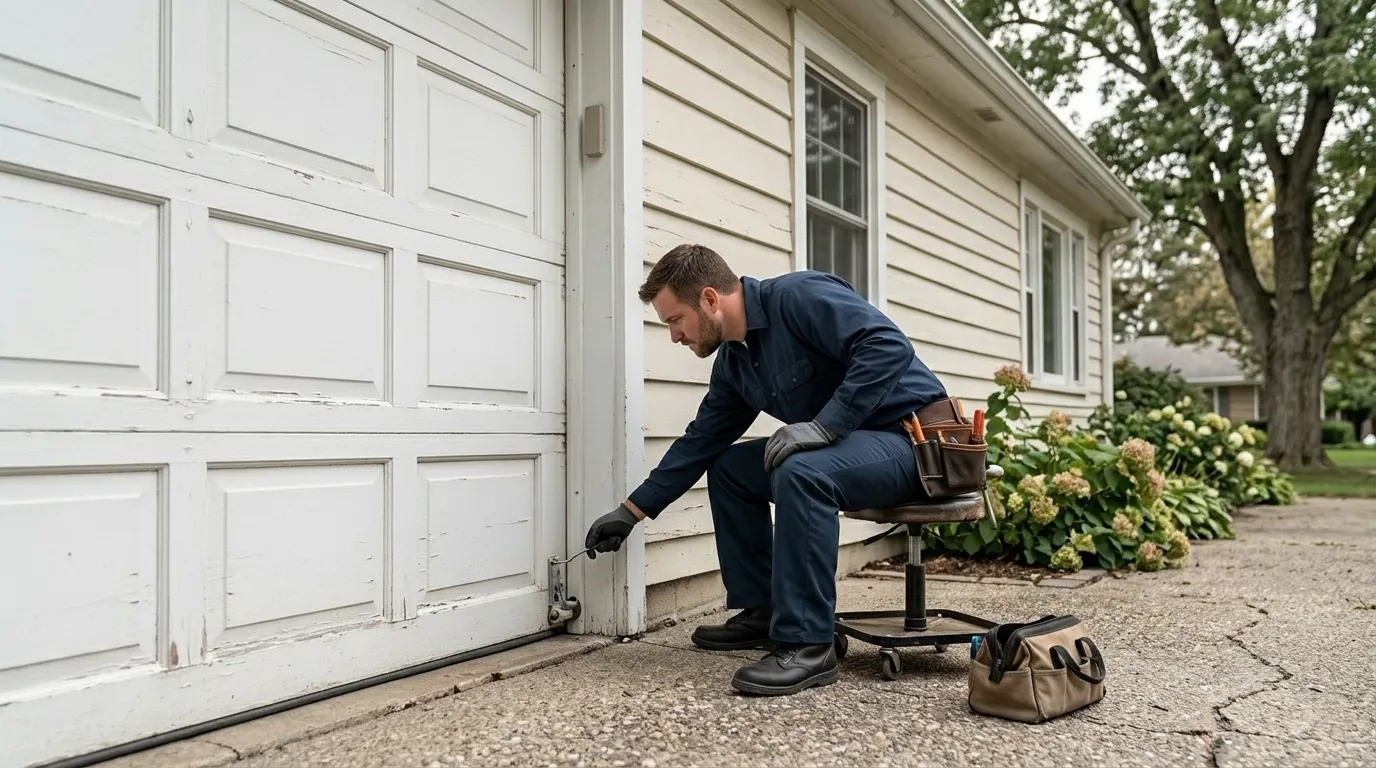
A 1983-era door doesn't fail the way a 1960s one does. The panels are usually steel, not the older wood composite, so the failure point shifts to hardware: worn rollers, stretched cables, and openers original to a house that's now over forty years old. In this mild, temperate climate we don't get the freeze-thaw cycling that snaps brackets up north, but humidity still eats at unpainted spring coils and un-lubricated hinges over four decades.
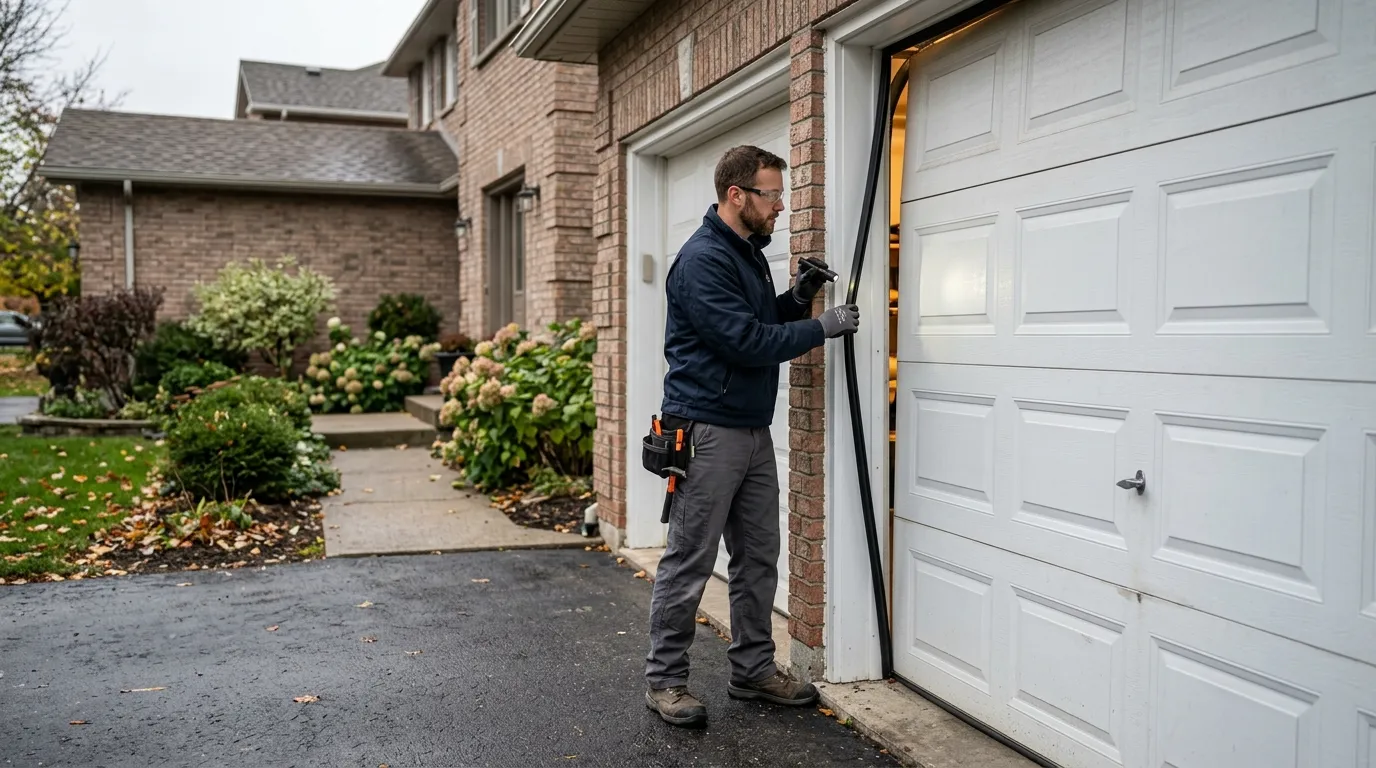
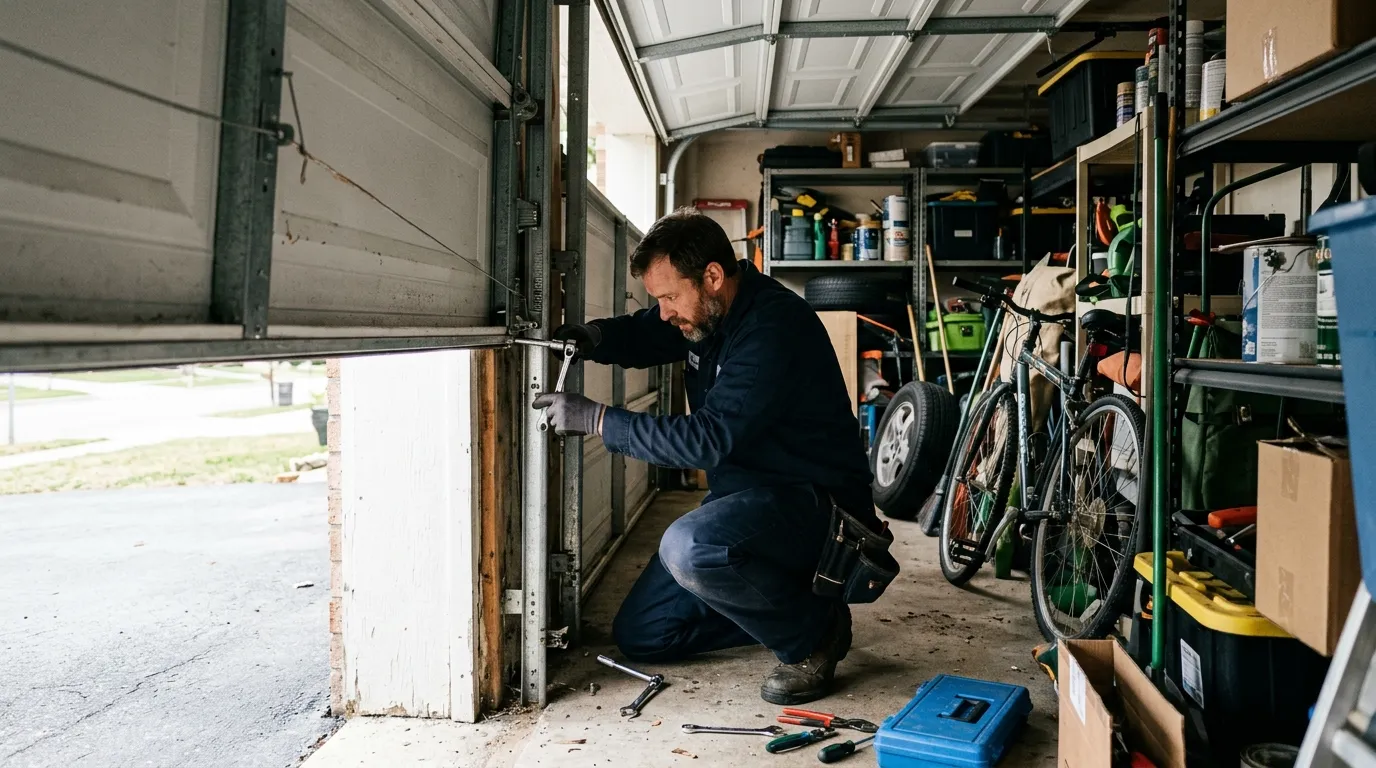
Where it goes sideways is when a homeowner replaces the opener but not the spring, or replaces the spring but the track is still bent from the original install. We see doors in Laurel that got a new opener ten years ago bolted onto original 1983 track - the opener strains, the homeowner blames the opener, and the actual fix was never in the motor. Diagnosing that correctly before quoting a job is most of the work.
What the Fix Involves
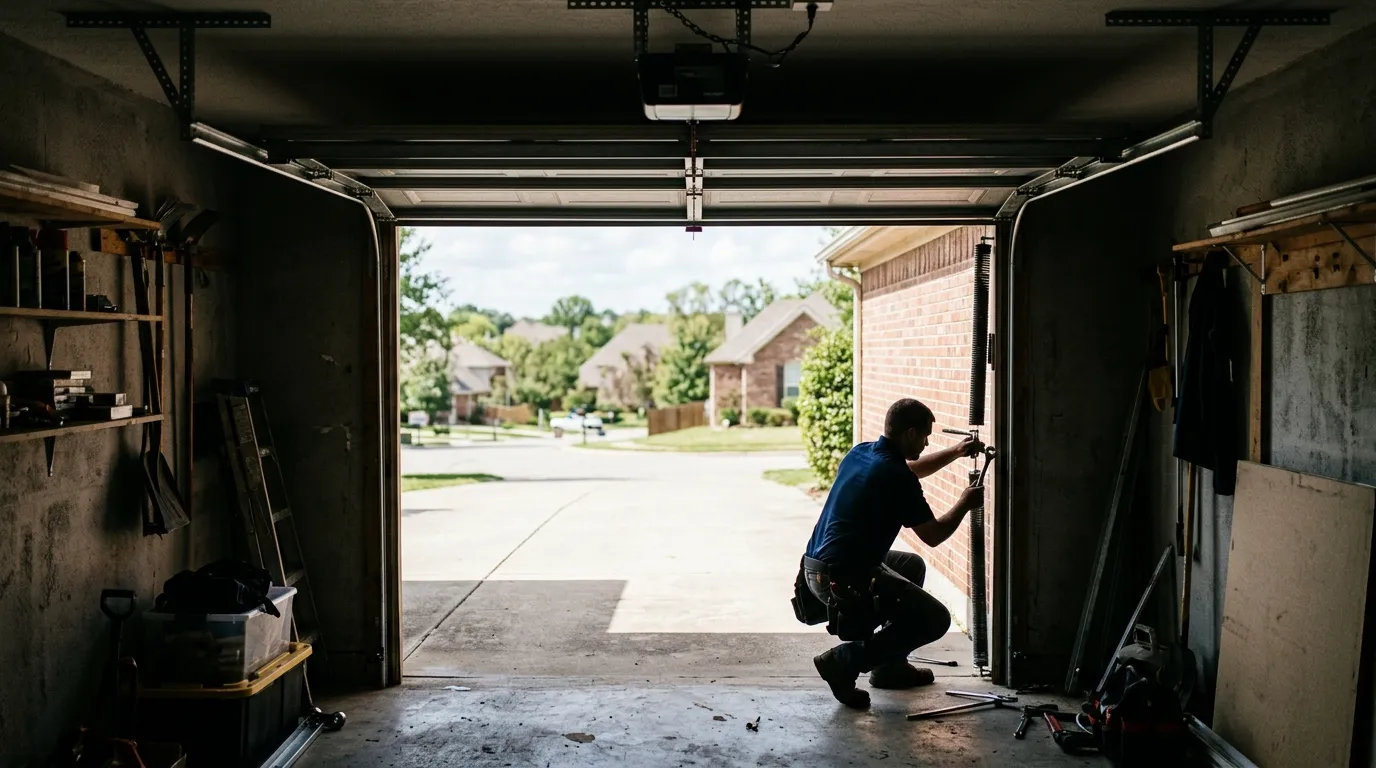
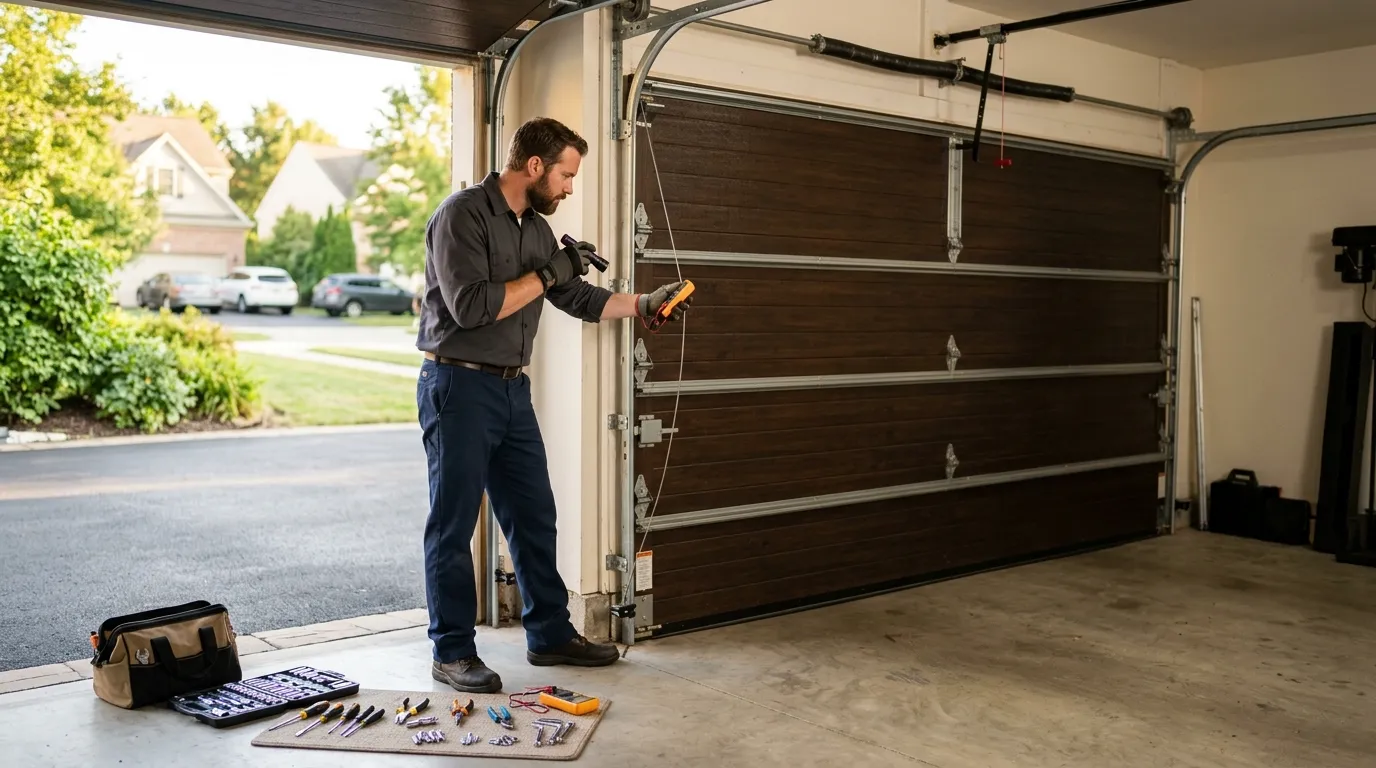
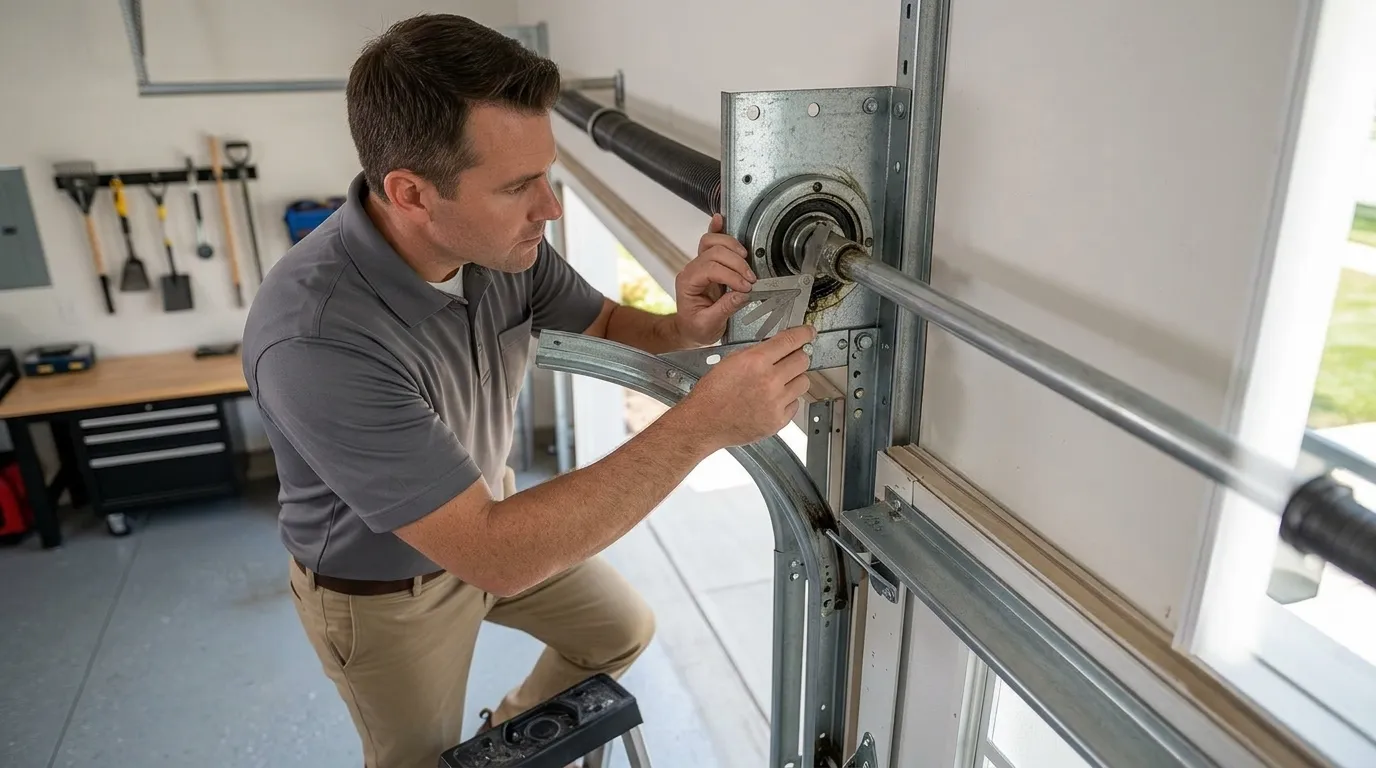
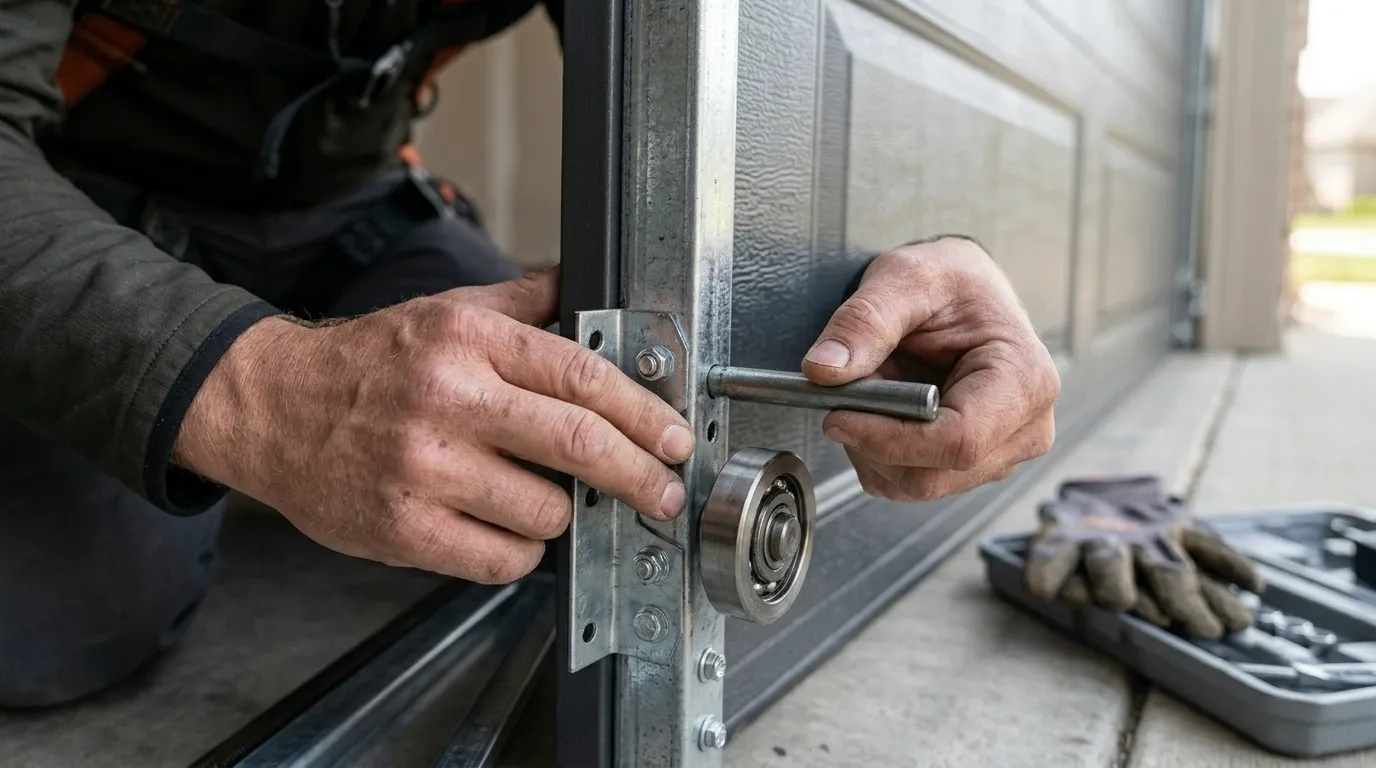
For a Laurel call, the fix usually starts with the spring and track together, since those two components were installed as a pair and wear as a pair. We check the torsion or extension spring against the door's actual weight - panel material changed over the decades and a spring sized for an older door won't balance a newer replacement panel correctly. Cables and rollers get inspected at the same time; if one failed from age, the other is close behind.
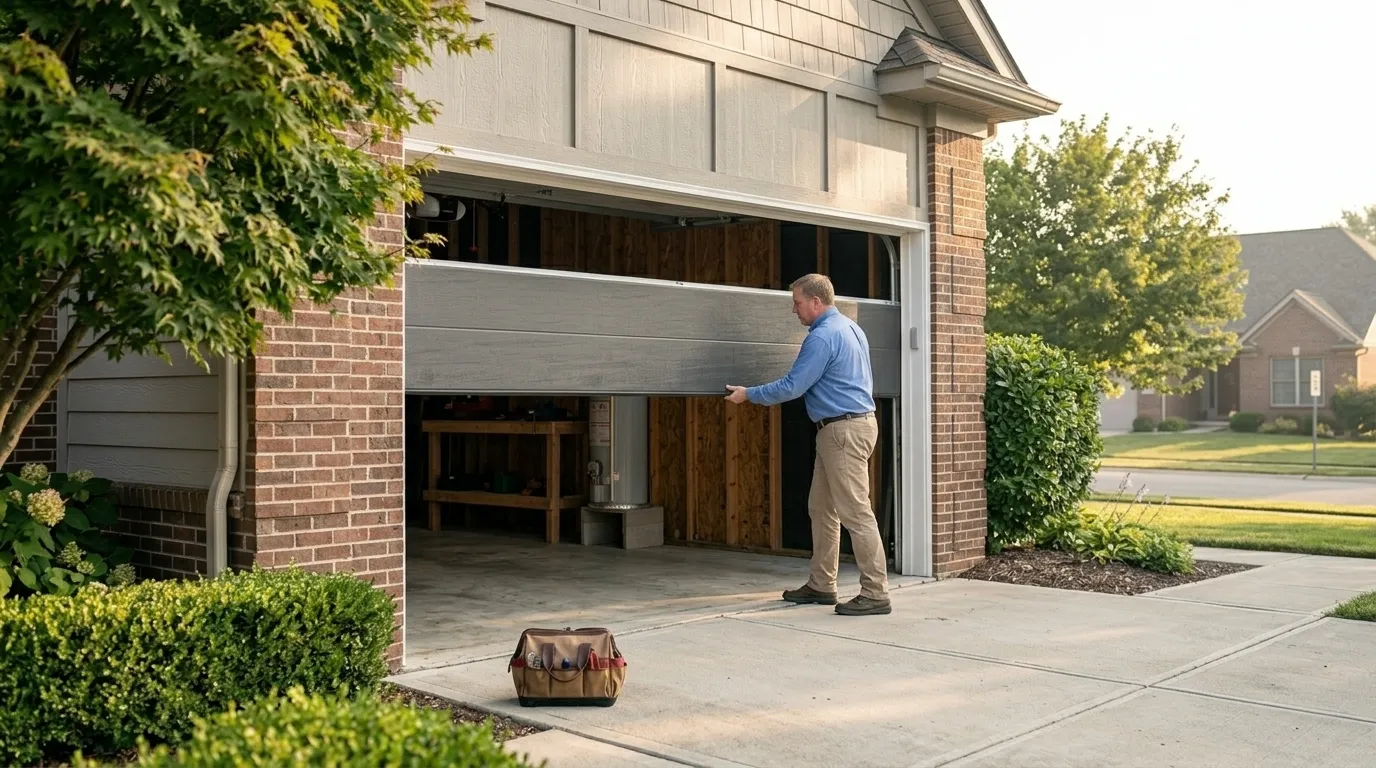
We drive the four miles from our Venice shop with a stocked truck rather than run back for parts, so most torsion spring, cable, and roller jobs on 1980s-era Laurel doors close in one visit. Openers are a separate call if the unit itself needs replacing rather than adjusting - we'll tell you which one you're facing before we start, not after.
The DIY Question
A torsion spring under load can put someone in the hospital, and that doesn't change because the house is newer or the neighborhood is nicer. If your door won't open, don't cut the spring yourself, and don't loosen the winding cones. That part of the job is ours every time.
What's fair to handle yourself: lubricating rollers and hinges, tightening loose bolts on the track, and testing the photo-eye sensors if the door reverses before it closes. None of that requires tools we'd charge you for.
One honest limitation - if your opener is a discontinued model from the early 1990s and the logic board is dead, we may not be able to source an exact replacement part. At that point the repair is a new opener, and we'll say so instead of hunting for a part that doesn't exist anymore.
How it works
From “it’s stuck” to “it’s fixed”
01
Tell us what’s wrong
Describe the symptom - won’t open, loud bang, opener runs but the door won’t move.
02
On-site diagnosis
A technician tests the door under power and by hand and finds what actually failed.
03
Clear, up-front plan
You get the fix that’s needed and what drives the cost - before any work starts.
04
Repaired & tested
The repair is done, the door is set true and tested, and the work area left clean.
Serving Venice, FL - tell us what your door’s doing and we’ll take it from there.
Laurel sits about 4 miles from our shop in Venice, so we're on-site the same day for most calls without the truck sitting empty on parts we didn't bring.
Are Laurel garage doors different from ones in older parts of the service area?
Generally yes. Laurel's median build year is 1983, about four years newer than the 1979 median across the rest of the territory, which means more standard steel sectional doors and fewer of the older one-piece doors on side-mount torsion bars found in the earliest neighborhoods we cover.
Does a higher household income change what repair you'd recommend?
It changes the math, not the diagnosis. Laurel's median household income of $89,282 is well above the area-wide $77,359, so replacement is often the more practical option here when a door has multiple problems at once, rather than stacking repairs on an aging door.
Ready to get your garage door sorted?
Tell us what it’s doing and where you are in Venice - we’ll take it from there.