What That Sound Coming From Your Garage Door Actually Means
A grinding, popping, or slapping garage door in Venice usually traces back to 1960s-90s hardware and mild-climate wear. Here's what each sound actually means.
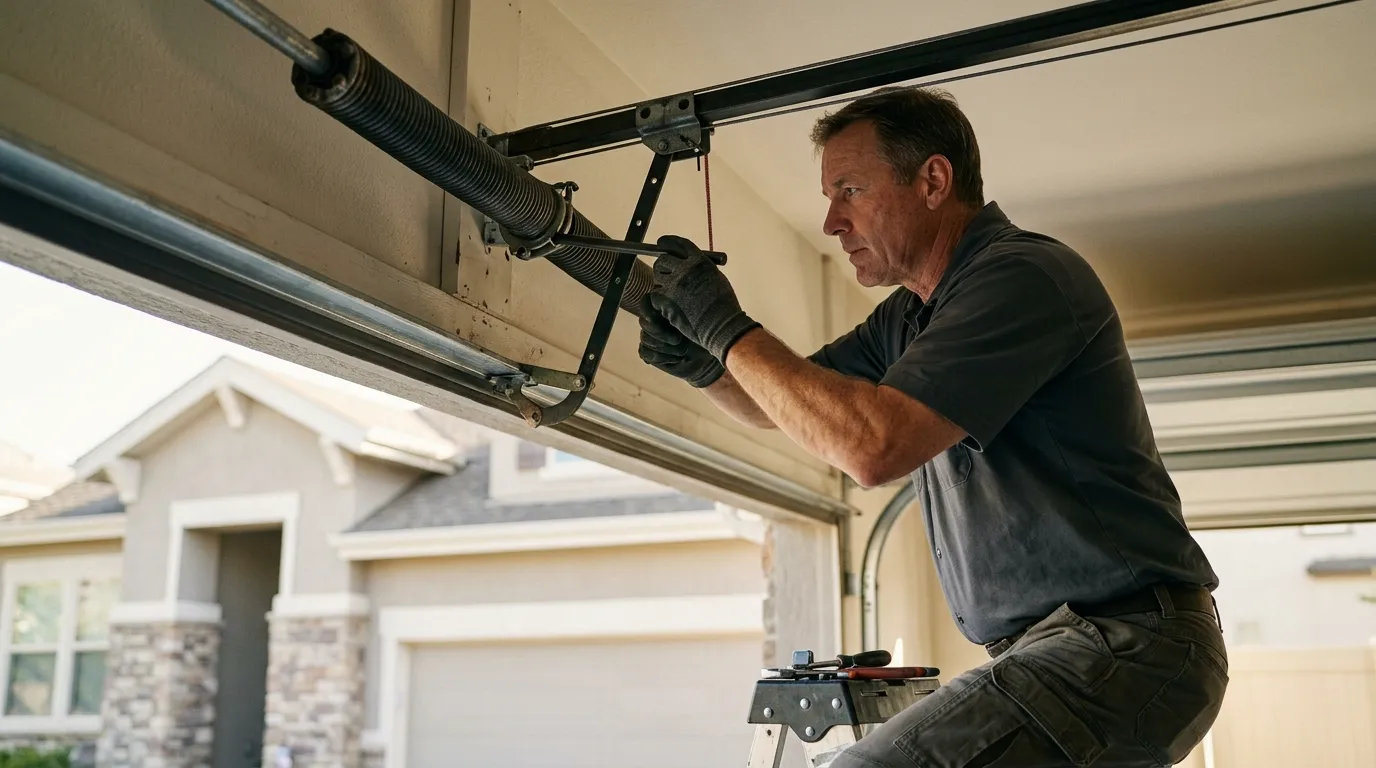
A door that squeals on the way up is usually just dry rollers, and you can put off that call. A door that bangs once, hard, on the way down and then sits crooked is a different animal - that's a cable off its drum or a spring that let go, and it's not a weekend project. If the door is heavier on one side when you lift it by hand with the opener disconnected, stop. That's a spring problem, and on the torsion-spring setups common in houses built here from the mid-60s through the 90s, an unwinding spring under tension can do real damage to a hand or a face. Grinding metal-on-metal from the tracks, especially paired with the door binding partway up, means a roller has worn through or a track has bent out of alignment. That's worth a call before it gets worse, not after the door comes off the track entirely. A soft rattle in the panels on a windy afternoon usually isn't urgent. A sharp pop followed by the door refusing to move at all - that's urgent, and it's usually the spring.
The Situation
Most of the housing across this service area - the 22 communities from Nokomis to Desoto Acres - went up between 1964 and 1999, with the bulk of it dating to the 1960s and 70s. That means a lot of original or first-replacement garage door hardware that was engineered for a shorter service life than people expect. Torsion springs, extension springs, and the steel tracks bolted to that era's framing have been cycling for decades in some of these houses, and the wear shows up as noise well before it shows up as failure. With 37,668 owner-occupied houses across roughly 61,549 households in the area, a good share of those doors are original equipment or one generation removed from it. The sounds aren't random. A door built in 1975 and a door built in 1995 fail differently, and the noise each one makes on the way there is different too - which is why 'my door is loud' isn't specific enough to diagnose over the phone.
What Local Conditions Do
Venice sits in a mild temperate band - no hard freeze-thaw cycle to crack hardware, but also no dry season that lets lubricant and metal sit undisturbed. Humidity here doesn't spike and drop the way it does inland; it stays present, and that steady moisture works into unsealed roller bearings and spring coils slowly rather than all at once. The result is corrosion that shows up as noise long before it shows up as visible rust - a fine grinding or a rhythmic tick as a pitted roller turns in its track. Salt-tinged air moving off the coast doesn't help stainless components stay stainless. None of this is dramatic weather damage; it's cumulative wear that a drier, colder climate wouldn't produce at the same pace. A door here that's twenty years old has usually seen more corrosion-driven wear than the same door twenty years old somewhere with real winters - even though it's never been through a storm worth mentioning.
Where People Go Wrong
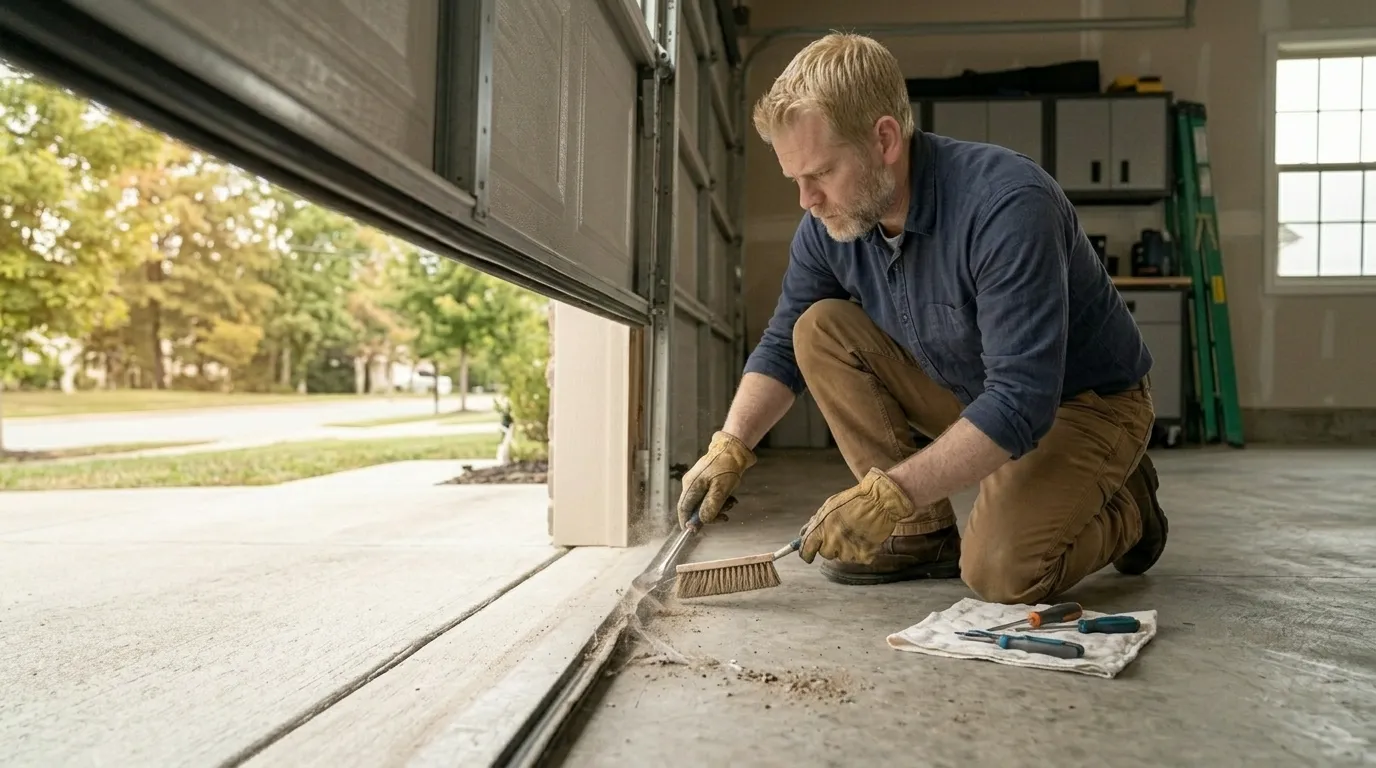
The most common mistake is spraying WD-40 on a noisy track and calling it fixed. WD-40 is a solvent, not a lubricant - it strips old grease off rollers and hinges, and a week later the noise comes back louder. A proper lithium or silicone-based grease on the rollers and hinge points does the job; the track itself shouldn't be greased at all, just kept clean. The second mistake is ignoring a single loud bang because the door still opens. On a door original to a 1970s house, that bang is very often one strand of a multi-strand cable starting to fray, and it won't announce itself twice before it fails completely. The third mistake, and the costliest, is replacing a spring without replacing its match. Springs are sold and rated in pairs for a reason - one worn spring and one new spring under the same door age at different rates and put uneven strain on the opener. We don't push full replacement on a door that just needs new rollers and a proper lubrication schedule; sometimes the noisy door is the cheap fix, and it's worth saying so before anyone assumes otherwise.
How it works
From “it’s stuck” to “it’s fixed”
01
Tell us what’s wrong
Describe the symptom - won’t open, loud bang, opener runs but the door won’t move.
02
On-site diagnosis
A technician tests the door under power and by hand and finds what actually failed.
03
Clear, up-front plan
You get the fix that’s needed and what drives the cost - before any work starts.
04
Repaired & tested
The repair is done, the door is set true and tested, and the work area left clean.
Serving Venice, FL - tell us what your door’s doing and we’ll take it from there.
My garage door in Venice makes a loud pop and won't open. What is that?
That's almost certainly a broken torsion or extension spring. The pop is the spring snapping under tension. Don't try to force the door open by hand or with the opener - with the spring gone, the full weight of the door is on whatever's left holding it, and that's not safe to test yourself.
Why does my garage door squeal even though it's not that old?
In this climate, steady coastal humidity gets into roller bearings and hinge pins faster than in drier regions, even on doors installed within the last decade. Squealing is usually dry metal-on-metal contact at the rollers or hinges - a lubrication issue more than an age issue, at least at first.
Is it normal for an original 1970s garage door to still be running?
It happens, but it's borrowed time. Housing in this area mostly dates from the 1960s through the 90s, and doors from the earlier end of that range are well past the service life the hardware was built for. Running quiet doesn't mean the springs and cables have the same margin they did new.
Ready to get your garage door sorted?
Tell us what it’s doing and where you are in Venice - we’ll take it from there.