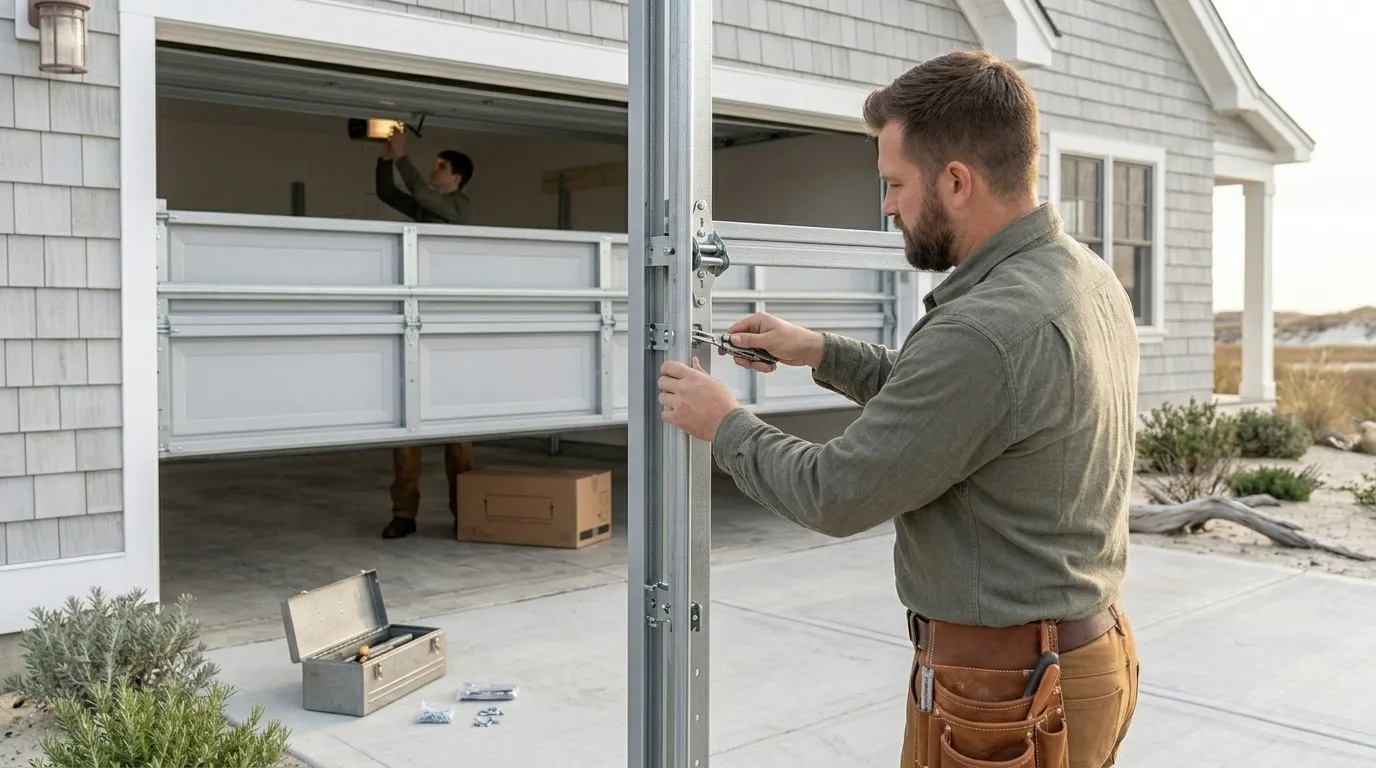
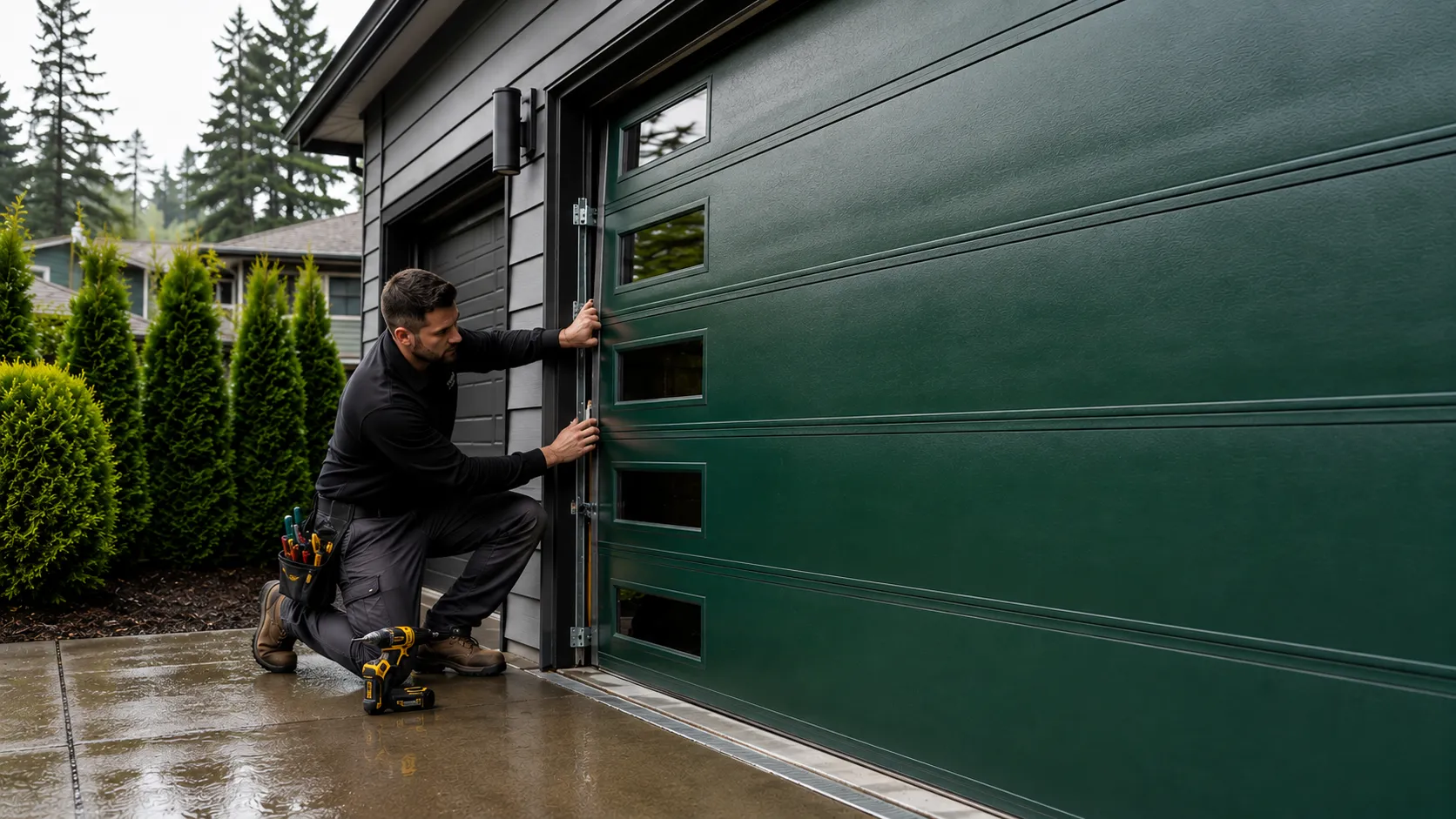
A look at what a garage door service call actually checks in Venice, FL, where most houses date to 1964-1999 and doors run on original 1970s-era hardware.
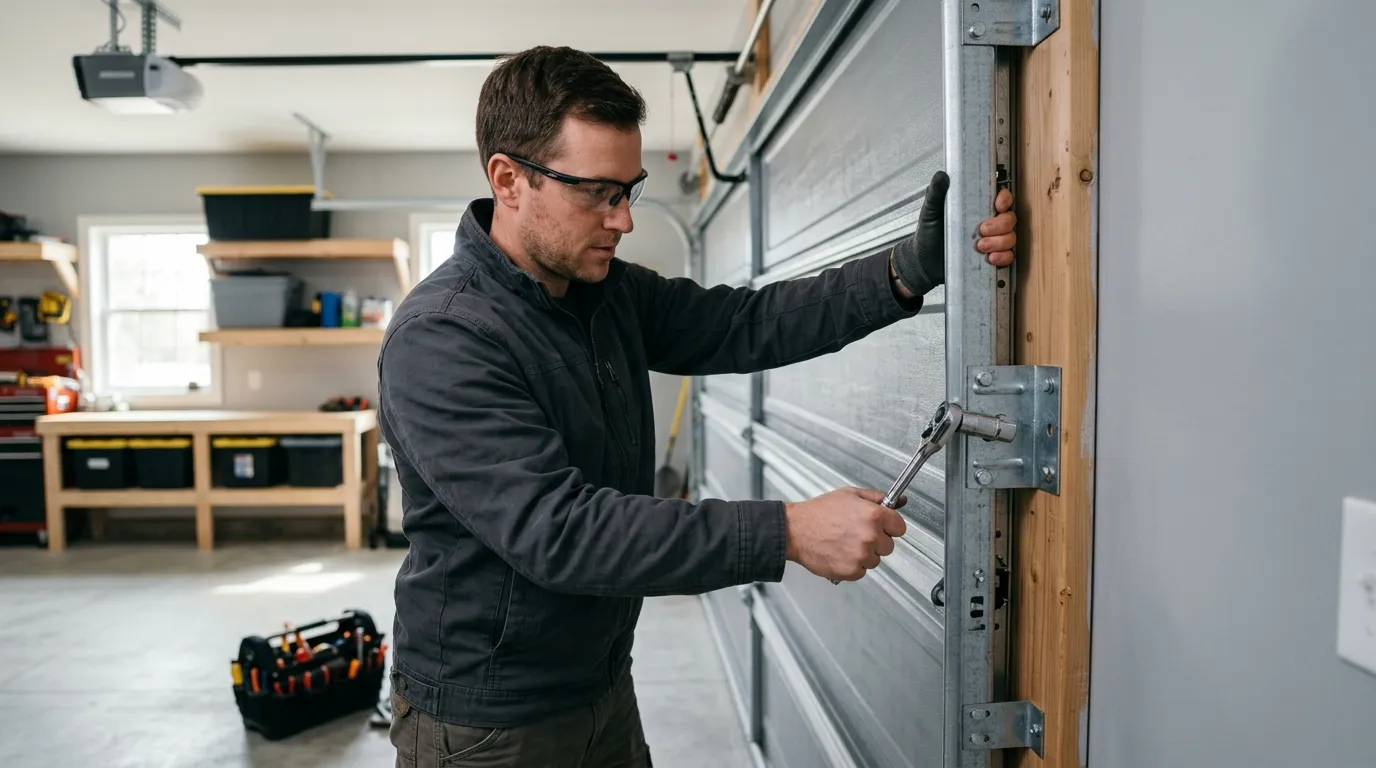
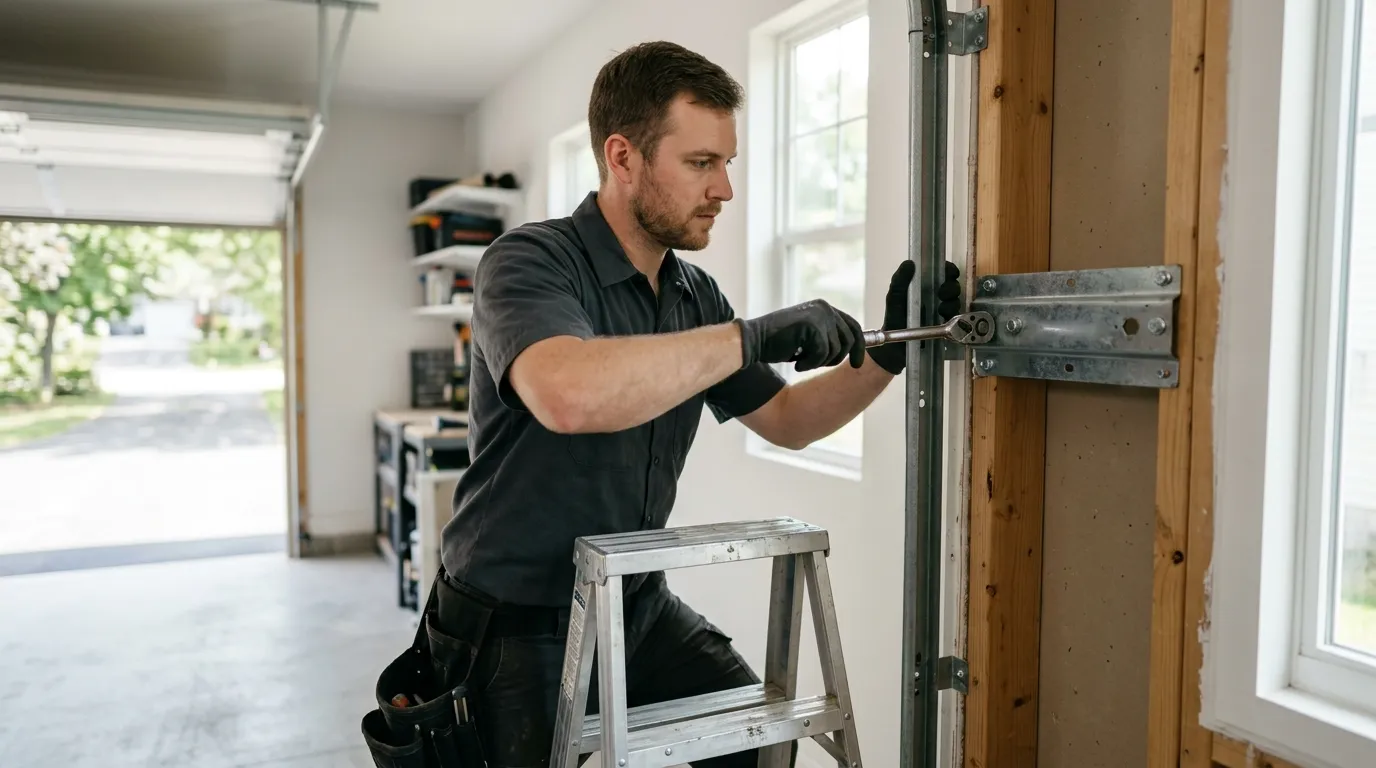
You don't need a truck out here for every squeak. Call when the door won't open or close all the way, when a spring has snapped and the door is dead weight, when the opener runs but the door doesn't move, or when a panel is bent enough to bind the track. If the door still moves smoothly and just makes noise, that's usually a lube-and-adjust job, not an emergency. Given that most houses in this service area went up between 1964 and 1999, with the median build year around 1979, a lot of the doors we see are original or one replacement removed from original. That means the hardware underneath the door skin is often older than the door itself. A call is worth making once you notice the door working harder than it used to, hesitating partway, or reversing on its own. Waiting past that point usually turns a $150 adjustment into a spring or cable replacement.
The Situation
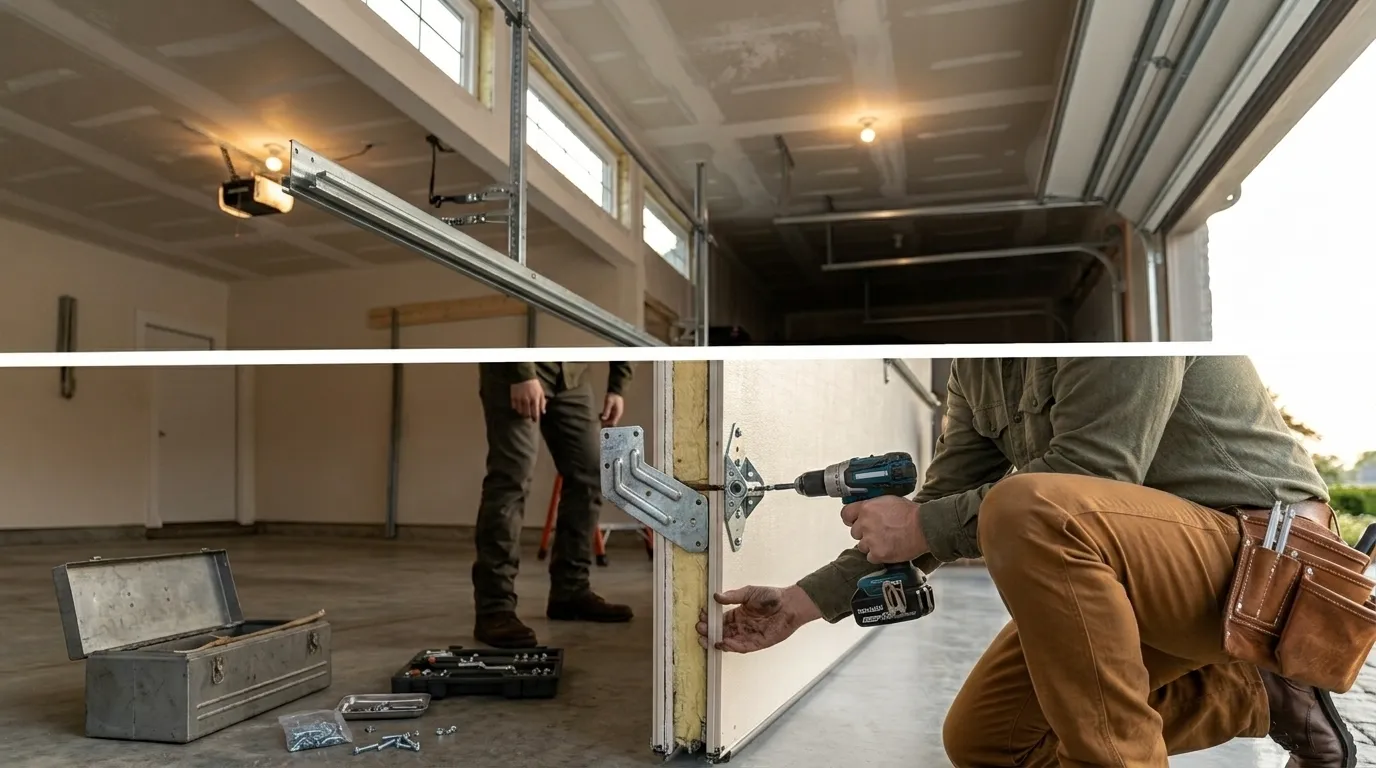
Across the 22 named areas we cover, from Nokomis a mile up the road to Desoto Acres and Desoto Lakes out past 19 miles, the housing stock skews the same way: mostly 1960s and 70s construction, with pockets built out through the 90s. That consistency matters for a service call, because it means the tracks, torsion springs, and rollers we find in Nokomis or Venice Gardens are frequently the same gauge and mount style we find here in Venice proper. A tech who knows this stock doesn't have to guess twice about what's behind the wall. The flip side is that a lot of these doors have had one opener swapped in over the decades without anyone touching the springs or drums, so the parts doing the actual lifting are often the oldest thing in the garage. A real service call checks the whole chain - track alignment, spring balance, cable wear, opener force settings - not just whichever part is making noise that day.
What Local Conditions Do
Venice sits in a mild temperate band, not the extreme heat-and-freeze cycle that chews through hardware up north. That's good news for steel components, but it doesn't mean nothing happens. Consistent humidity and salt-tinged air this close to the Gulf side of the county still work on unsealed bearings, spring coils, and exposed fasteners over the decades, especially on doors original to a 1970s build. A service call in this climate spends real time on corrosion at the hinges and bottom bracket, not on cold-weather brittleness in the springs, which is more of a northern problem. We also check weatherstripping and the bottom seal more than we'd check for ice damage - mild winters mean the seal rarely gets tested until a heavy summer rain, and that's when owners find out it failed months earlier. None of this is dramatic, which is exactly why it gets missed: nothing forces the issue until the door won't lift.
Where People Go Wrong
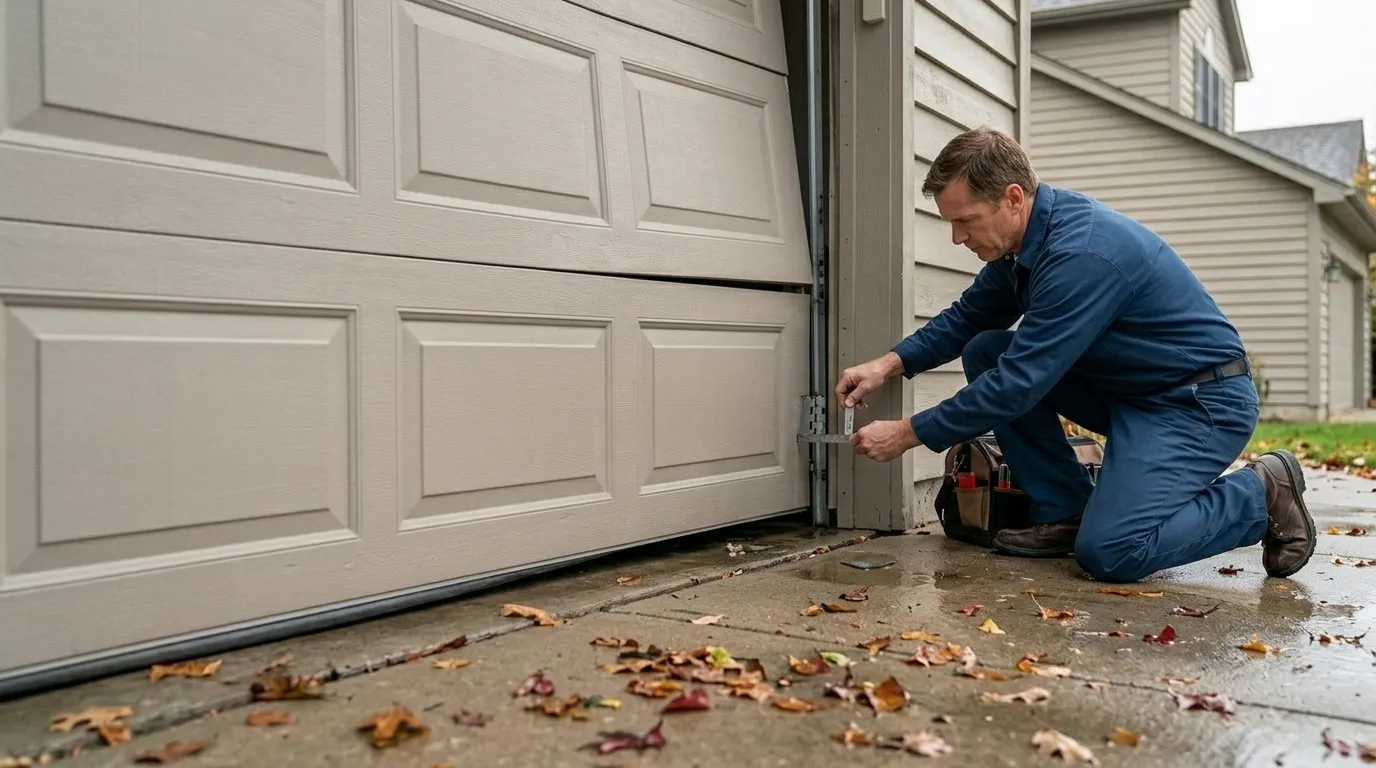
The most common mistake we see is treating the opener as the whole system. Homeowners replace a struggling opener, the door lifts fine for a few months, and then a spring goes - because the opener was compensating for spring wear the whole time, not causing the problem. With median household income in the area at $77,359 and roughly 37,668 owner-occupied houses across the wider service area, a lot of owners can afford to fix things right the first time, but get steered toward the visible part instead of the load-bearing one. The other common error is ignoring track alignment on older 1960s-70s doors because the door still closes - a slightly bent track will close a door for years before it jumps off the roller entirely, usually with the car parked under it. One honest limit on our end: if a door's springs, drums, and track are all original to a 1970s build, we'll usually recommend replacing the full lift system together rather than patching one part, because mixing new cable on an old drum is a callback waiting to happen.
How it works
From “it’s stuck” to “it’s fixed”
01
Tell us what’s wrong
Describe the symptom - won’t open, loud bang, opener runs but the door won’t move.
02
On-site diagnosis
A technician tests the door under power and by hand and finds what actually failed.
03
Clear, up-front plan
You get the fix that’s needed and what drives the cost - before any work starts.
04
Repaired & tested
The repair is done, the door is set true and tested, and the work area left clean.
Serving Venice, FL - tell us what your door’s doing and we’ll take it from there.
Yes, and a lot of what we see in this service area is exactly that - doors and hardware original to houses built between 1964 and 1999. We carry parts sized for that era's tracks and torsion setups, since that's the majority of what's still in garages here.
Does Venice's climate cause different garage door problems than up north?
Some, yes. The mild temperate band here means we're not fighting frozen springs or ice-jammed tracks, but the humid, salt-tinged air still corrodes hinges, bottom brackets, and unsealed bearings over time, especially on older doors.
Is a noisy door always a spring problem?
No. Noise is often just dry rollers or a loose hinge. A full check looks at track alignment, spring balance, and cable wear together, since on older hardware one worn part usually means the others aren't far behind.
Will you drive out to Nokomis or South Venice?
We cover Venice and the surrounding named areas, including Nokomis a mile out and South Venice at about five miles, along with the wider ring of communities further out.
Ready to get your garage door sorted?
Tell us what it’s doing and where you are in Venice - we’ll take it from there.