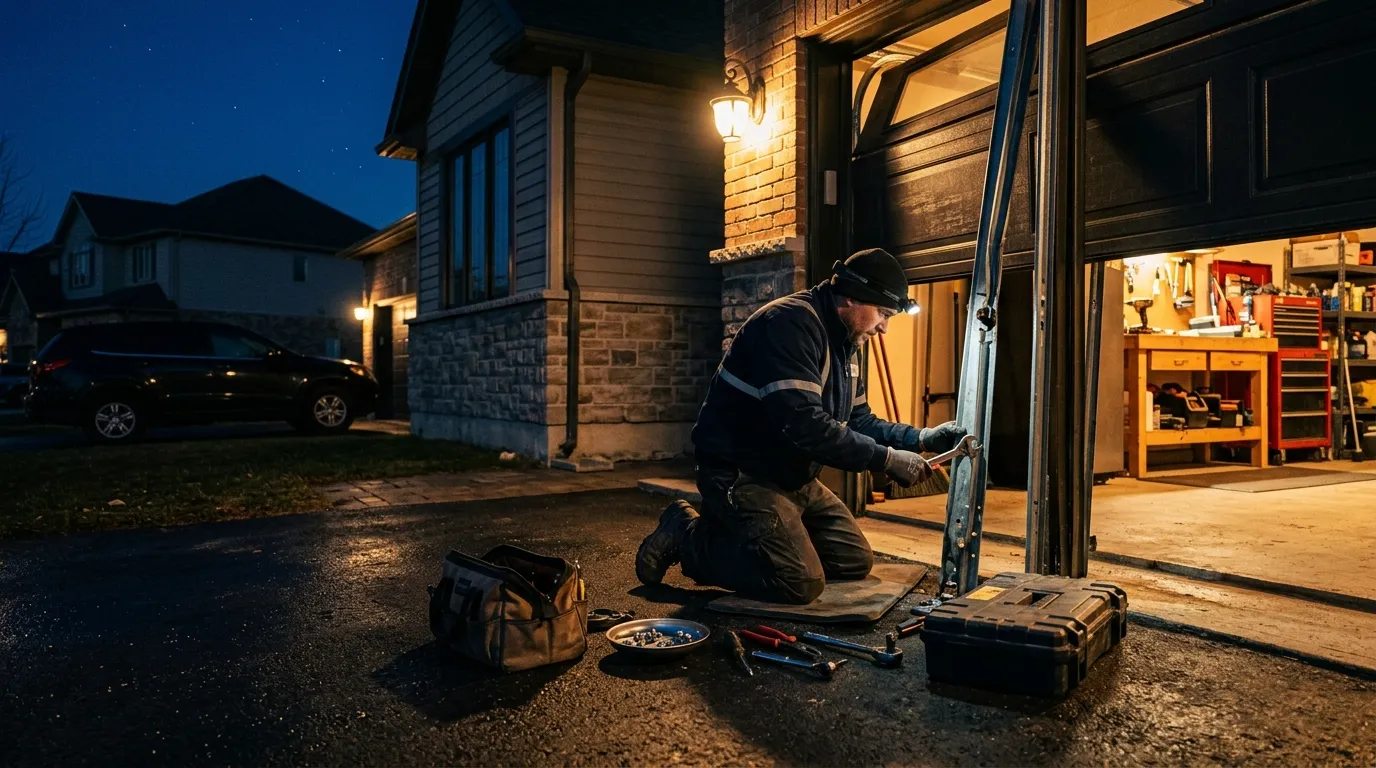
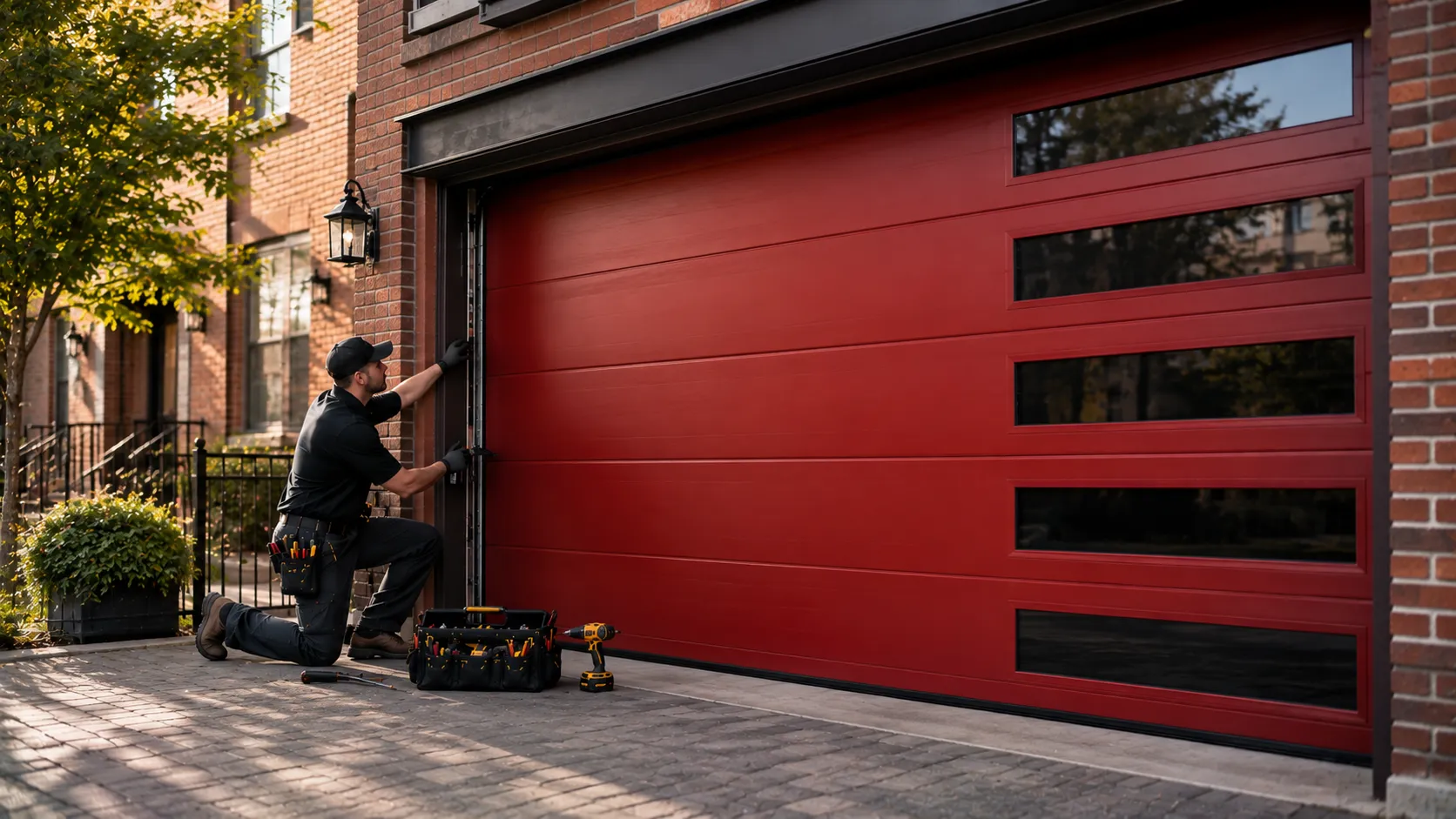
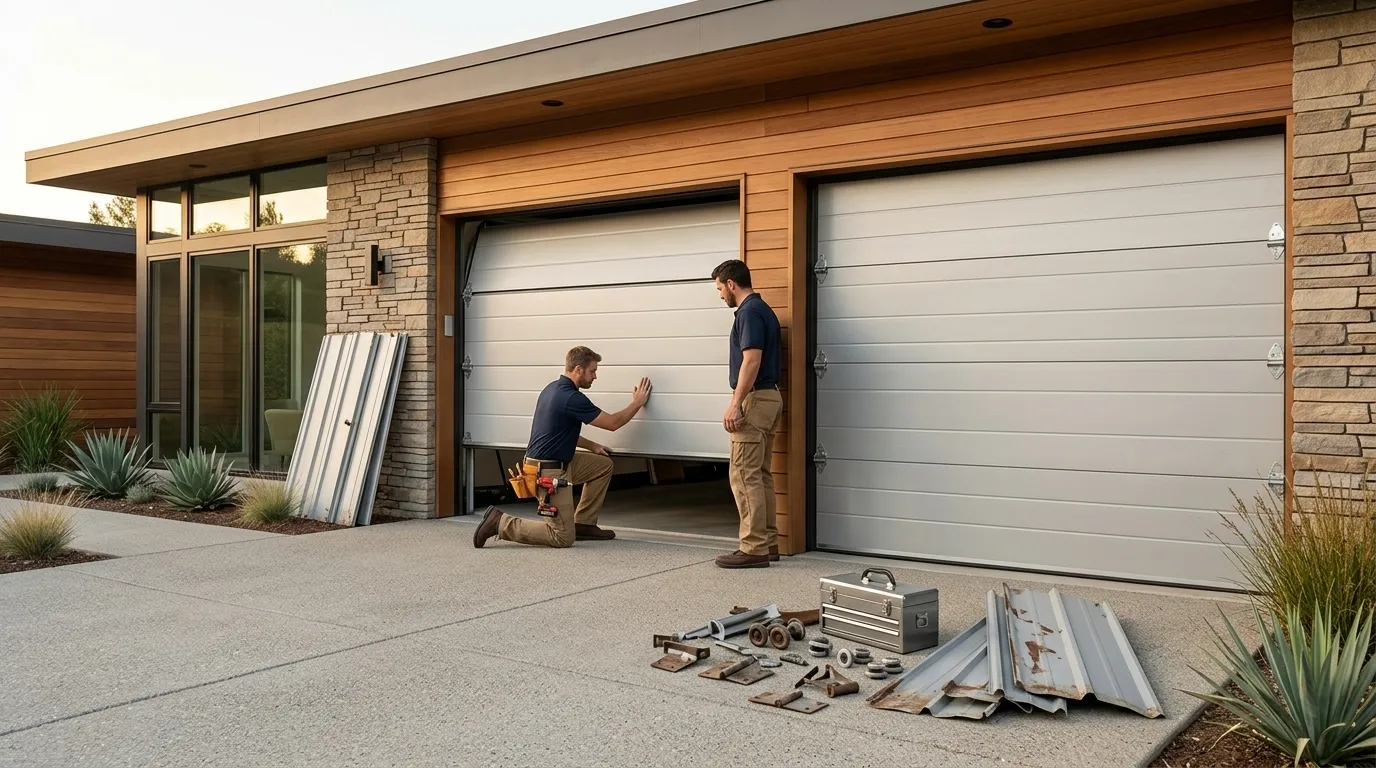
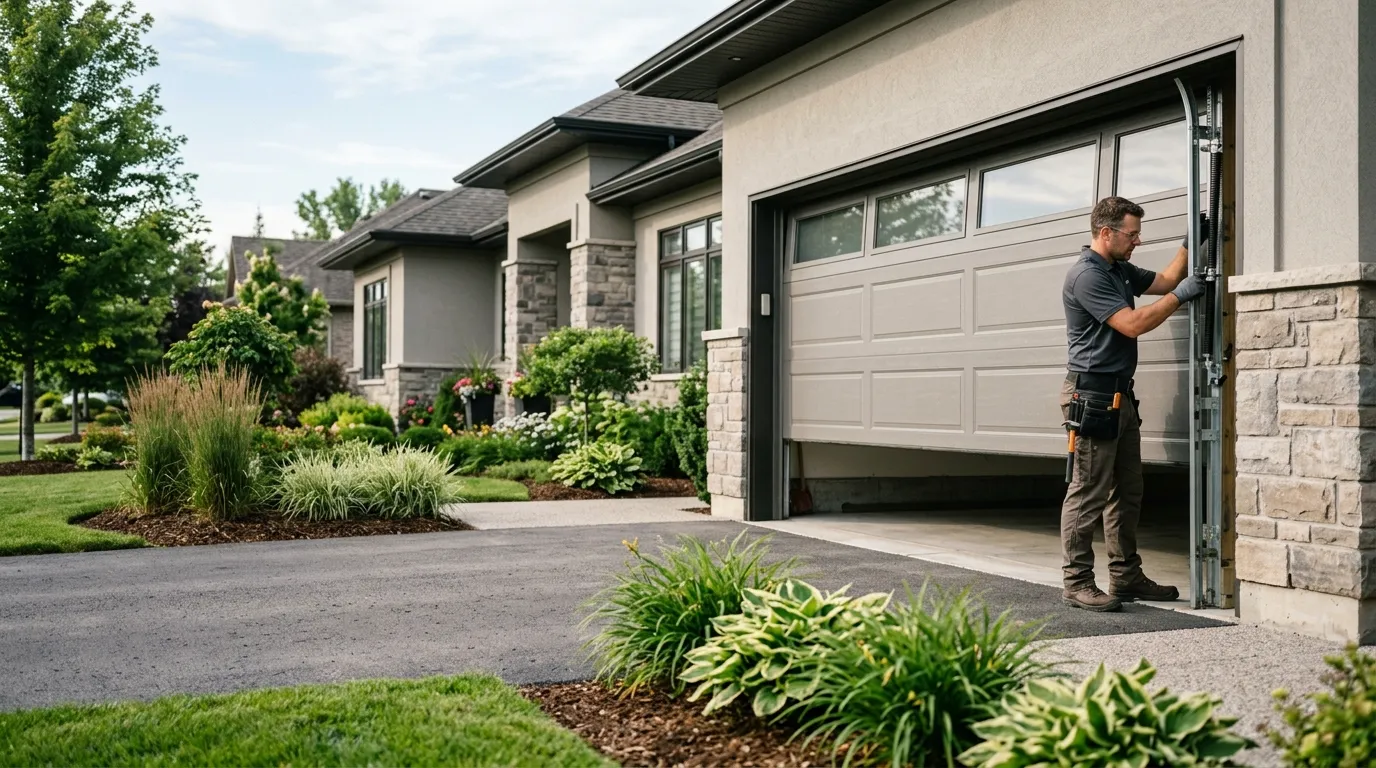
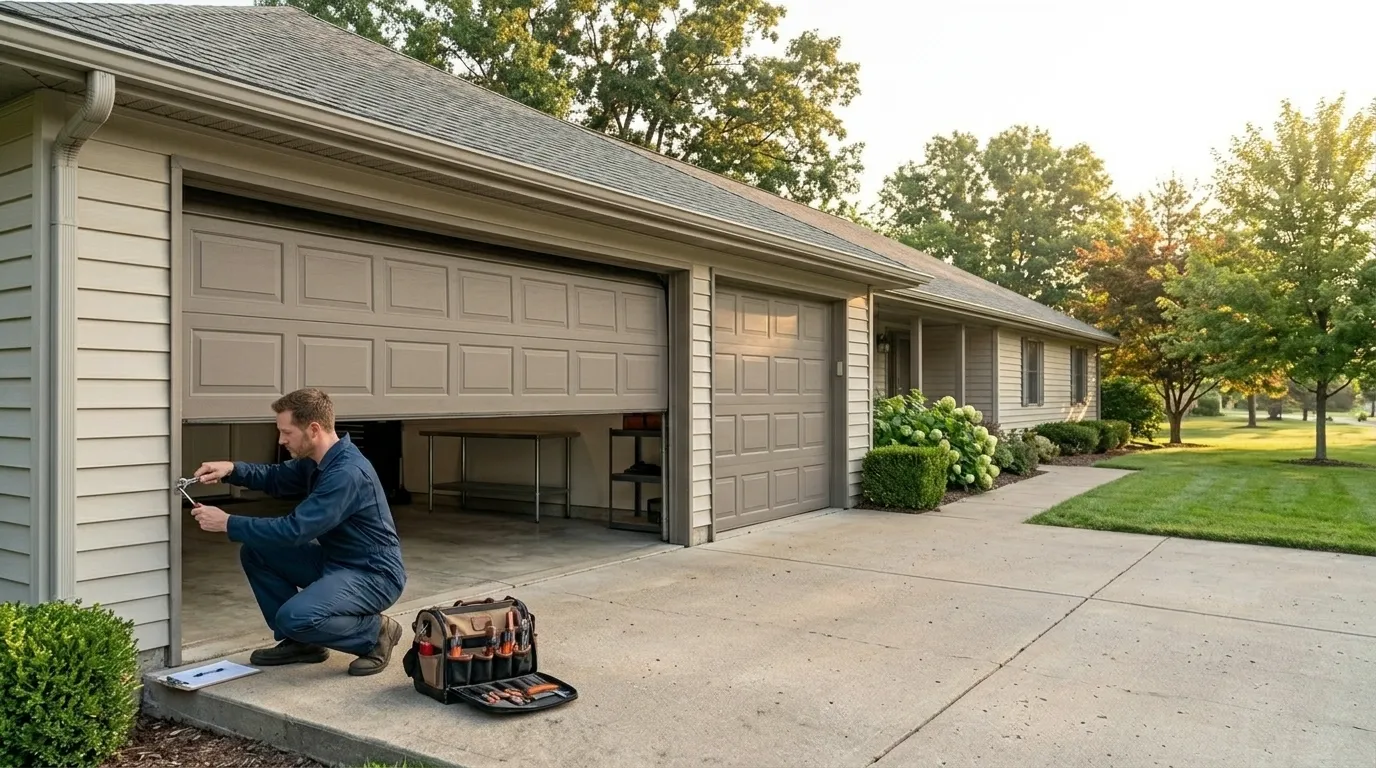
Venice Garage Door Pros installs steel garage doors on Venice, FL homes built mostly 1964-1999, matching openings and hardware to the era of the house.
We don't post a flat number here, because what you pay depends on what's actually at the opening - and in this area that varies more than you'd think. A single door on a house built close to the 1979 median is a different job than a double door on newer track. What drives the number: door width, whether you want insulated steel or a lighter uninsulated panel, and whether the existing jamb and track can stay or need to come out with the old door. On a lot of the 1960s-70s stock across this service area, the track and rollers are as old as the door itself, so the job isn't just hanging a new panel - it's replacing hardware that was never built to pair with a modern opener. That adds labor and parts you won't see quoted on a phone call. With 37,668 owner-occupied houses and a median household income of $77,359 across this area, most owners here are budgeting for this as a planned job, not an emergency, which is the right way to do it - get someone out to look at the opening before you commit to a number. We'll tell you straight if your existing frame is fine to reuse or if it's adding cost you didn't expect.
The Symptom
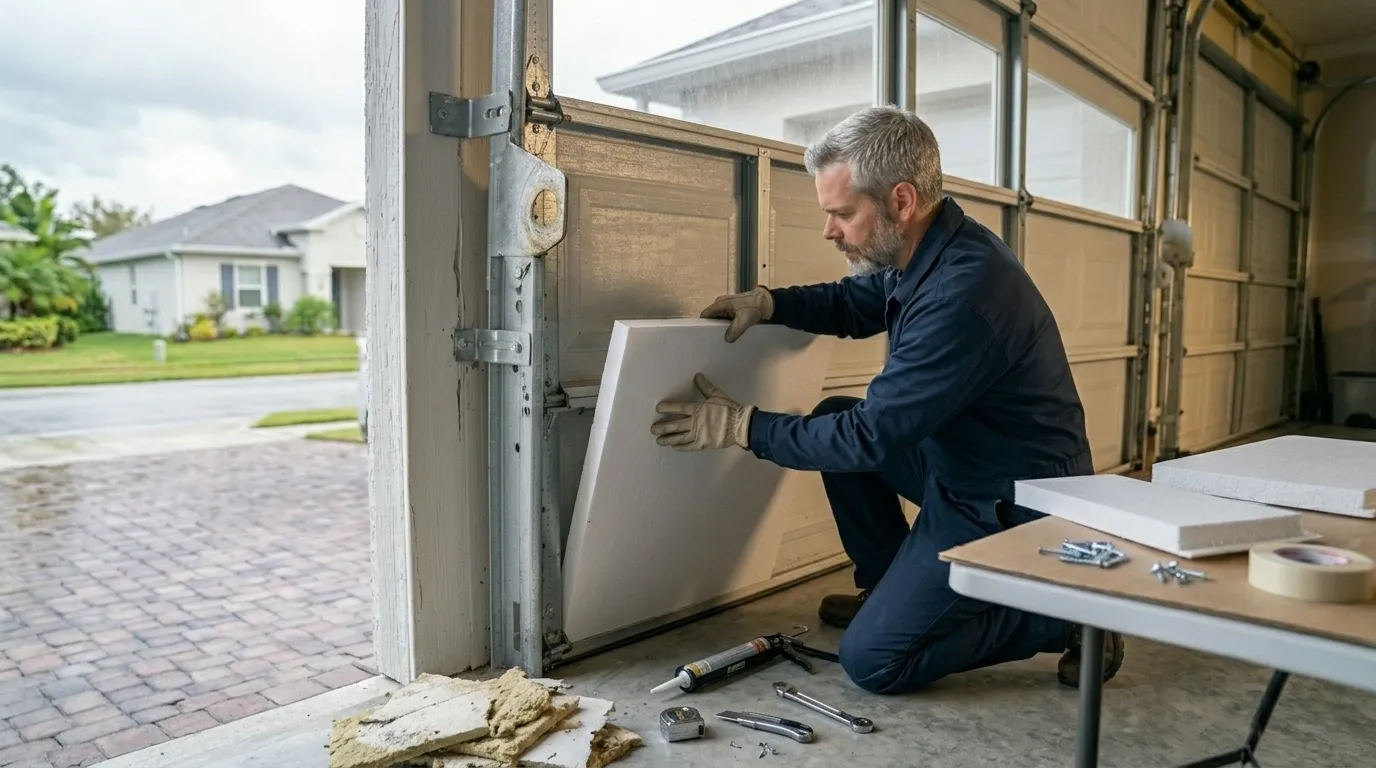
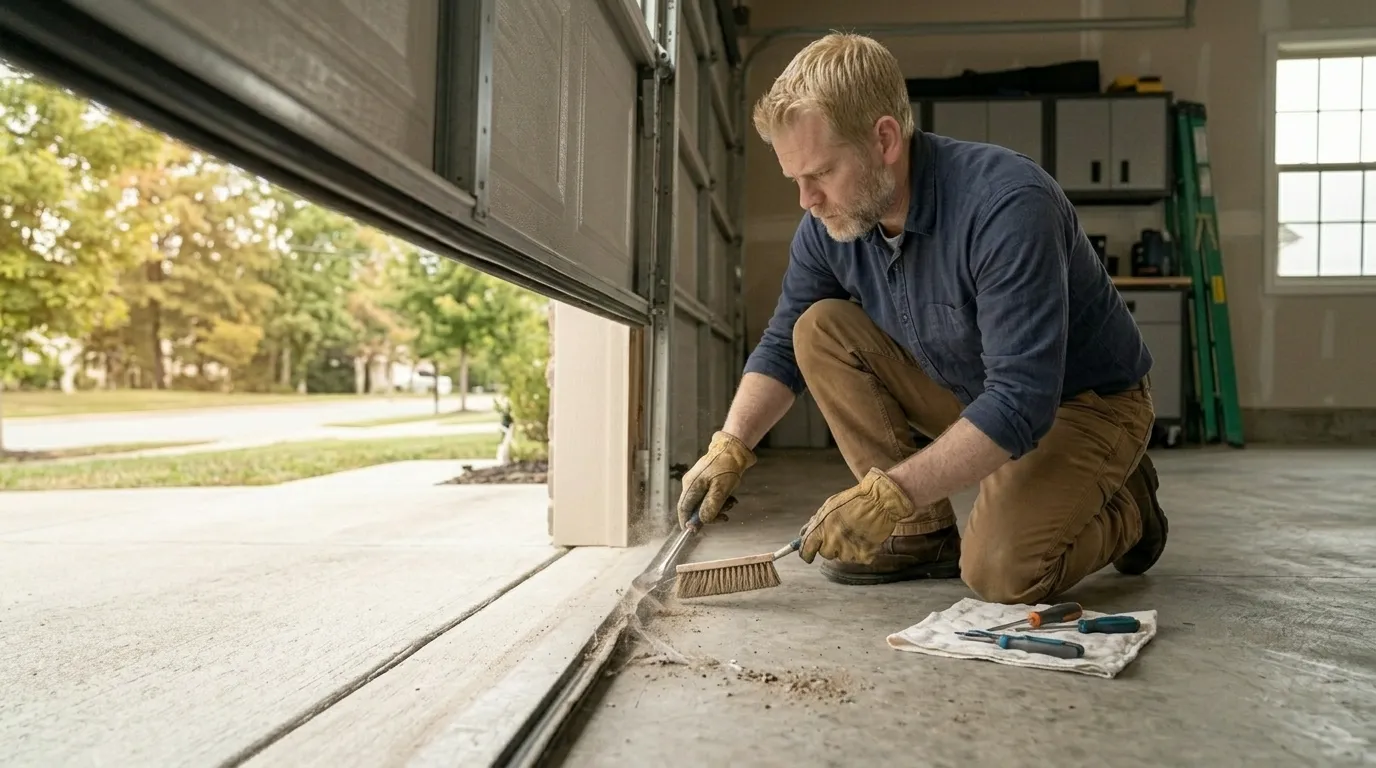
You don't usually decide to replace a garage door because it stopped working one morning. It's slower than that. The door still opens, but it's heavier to lift by hand than it used to be, or the opener strains and groans partway up. Panels on the bottom section show rust bubbling through the paint, especially near the weatherstrip where water sits. Foam backing that used to be solid now crumbles when you press on it from inside the garage. On older single-layer steel doors, you'll see the skin flex and boom when wind pushes on it - there's nothing behind it to stop the panel from oil-canning. Sometimes it's simpler: the door is the original one-piece slab or a narrow-rail sectional door that doesn't fit any opener kit sold today, so a repair means sourcing parts nobody stocks, not swapping in something off the shelf. None of these are emergencies on their own. They're the point where patching one more spring or roller stops making sense next to just putting in a door built for the house as it is now, not as it was when it went up.
What Causes It Around Here
Housing in this service area mostly went up between 1964 and 1999, with a lot of it clustered around 1979, and the same handful of door styles from that stretch show up house after house across the 22 named communities in this area. That matters because those original doors are steel sections with no insulation layer, hung on galvanized track that was never rated for forty-plus years of coastal air. The climate here sits in the mild temperate band - not extreme heat, not freeze cycles - but mild and humid is still humid, and humid air moving through an open garage day after day is what eats through galvanizing from the inside out and rots wood trim around the jamb long before the door itself gives up structurally. Across the 22 named areas we work in, from Nokomis a mile out to Desoto Acres nineteen miles north, the same 1960s-70s stock repeats, which is why the same failure shows up on so many streets at roughly the same age rather than being random.
What Is on the Truck
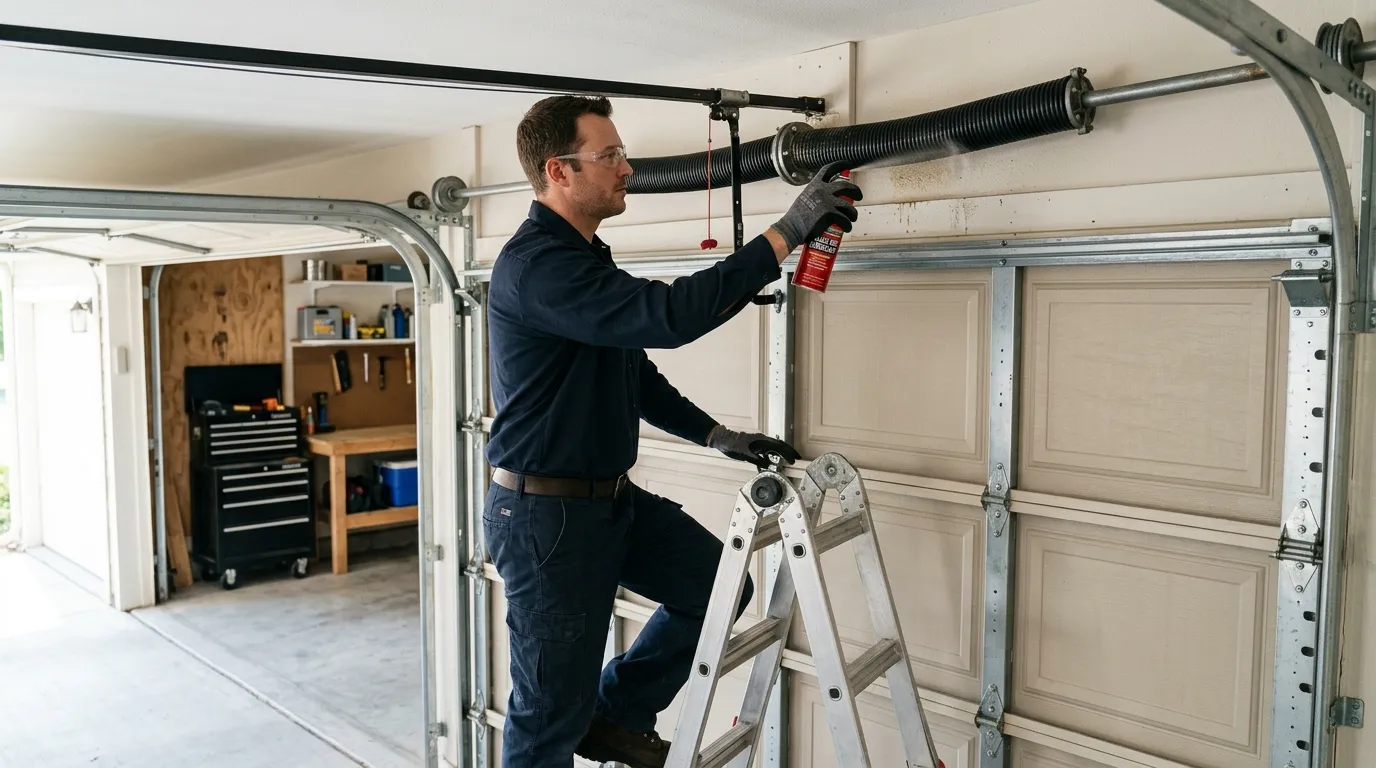
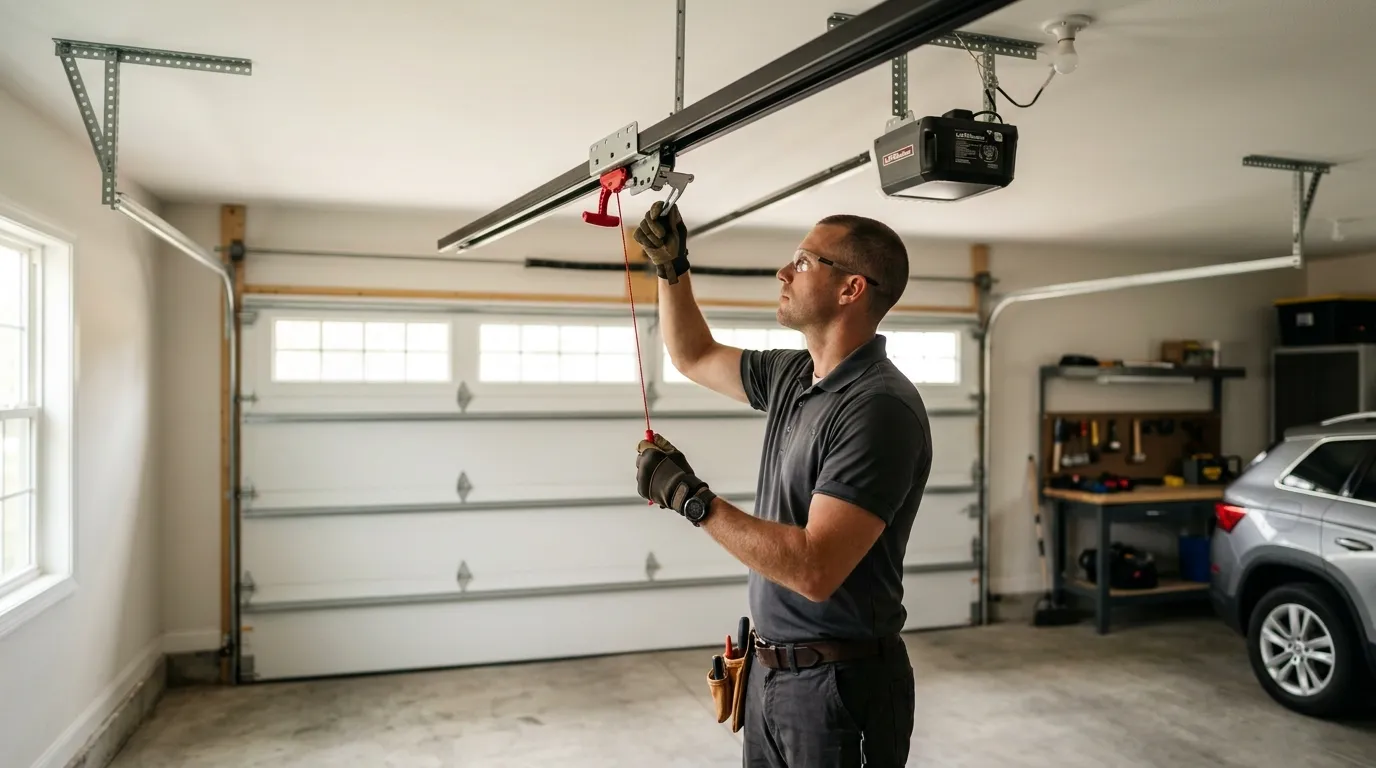
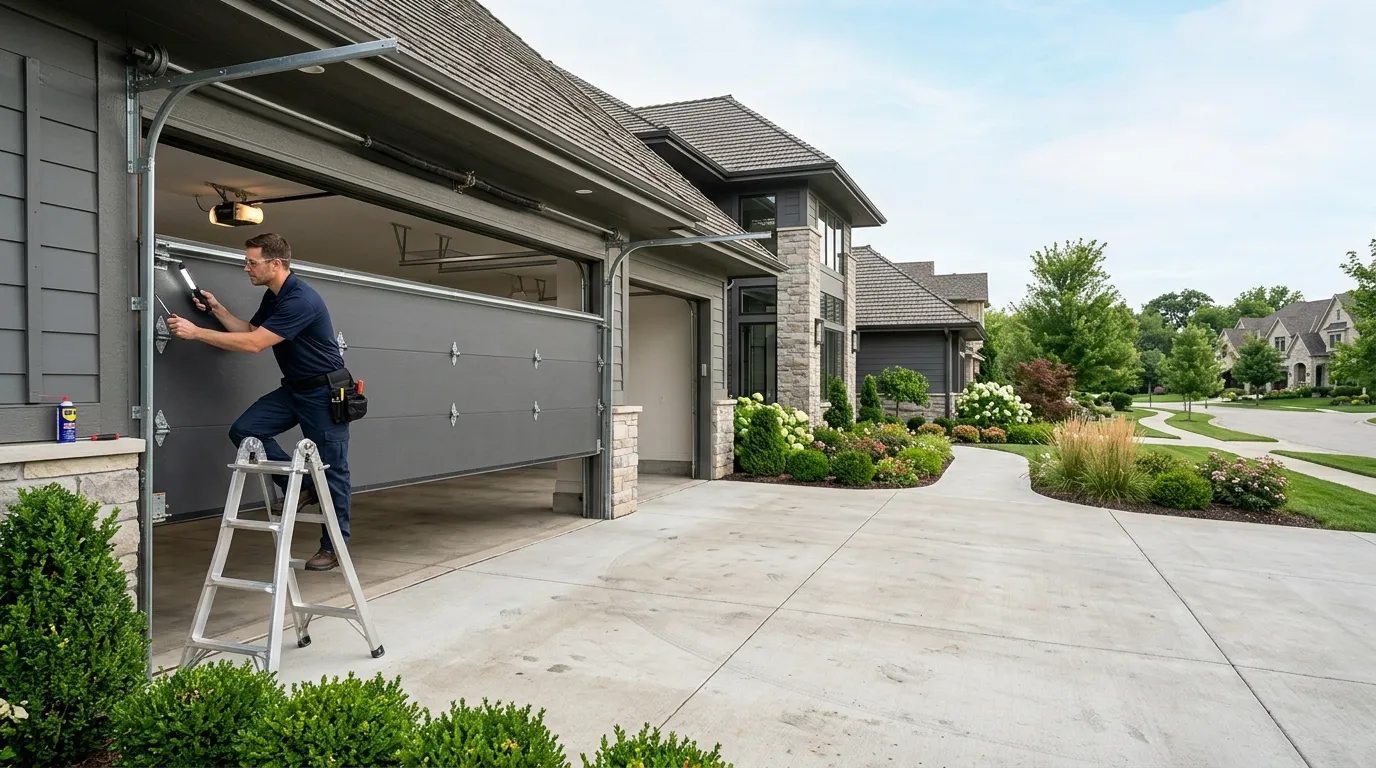
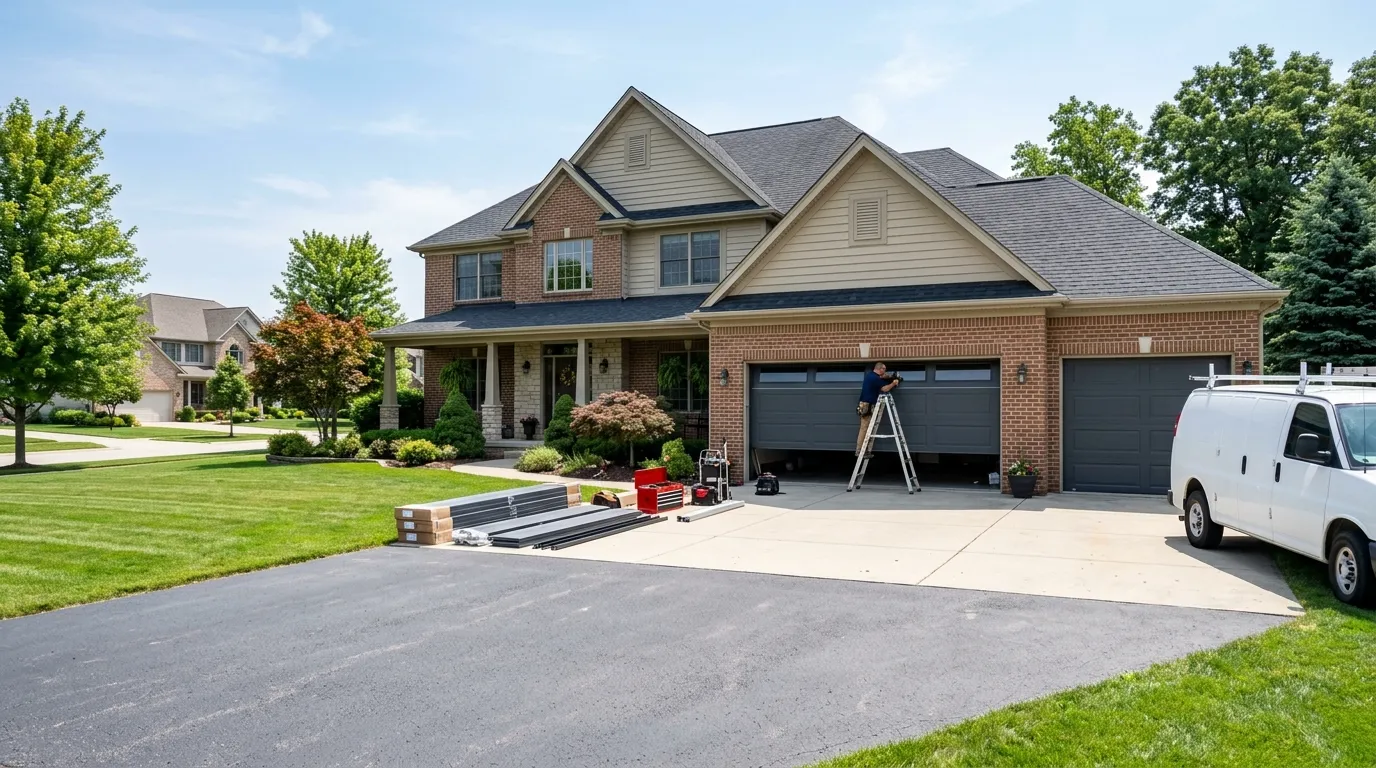
For an install job we carry steel sections in the standard widths that match openings built during this area's main building years, both insulated and plain-skin, so we're not special-ordering a width for a house that's the same as the one three doors down. Torsion springs get wound to the actual weight of the new door, not left at whatever the old spring was rated for - that's one of the more common mistakes on a reused-track job. Hardware is corrosion-resistant, since anything installed near this coastline sits in humid air even without direct salt exposure. Openers on the truck include current photo-eye safety sensors and a manual disconnect, standard on anything we hang now. One limitation worth saying plainly: if your opening is out of square or the header above it has settled, that's carpentry, not garage door work, and we'll tell you to get that looked at first rather than force a door into a frame that isn't square.
How it works
From “it’s stuck” to “it’s fixed”
01
Tell us what’s wrong
Describe the symptom - won’t open, loud bang, opener runs but the door won’t move.
02
On-site diagnosis
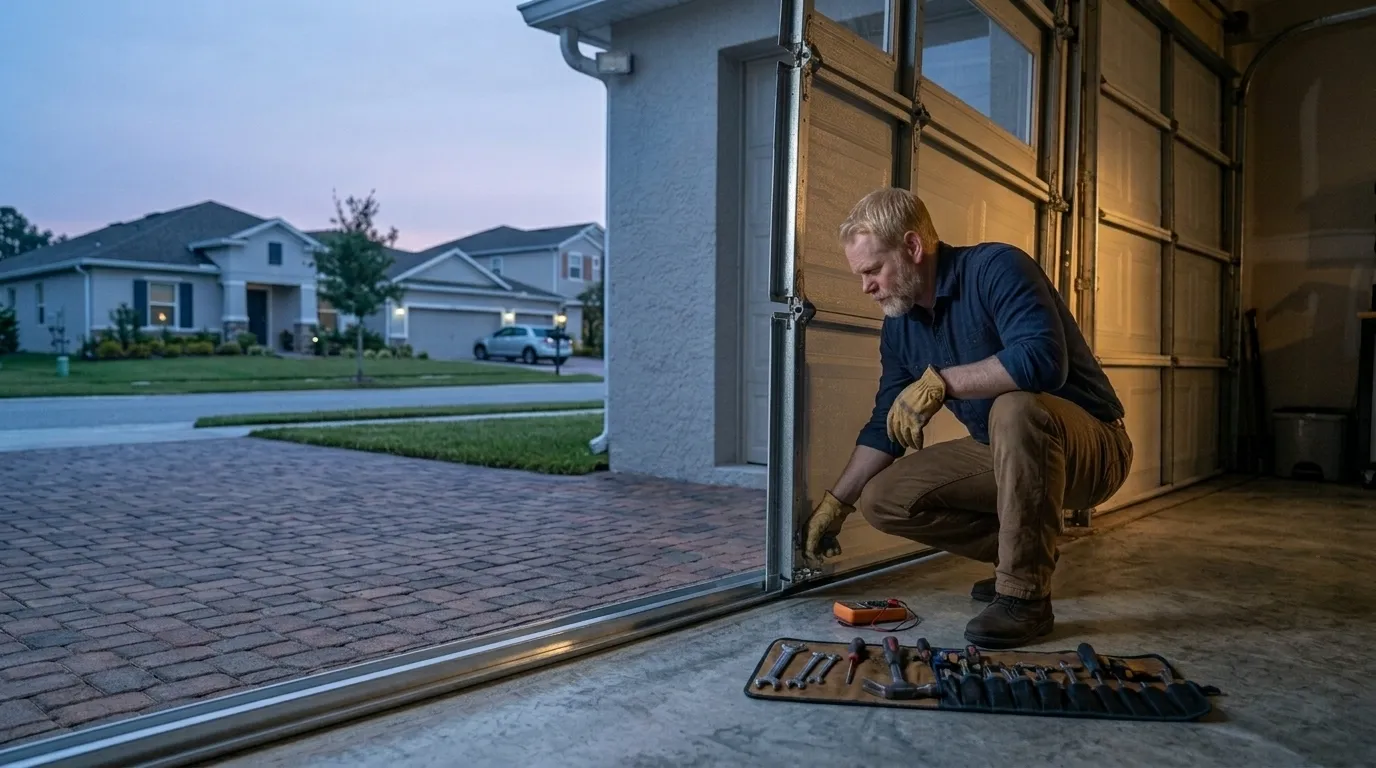
A technician tests the door under power and by hand and finds what actually failed.
03
Clear, up-front plan
You get the fix that’s needed and what drives the cost - before any work starts.
04
Repaired & tested
The repair is done, the door is set true and tested, and the work area left clean.
Serving Venice, FL - tell us what your door’s doing and we’ll take it from there.
How do I know if I need a new door instead of a repair on my current one?
If the door is an original single-layer steel panel from the 1960s-80s build era common in this area, and you're now looking at rusted bottom sections, crumbling foam, or track that doesn't match any opener kit sold today, repair usually just delays the same decision. A cracked panel or one bad spring on a newer door is worth fixing. A door that's outlived its hardware usually isn't.
Does the mild Venice climate mean I don't need to worry about insulation?
Mild temperatures mean you're not fighting freeze-thaw cracking, but humidity here still works on galvanized track and steel skins year-round. Insulated sections help more with noise and denting resistance than with heating or cooling bills in this climate band, so it's a preference call, not a code requirement, based on what FACTS we have.
Can you reuse my existing track and opener with a new door?
Sometimes. If the track is square, not rusted through, and rated for the new door's weight, we can reuse it. On a lot of the 1960s-70s stock in this area, though, the track is original to the house, and reusing worn track under a heavier new door usually isn't worth the risk - we'll tell you honestly which case yours is.
Ready to get your garage door sorted?
Tell us what it’s doing and where you are in Venice - we’ll take it from there.