Venice homes built 1964-1999 carry original hardware that reacts to the rare cold snaps our mild climate does bring. Here's what actually happens and when to call.
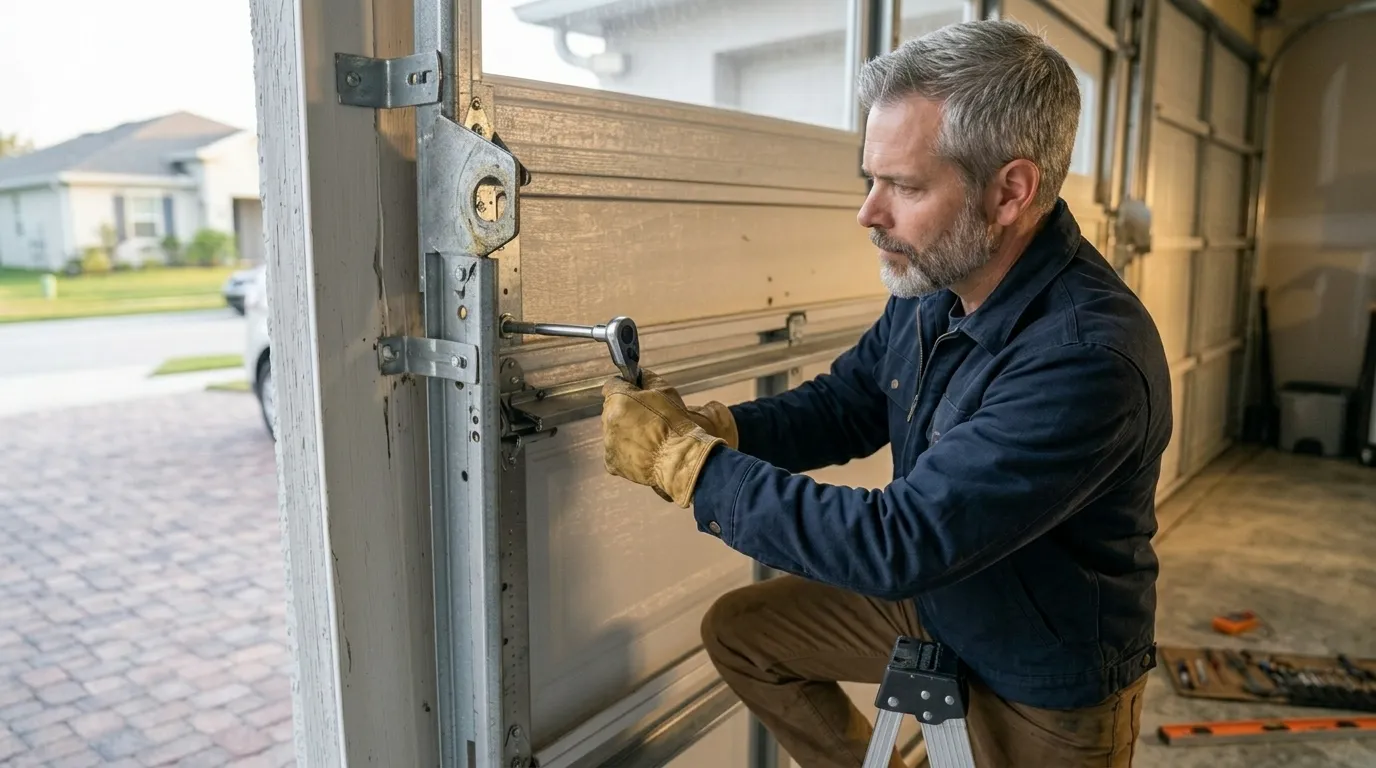
If your door won't budge and you hear a bang or a loud pop right before it locks up, that's a spring, not an opener problem. Call someone before you touch the release handle. A broken torsion spring under tension can whip loose hardware and it has hurt people who tried to force a manual open on their own. If the door is still moving but slower than usual, or the opener strains and reverses partway up, you've got a window to schedule a visit rather than an emergency call. Venice's mild temperate climate means we don't get the deep freezes that snap springs outright the way a Midwest winter does, but a rare cold front that drops overnight lows sharply can still be the final push on a spring that's already fatigued from decades of daily cycling in this area's older housing stock. If the spring itself looks intact but the door binds on one side only, that's often a track or roller issue, and it's worth a look before it turns into a spring problem too.
The Situation
Most of the service area's homes were built between 1964 and 1999, with the median year landing around 1979, and the bulk of that stock is concentrated in the 1960s and '70s across the 22 named communities we cover, from Nokomis a mile out to Desoto Acres nearly 19 miles north. A torsion spring on a door installed in 1979 is well past any reasonable service life even if it's never been swapped. Steel fatigues with use, and a spring that's flexed tens of thousands of times over 40-plus years is running on borrowed cycles regardless of weather. What a cold snap does is add one more variable on top of metal that's already near its limit. It's rarely the cold alone that breaks a spring here - it's the cold arriving on a spring that was going to fail within the next year or two anyway.
What Local Conditions Do
Venice sits in a mild temperate band, so we don't deal with the kind of sustained sub-freezing stretches that make steel brittle for weeks at a time. What we do get is the occasional sharp overnight drop, often after a warm humid stretch, and that swing matters more here than the actual number on the thermometer. Steel contracts slightly as it cools, and a spring that's already lost tension or developed a hairline stress point from age is more likely to give under that sudden contraction than one that's newer. Houses from the 1960s-70s wave of construction often still carry their original spring hardware sized to the door weight standards of that era, which weren't always matched well to later replacement doors if an owner upgraded to a heavier insulated panel at some point. That mismatch, plus age, plus a cold night, is the combination we actually see - not the cold by itself.
Where People Go Wrong
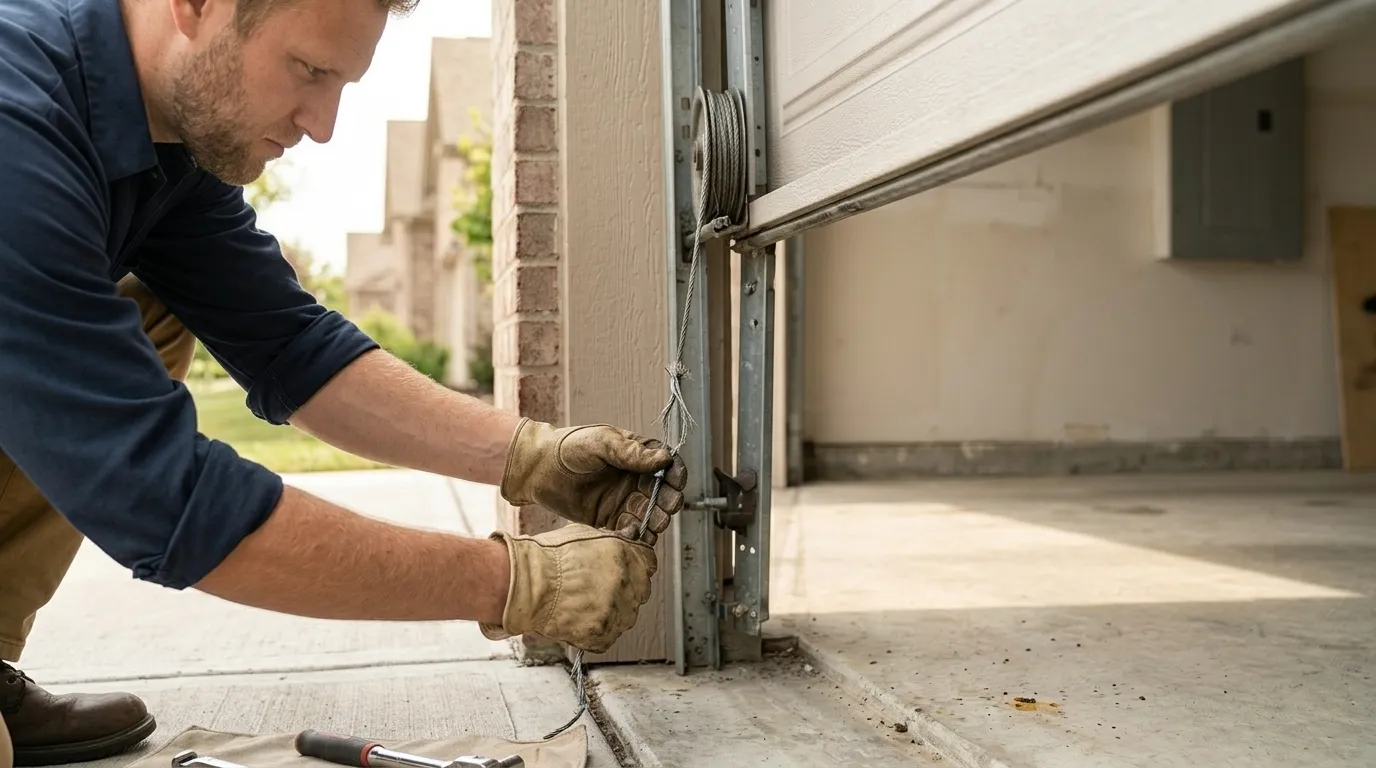
The most common mistake is treating a slow, noisy door as a lubrication problem for months before anyone looks at the spring. WD-40 on a dry roller buys you a week, not a fix. Another is assuming that because Venice doesn't get hard winters, spring failure isn't weather-related here at all - it is, just not in the way people expect from colder states. And on the repair side, we don't recommend re-tensioning an old torsion spring instead of replacing it; once a spring from a 1970s-era install has weakened, stretching it back to spec is a temporary patch that tends to fail again within a season. Our honest limitation: if your door and opener are both original to a house built in that 1964-1999 window, a spring swap alone sometimes just delays the next call - the drums, bearings, and cables from the same era are usually due too, and we'll tell you that up front rather than sell you a single part.
How it works
From “it’s stuck” to “it’s fixed”
01
Tell us what’s wrong
Describe the symptom - won’t open, loud bang, opener runs but the door won’t move.
02
On-site diagnosis
A technician tests the door under power and by hand and finds what actually failed.
03
Clear, up-front plan
You get the fix that’s needed and what drives the cost - before any work starts.
04
Repaired & tested
The repair is done, the door is set true and tested, and the work area left clean.
Serving Venice, FL - tell us what your door’s doing and we’ll take it from there.
Does cold weather actually break garage door springs in Venice?
It can, but it's usually the last straw on a spring that's already old, not the main cause. Venice's mild climate doesn't produce the sustained deep freezes that crack steel outright, but a sharp overnight temperature drop can be enough to finish off a spring that's decades into service, which describes a lot of the hardware still installed on homes built between 1964 and 1999.
How old is the typical garage door spring in this area?
Since the bulk of local housing across the 22 communities we serve went up in the 1960s and '70s with a median build year around 1979, a lot of original spring hardware is 40 to 60 years old. Most springs are rated for far fewer cycles than that, so age alone is usually the bigger factor than any single cold night.
Can I re-tension my spring instead of replacing it?
We generally don't recommend it on older hardware. Re-tensioning an already-fatigued torsion spring is a short-term fix, and on a spring that's original to a 1960s or '70s build, it tends to fail again within a season. Replacement is usually the more honest answer once a spring has visibly weakened.
Ready to get your garage door sorted?
Tell us what it’s doing and where you are in Venice - we’ll take it from there.