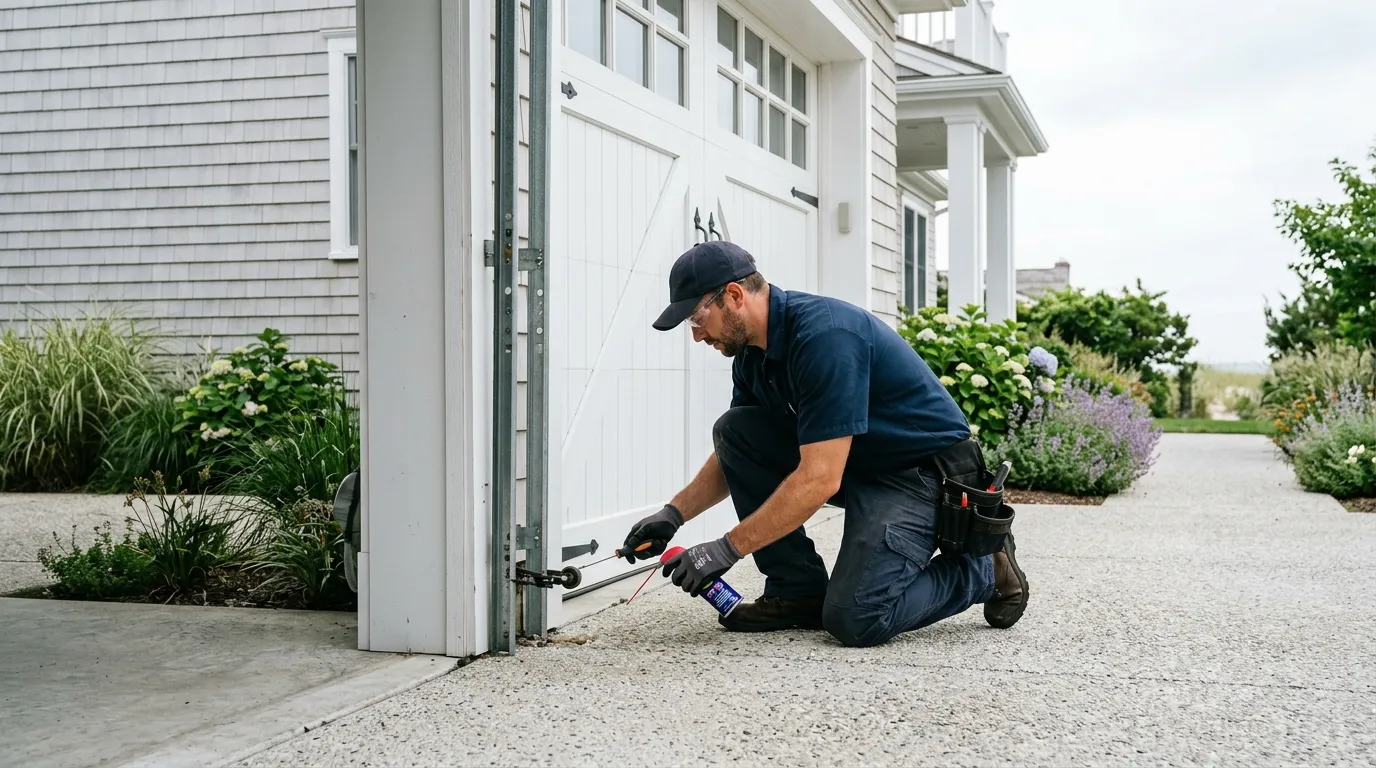
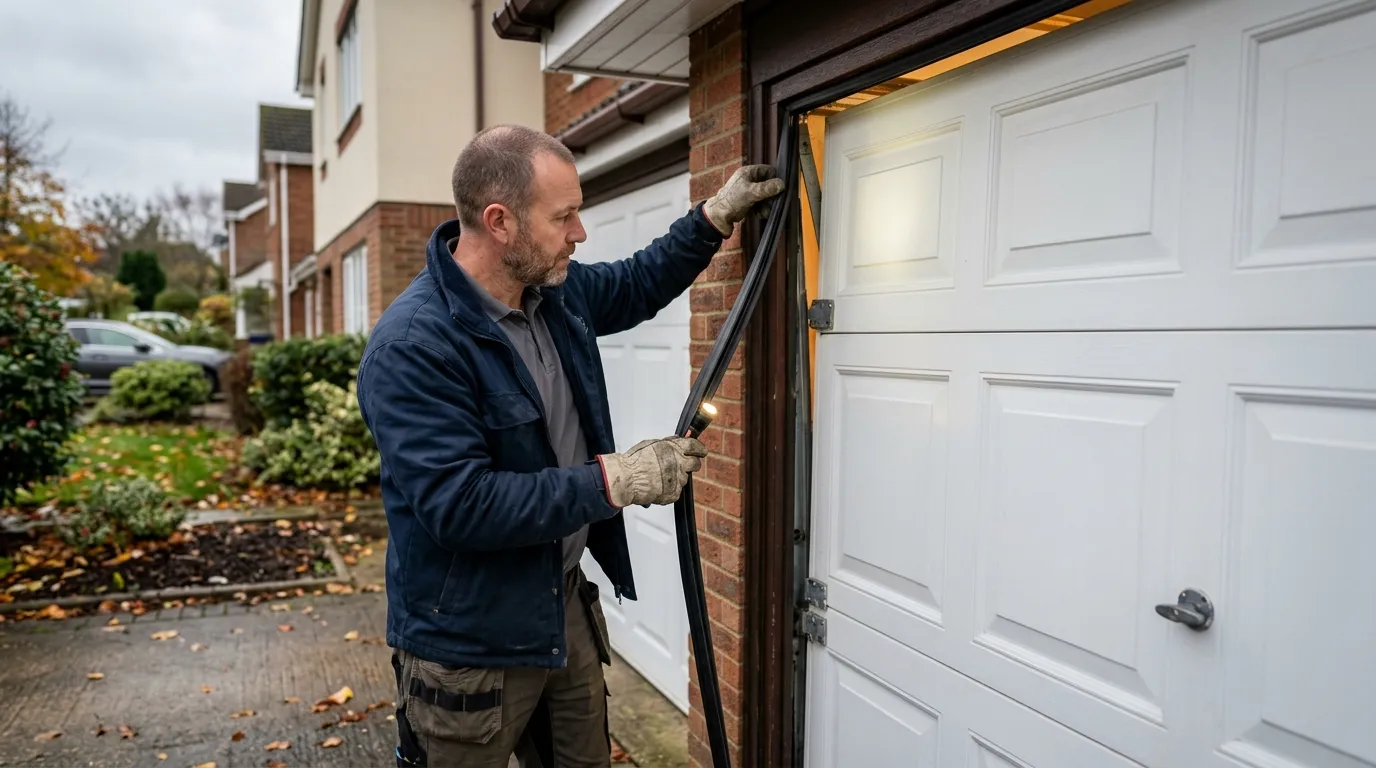
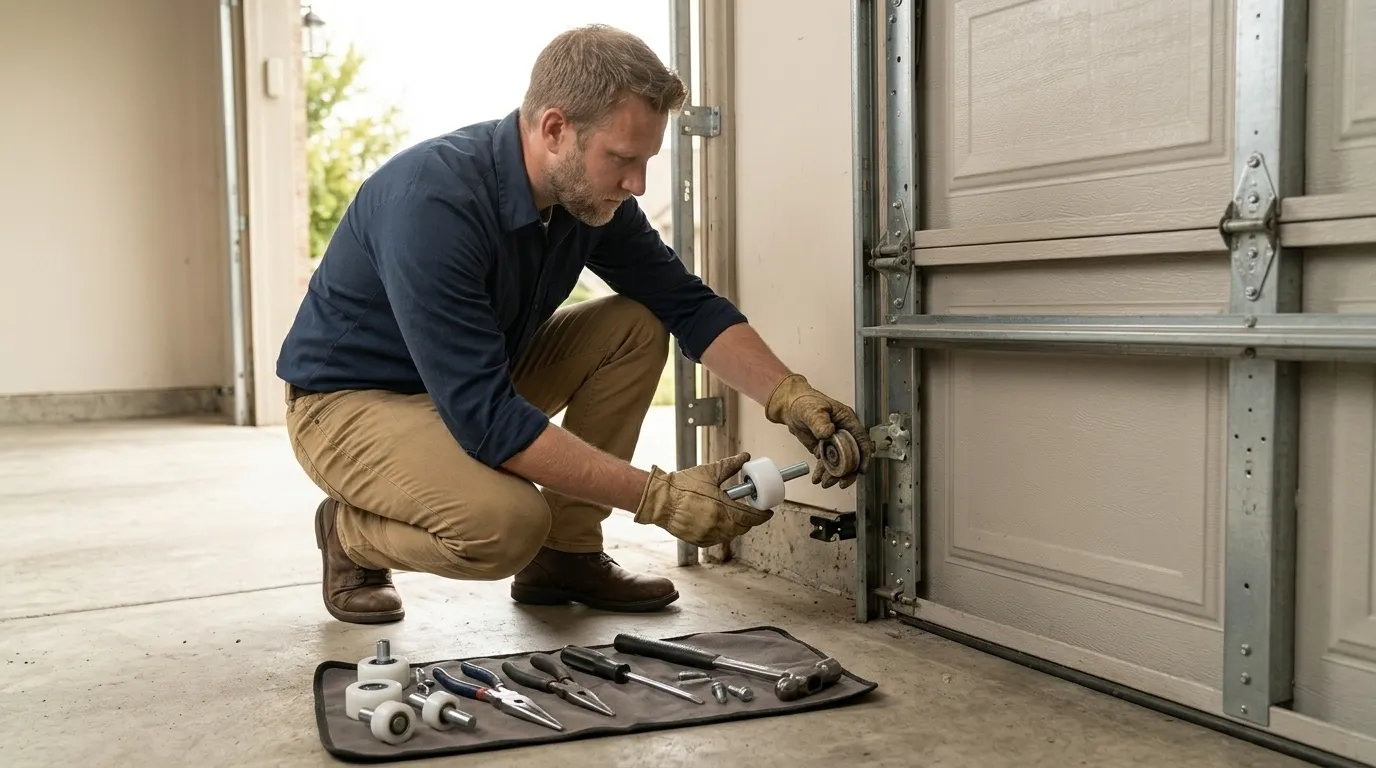
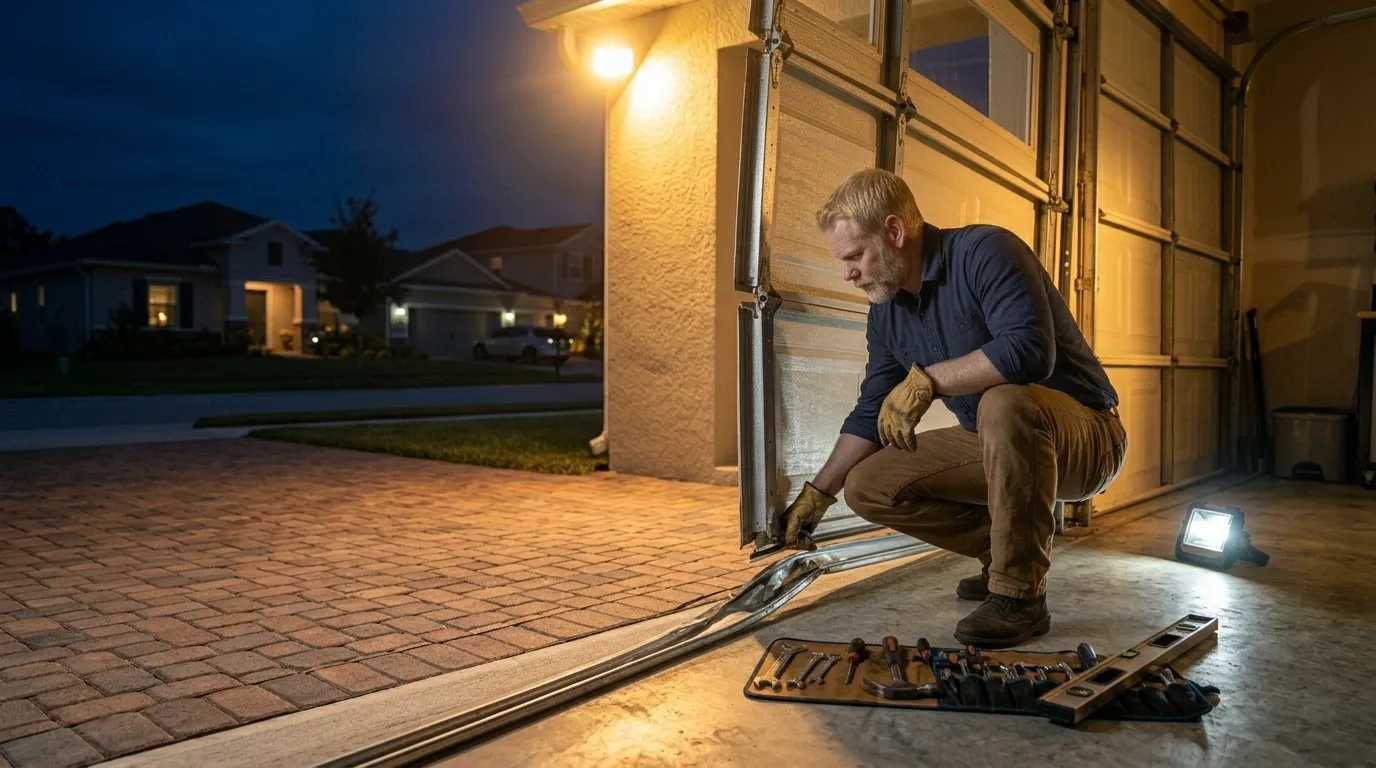
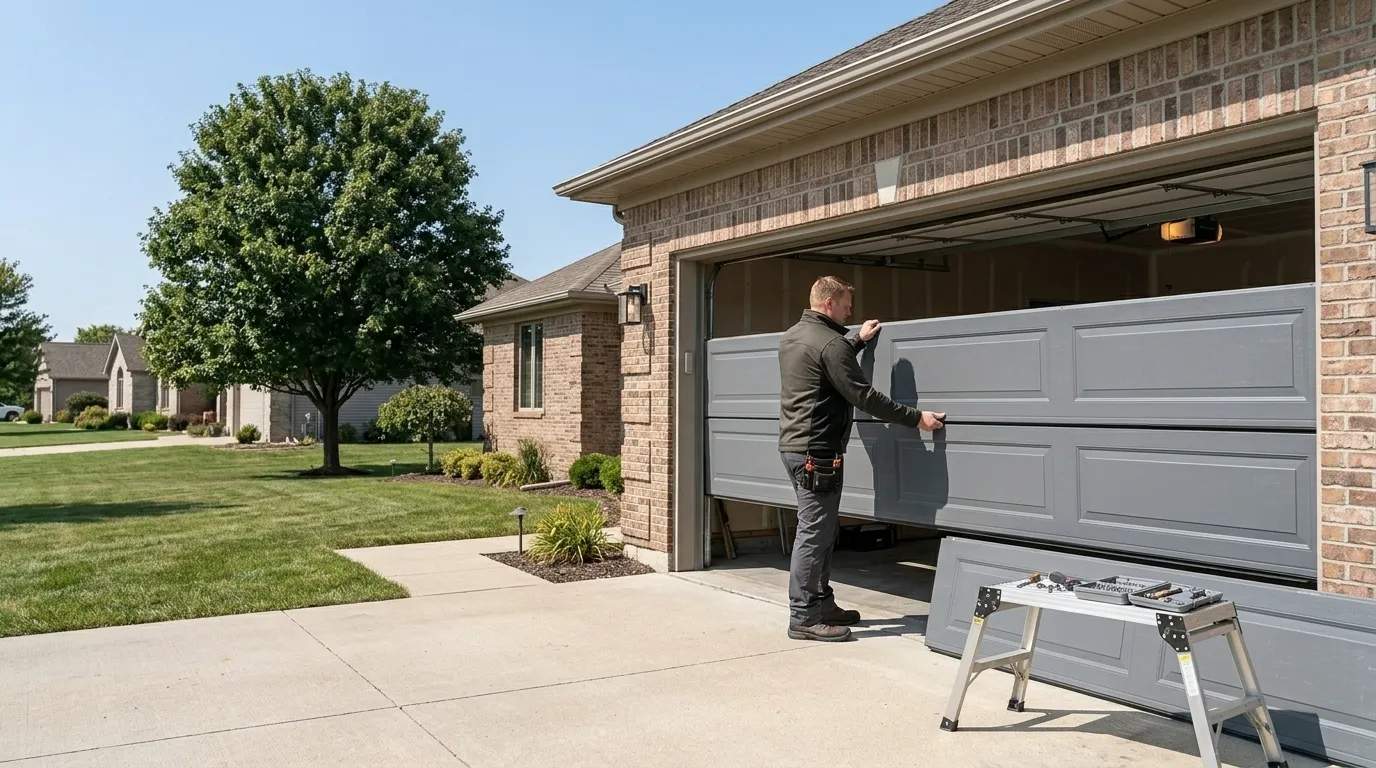
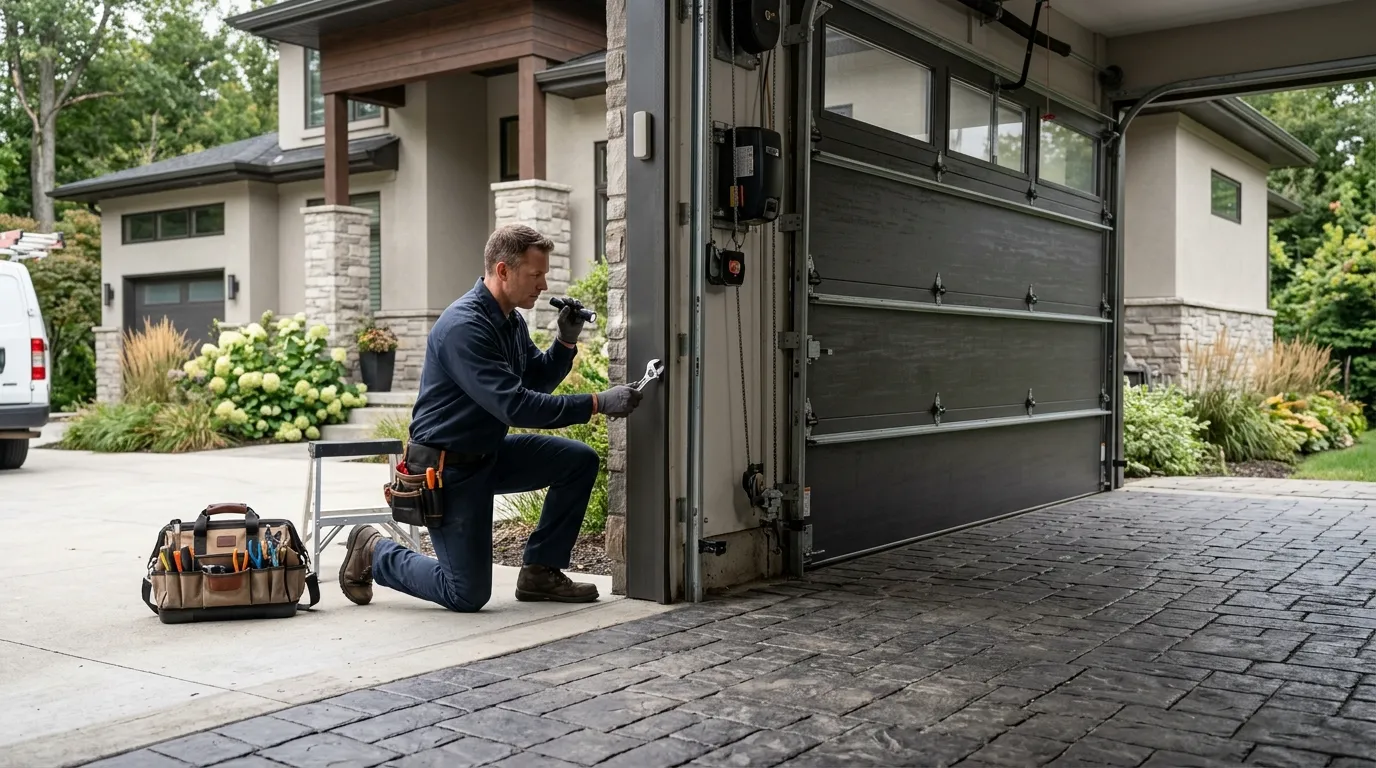
If you're feeling a steady draft along the bottom of the door, or you can see daylight at the corners, that's a seal problem, not a spring or opener problem, and you can often fix it yourself with a new bottom astragal from a hardware store. Call someone when the draft comes with sand or water getting in under the door after wind off the Gulf, when the seal has hardened and cracked rather than just flattened, or when the door won't sit flush no matter how many times you adjust the track. Most of Venice's housing stock dates to 1964-1999, with a lot of it clustered in the 1970s, so a lot of these doors are on their second or third seal replacement already and the track alignment underneath has shifted over the decades. That's a different job than swapping rubber. We don't chase every draft complaint with a full service call - if it's a five-dollar strip of weatherstripping, we'll tell you that on the phone.
The Situation
Venice sits in a mild temperate band, so this isn't a town where doors get pounded by hard freezes or heavy snow load. What it does get is humidity, salt air, and steady low-grade moisture that works on rubber and vinyl seals slowly instead of all at once. A seal here doesn't crack open in a week the way it might somewhere with sharp temperature swings - it goes soft, then brittle, then it just stops making contact with the slab. Because so much of the local housing was built between 1964 and 1999, with median construction around 1979, a large share of doors were installed with seal hardware that's now well past its expected life, even on doors that still open and close fine. The seal isn't a symptom of a broken door. It's the part of the door built to wear out first, and in this climate it wears out quietly.
What Local Conditions Do
The mild temperate climate here means the seal on a Venice garage door is fighting humidity and salt air more than cold. That combination breaks down rubber compounds from the inside - the material stays flexible-looking on the surface but loses its grip and starts letting air and grit through at the bottom edge and the side jambs. On houses from the 1960s and 70s stock common across this area, the original door frames were built with tighter tolerances than the vinyl or rubber seals available today, so even a correctly installed replacement seal can look slightly proud or slightly recessed depending on how much the frame itself has settled. That's not a defect, it's forty-plus years of a wood or masonry frame moving in a coastal environment. We check frame square before we recommend a seal replacement for exactly that reason - putting a new seal on an out-of-square frame just buys you a few months before the draft is back.
Where People Go Wrong
The most common mistake we see is treating a drafty door as a sign the whole unit needs replacing, when it's a $30-$80 part on a door that's otherwise sound. The second is the opposite: caulking or foaming around a seal that's already failed, which traps moisture against the bottom of the door panel instead of letting it evaporate, and on the older doors from the 1964-1999 building wave that moisture sits against steel or wood that wasn't finished to handle constant dampness. Owner-occupied houses across this area number in the tens of thousands, and a lot of them share the same generation of door hardware, so a seal fix that works on one 1970s-era door usually works on the next one down the street - but only if the track and frame are checked first. Skipping that step is the third mistake: people buy a universal seal kit, jam it on, and wonder six months later why the draft's back.
How it works
From “it’s stuck” to “it’s fixed”
01
Tell us what’s wrong
Describe the symptom - won’t open, loud bang, opener runs but the door won’t move.
02
On-site diagnosis
A technician tests the door under power and by hand and finds what actually failed.
03
Clear, up-front plan
You get the fix that’s needed and what drives the cost - before any work starts.
04
Repaired & tested
The repair is done, the door is set true and tested, and the work area left clean.
Serving Venice, FL - tell us what your door’s doing and we’ll take it from there.
Why does my garage door let in a draft even though it closes all the way?
On houses from the 1964-1999 building era common in Venice, the seal can go brittle from humidity and salt air even while the door mechanism still works fine. The seal loses its grip on the slab well before the springs or opener show any wear, so a draft usually means the rubber, not the door.
Does Venice's climate wear out seals faster than cold-weather towns?
Differently, not necessarily faster. The mild temperate climate here means seals rarely crack from cold, but steady humidity and salt air break down the rubber compound gradually, so it goes soft and stops sealing well before it looks visibly damaged.
Can I just caulk around a leaking seal instead of replacing it?
No - caulking traps moisture against the bottom of the panel instead of letting it evaporate, which is a real problem on older steel or wood doors from the 1970s stock common here. Replace the seal instead; it's a cheaper and more durable fix.
Is a drafty door a sign I need a whole new garage door?
Usually not. Most draft complaints trace back to a worn seal, a $30-$80 part, not a failing door. Full replacement makes sense when the frame itself has shifted out of square or the panel is damaged, which we check before recommending anything.
Ready to get your garage door sorted?
Tell us what it’s doing and where you are in Venice - we’ll take it from there.