Venice homes built between 1964 and 1999 run original track hardware that wasn't sized for today's heavier doors. Here's why panels jump track and when to call.
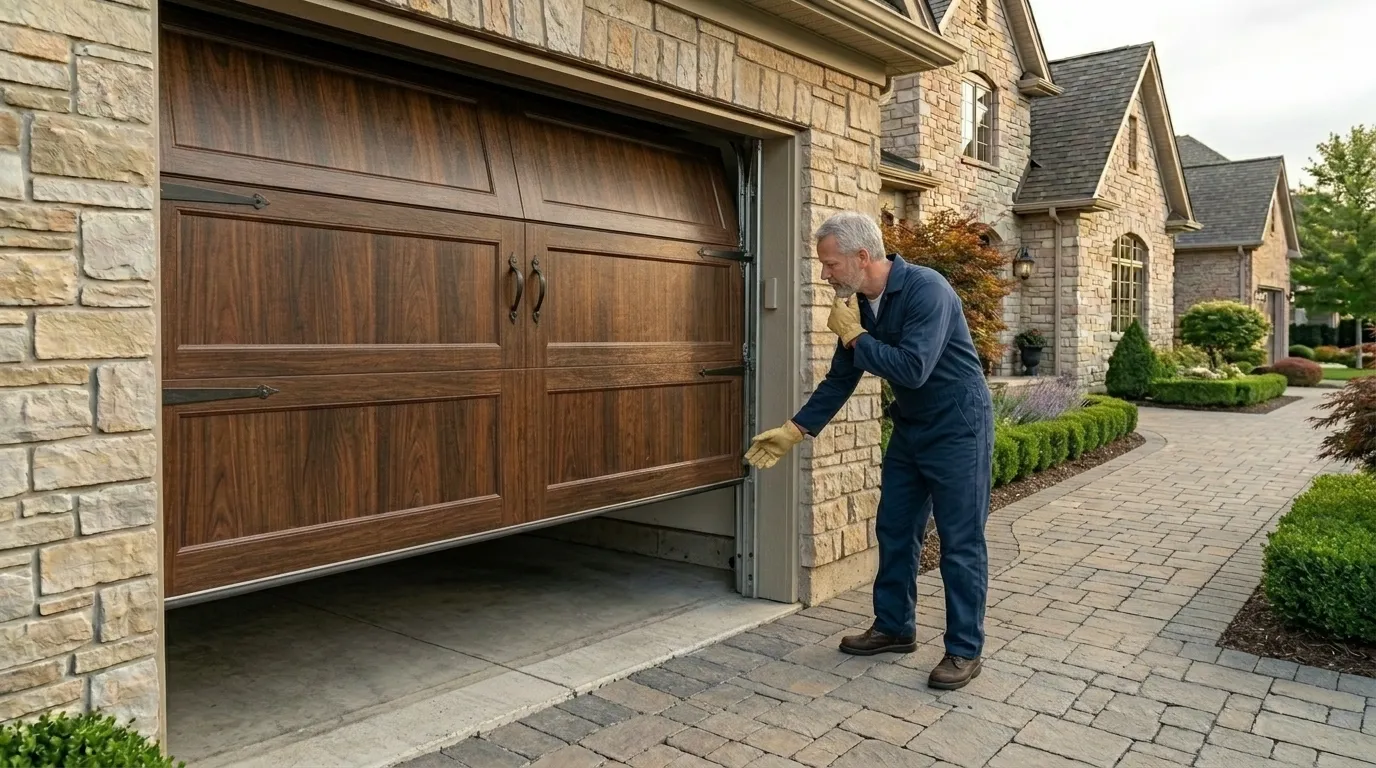
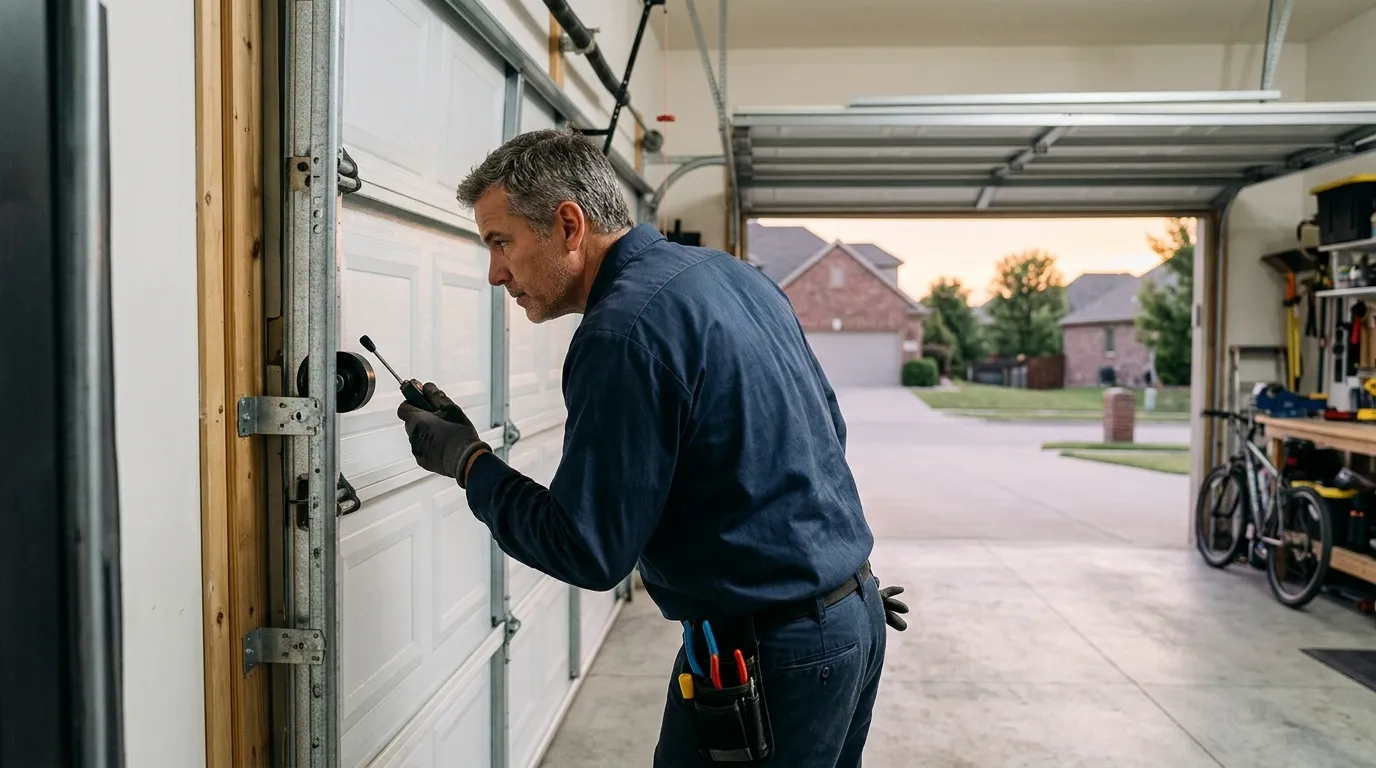
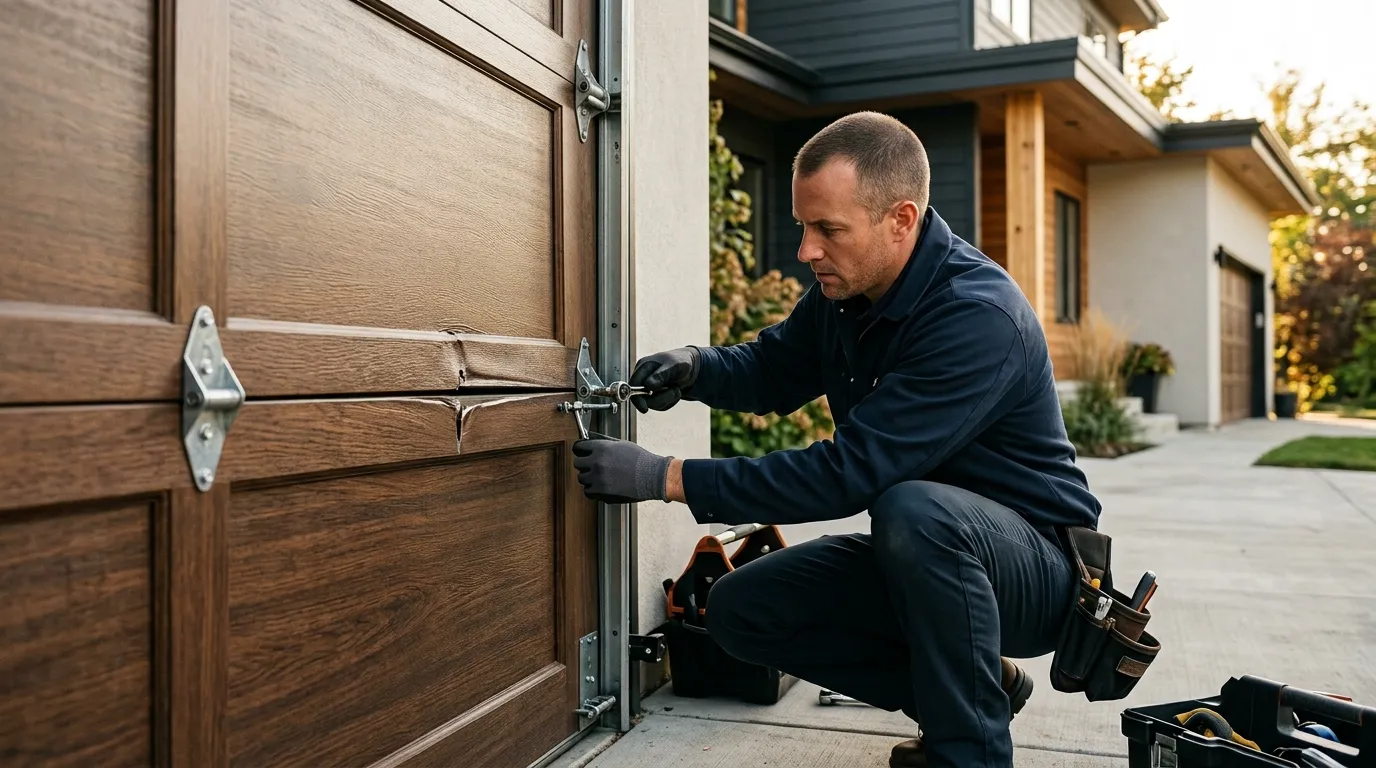
If the door has come off the track on one side and the panel is visibly bent or the rollers are outside the rail, stop opening it by hand or by the opener. Running the opener against a jammed track strips the drive gear and can pull the section clean off the hinges. Call before you touch the emergency release cord if the door is halfway up and won't move either direction; that usually means a cable has jumped a drum or a roller has snapped its stem, and forcing it makes the repair bigger. A door that's merely noisy or slightly crooked at the bottom corner is worth a call too, but it isn't an emergency. We'll tell you honestly if it's a twenty-minute roller swap or something that needs the full track re-set.
The Situation
Most of the housing stock in the Venice service area went up between 1964 and 1999, with the median build year sitting around 1979. That's a window when steel torsion track was standard but rail gauge and roller size varied a lot between builders working the same subdivisions. A lot of these garages still carry the original track from that era, sometimes paired with a heavier replacement door installed later that the old rail was never sized for. Across the roughly 37,668 owner-occupied houses in the area, that mismatch - original 1970s track under a door bought in 2015 - is one of the most common reasons we get called for a door that's walked out of its rail. It's not a defect in the door. It's two different decades of hardware trying to work as one system.
What Local Conditions Do
Venice sits in a mild temperate band - no hard freeze-thaw cycling to warp a track the way it does further north, but that's not the same as no movement. Humidity swings here still work on steel fasteners and on the wood jamb the track is bolted to, and in older houses from the 1964-1999 build era that jamb has usually shifted a fraction over the decades. A track that's plumb on installation day can end up a few degrees off vertical, and a door running slightly off-plumb rail will ride harder on one roller than the other every single cycle. Add a hot afternoon that swells the wood jamb even slightly and a rail bracket that's already a little loose, and you get a roller that walks toward the open edge of the track until it finally jumps clear. It's slow damage, not sudden, which is why most owners don't see it coming.
Where People Go Wrong
The biggest mistake we see in houses from this build era is owners spraying oil on a track that's actually bent or misaligned, thinking lubrication will fix a geometry problem. It quiets the noise for a week and lets the roller keep grinding a groove into steel that was never round to begin with. The second mistake is replacing just the rollers after a jump without checking whether the bracket that holds the track to the jamb has pulled loose - on a house built in the 1970s, that bracket has had forty-plus years of cycles on the original screws, and new rollers on a loose bracket will jump again within months. With median household income in the area around $77,359, we understand the instinct to do the cheaper fix first. Sometimes that's the right call. But on original track from this era, we'll tell you straight if the bracket needs re-setting into fresh wood rather than just tightening the same stripped holes.
How it works
From “it’s stuck” to “it’s fixed”
01
Tell us what’s wrong
Describe the symptom - won’t open, loud bang, opener runs but the door won’t move.
02
On-site diagnosis
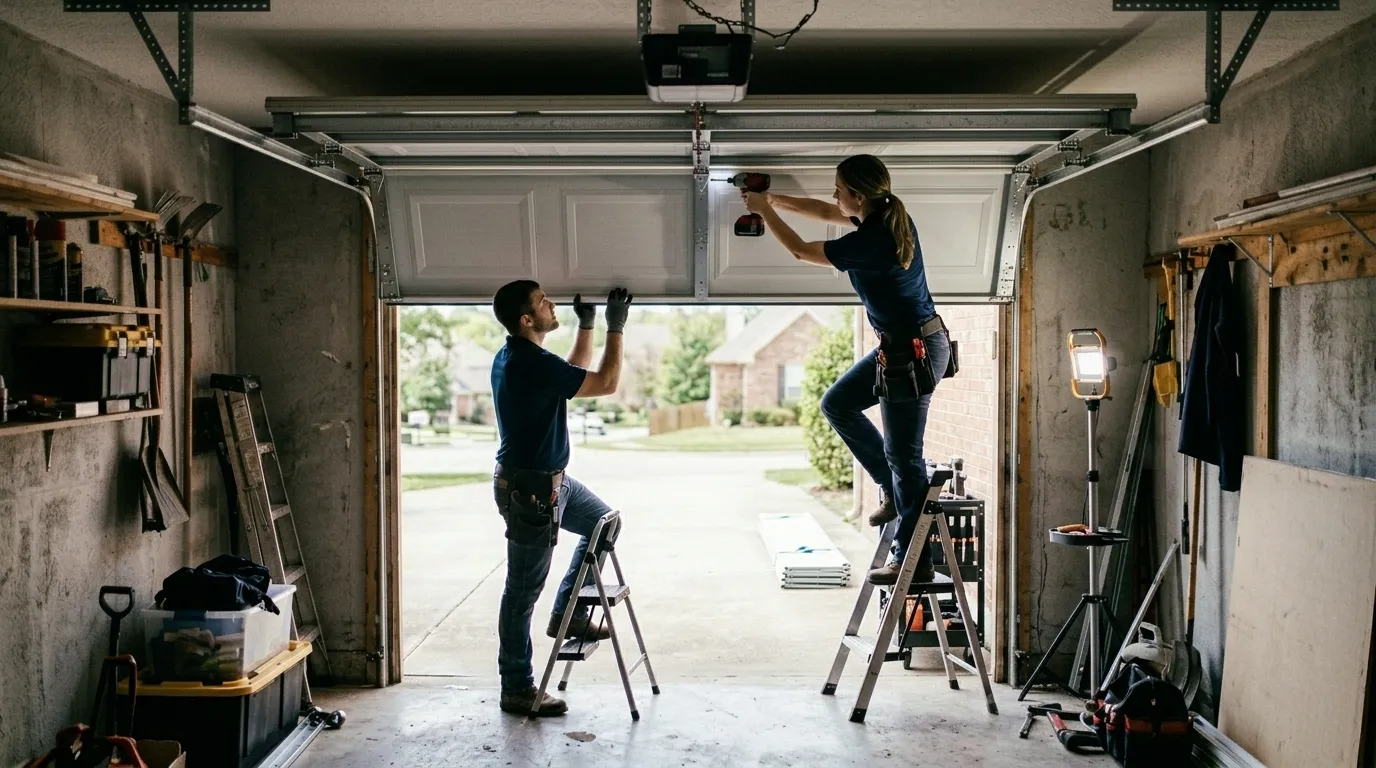
A technician tests the door under power and by hand and finds what actually failed.
03
Clear, up-front plan
You get the fix that’s needed and what drives the cost - before any work starts.
04
Repaired & tested
The repair is done, the door is set true and tested, and the work area left clean.
Serving Venice, FL - tell us what your door’s doing and we’ll take it from there.
Why does my garage door only come off track on one side?
Usually one side of the track has a loose bracket or a slightly bent rail while the other doesn't. On houses from the 1964-1999 era common across Venice, it's often the original bracket screws that have worked loose in the jamb over the decades, letting that side of the track drift out of alignment while the other side stays put.
Is it the heat that's doing this to my track?
Venice sits in a mild temperate band, so it isn't hard freeze-thaw damage. It's slower - humidity working on old fasteners and wood jambs over many years, which nudges a track out of plumb a little at a time rather than all at once.
Can I just push the door back onto the track myself?
If a roller is out of the rail, don't force it back in under power. Depending on how far it's traveled, forcing it can bend the track further or pull the section off its hinge. It's a fair thing to check by hand with the door manually lowered, but we'd rather look at it first.
Will new rollers stop this from happening again?
Sometimes, but not if the track bracket itself has pulled loose from the jamb - which is common on original hardware from the 1970s building era around here. New rollers on a loose bracket usually jump again within a few months.
Ready to get your garage door sorted?
Tell us what it’s doing and where you are in Venice - we’ll take it from there.