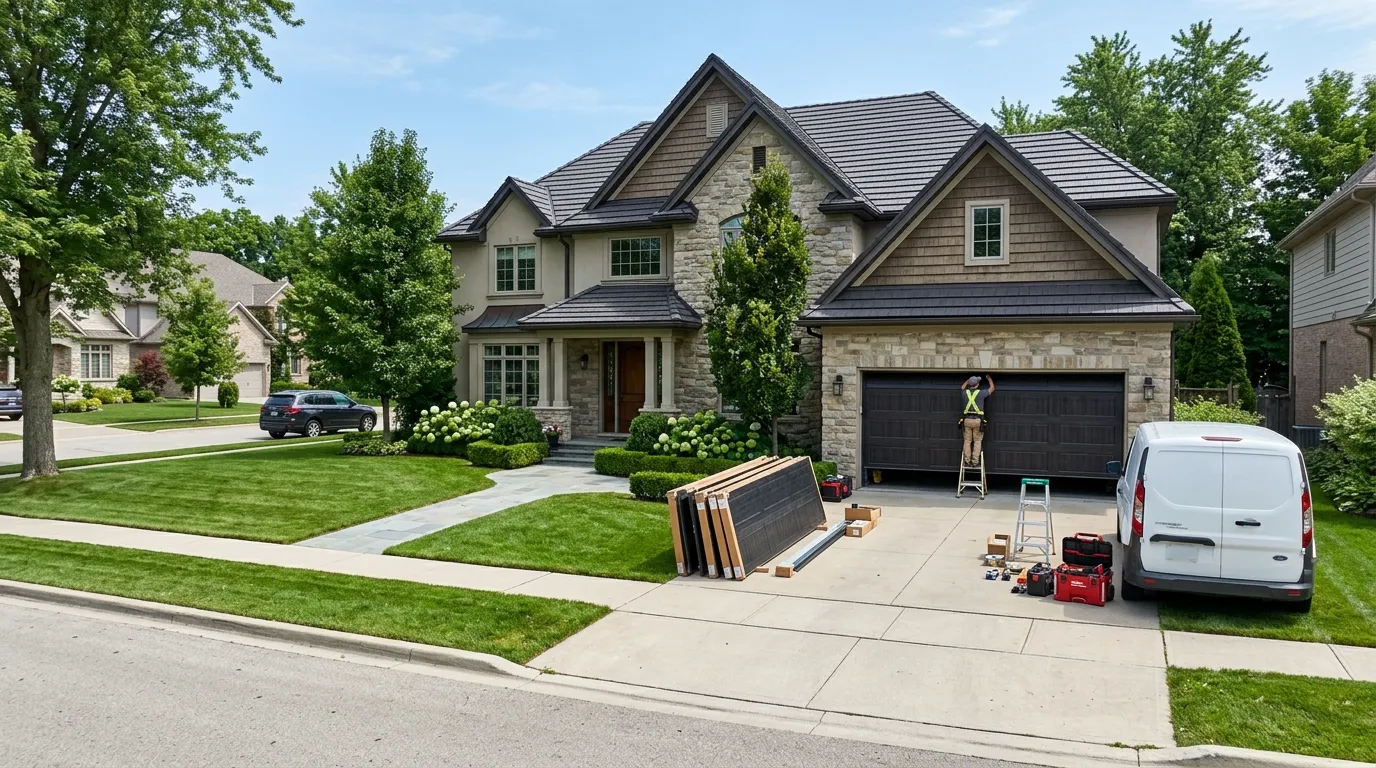
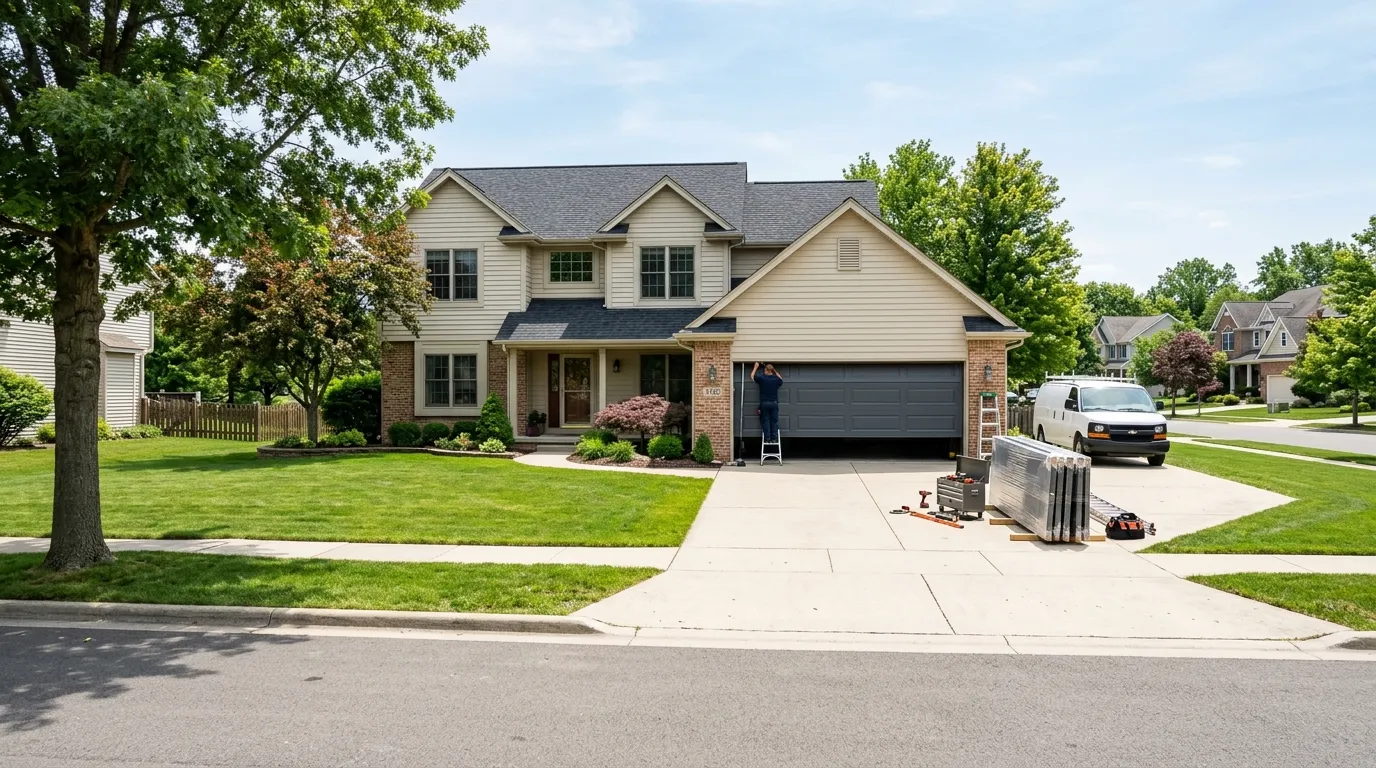
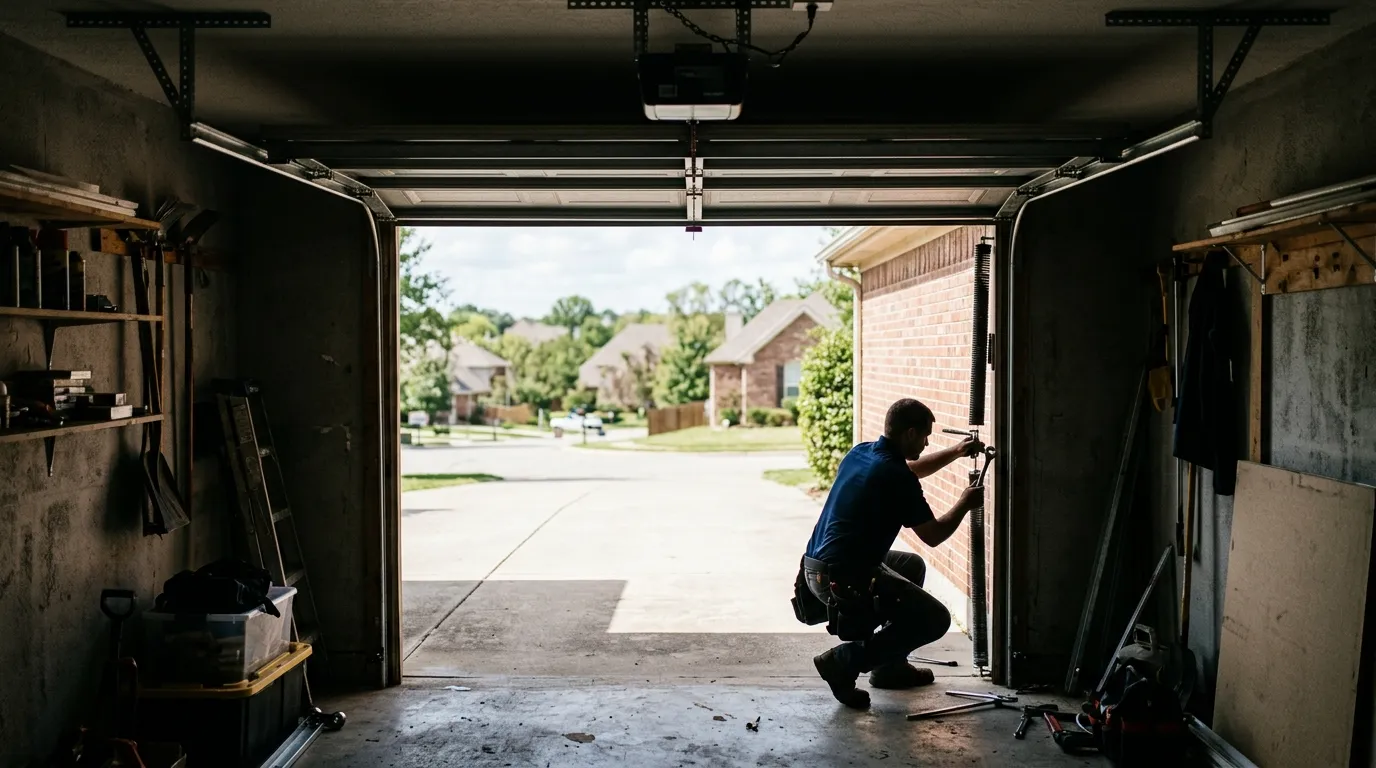
Garage door repair and tune-ups for Venice, FL homes built 1964-1999. We know the original spring hardware and mild-climate wear patterns on this stock.
We don't post a flat number here because the job changes with what's actually on your door, and in Venice that varies more than you'd think for a town this size. A house with the original torsion setup from the 1970s or 80s costs less to service than one where a prior owner swapped in a mismatched opener that fights the original track. What we can tell you: the cost driver is almost always parts age, not labor. If your spring, cable, or roller is the original part from when the house went up, expect a straight repair. If someone's already "fixed" it once with a part that doesn't match the door weight, the diagnosis takes longer and that shows up in the bill. We quote after we look, not before, because guessing on the phone burns your time and ours. One honest limit: if the door itself is warped or delaminating from age, we'll tell you replacement beats a repair bill, even if that's not the answer you called for.
We don't finance or lease doors, and we don't sell smart-opener subscriptions. We fix and replace what's on the door.
The Symptom
The call we get most from Venice addresses sounds the same almost every time: the door groans, hesitates about a foot off the ground, then either stalls or slams the rest of the way down when someone gives up and yanks the cord. Sometimes it's a grinding noise on the way up instead of a stall. Either way, the owner usually says the door "used to be fine" and started acting up gradually, not all at once. That gradual failure pattern points at spring fatigue or a rusted roller track rather than a dead opener motor, which fails all at once, not in stages. If your door only struggles on the first cold snap of the year, that's a different animal than one that's been getting heavier every month. We ask which one it is before we even load the truck.
What Causes It Around Here
Venice's housing stock is mostly 1960s and 70s builds, with the broader service area running 1964 to 1999 and a median year of 1979. That matters here specifically because a door installed in 1979 has been through forty-plus years of spring cycles, and torsion springs are rated in cycles, not years - a spring installed then is well past any reasonable service life even if nobody's touched it since. Across the 22 named communities we work in, from Nokomis a mile up the road to Desoto Acres nineteen miles out, the stock is overwhelmingly 1960s and 70s built, which means a lot of doors are still running original hardware nobody thought to replace because it never fully failed, it just got worse.
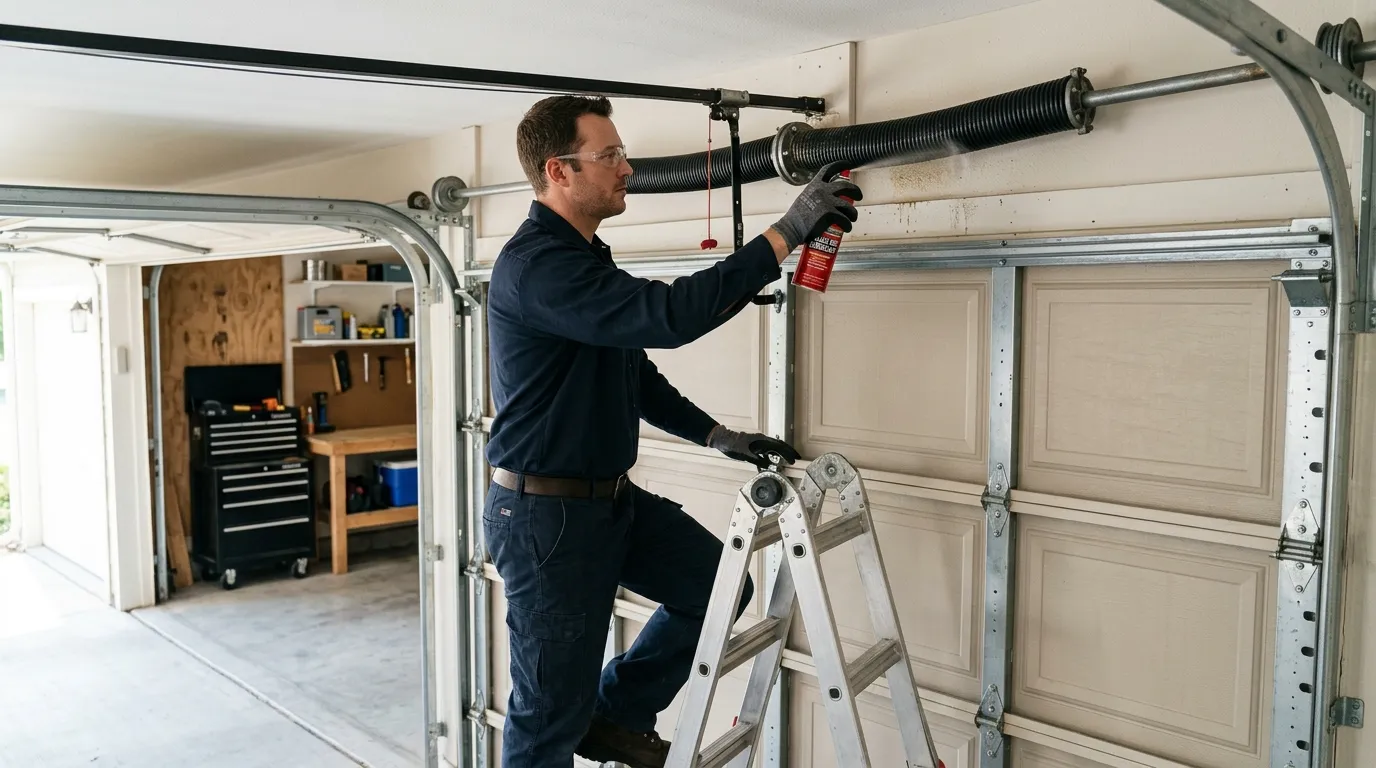
Venice sits in a mild temperate band, so we don't see the freeze-thaw cracking that snaps springs up north in a single hard winter. What we see instead is slow corrosion on unprotected steel - springs, hinges, and roller stems that were never galvanized because the builder didn't need to spec for cold. Humidity and heat break down lubricant faster than a dry climate would, so the failure looks gradual: stiff, then slow, then stuck. That's the pattern above, and it's a climate-and-age story, not bad luck.
What Is on the Truck
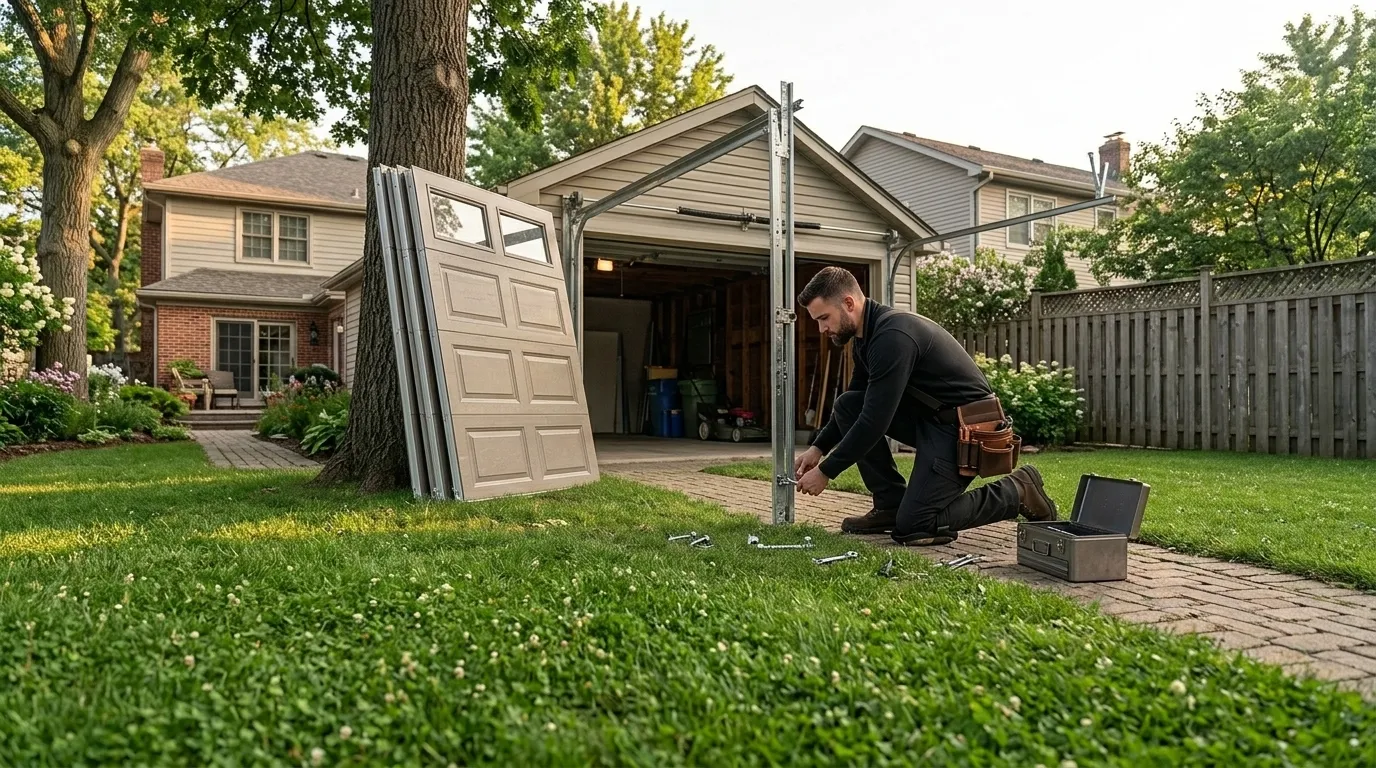
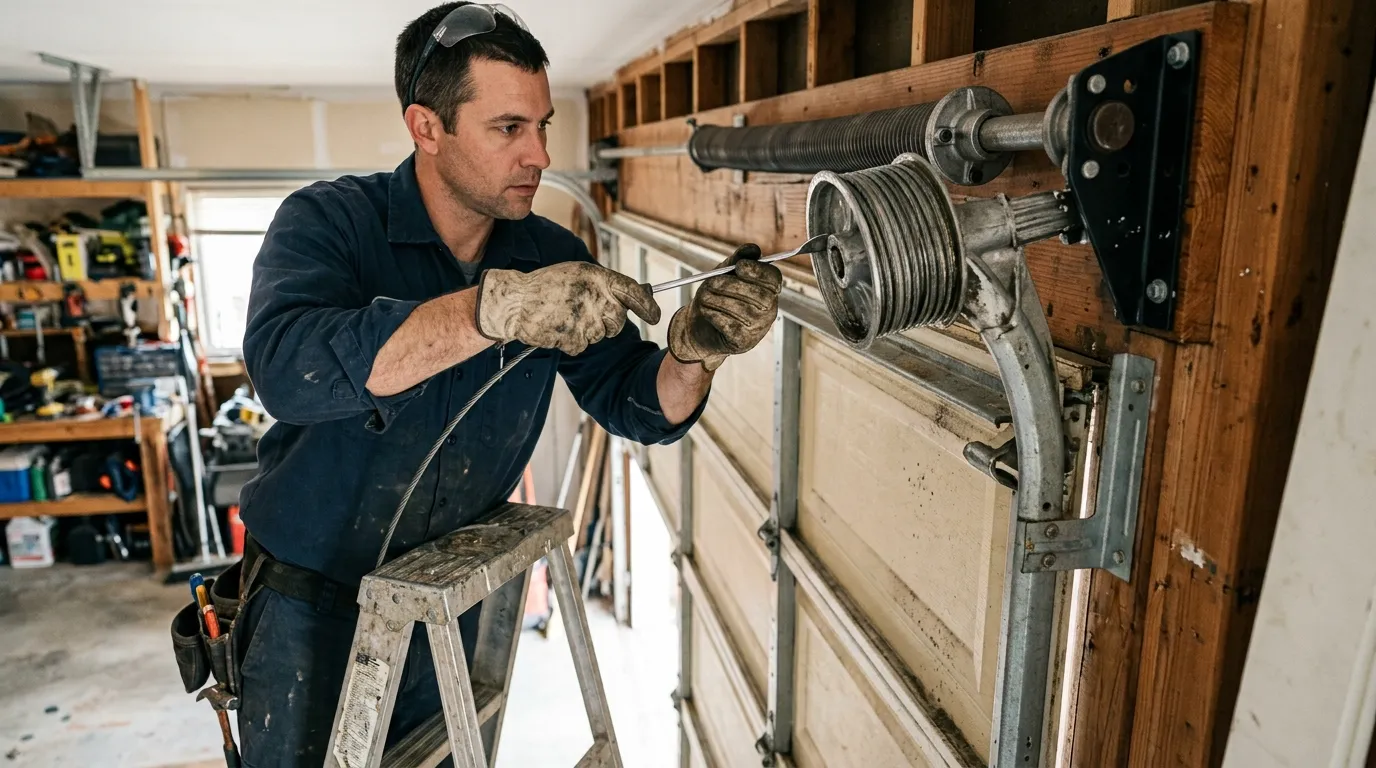
Because so much of what we service in Venice dates to that 1964-1999 build window, we carry torsion springs sized for the older standard door weights, not just the current lighter insulated panels. We stock extension-spring safety cables too, since plenty of houses in this window ran that older system before torsion became standard, and that hardware isn't something you find at a big box store anymore. We carry galvanized rollers and track sections specifically because the original steel in this climate corrodes faster than people expect, and swapping a corroded roller for another uncoated one just restarts the clock.
We carry common opener logic boards and drive gears for the era of openers still running in this area, but we don't stock every proprietary board for every discontinued brand - some of those parts run a lead time of a week or more, and we'll tell you that up front rather than promise a same-day fix we can't back. If your opener is a rare model, we're honest about that wait.
How it works
From “it’s stuck” to “it’s fixed”
01
Tell us what’s wrong
Describe the symptom - won’t open, loud bang, opener runs but the door won’t move.
02
On-site diagnosis
A technician tests the door under power and by hand and finds what actually failed.
03
Clear, up-front plan
You get the fix that’s needed and what drives the cost - before any work starts.
04
Repaired & tested
The repair is done, the door is set true and tested, and the work area left clean.
Serving Venice, FL - tell us what your door’s doing and we’ll take it from there.
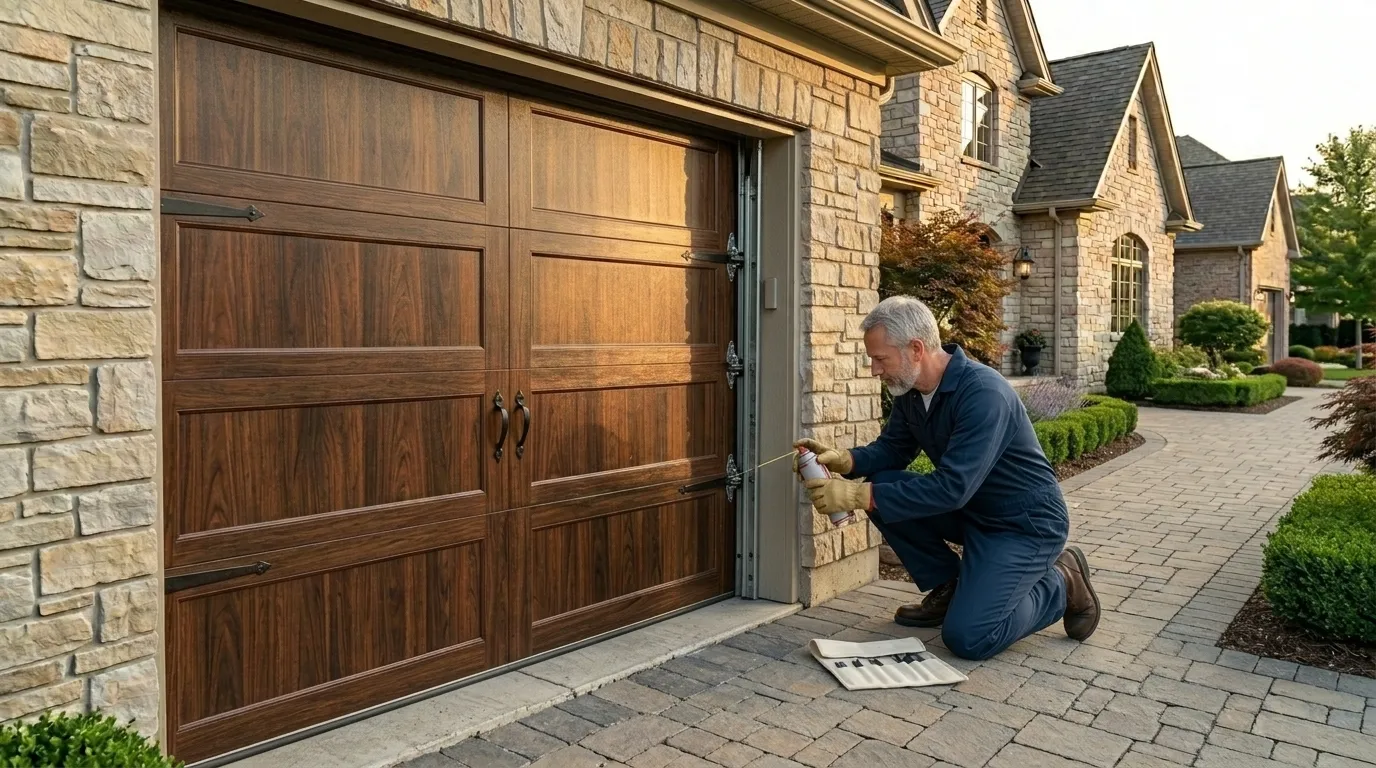
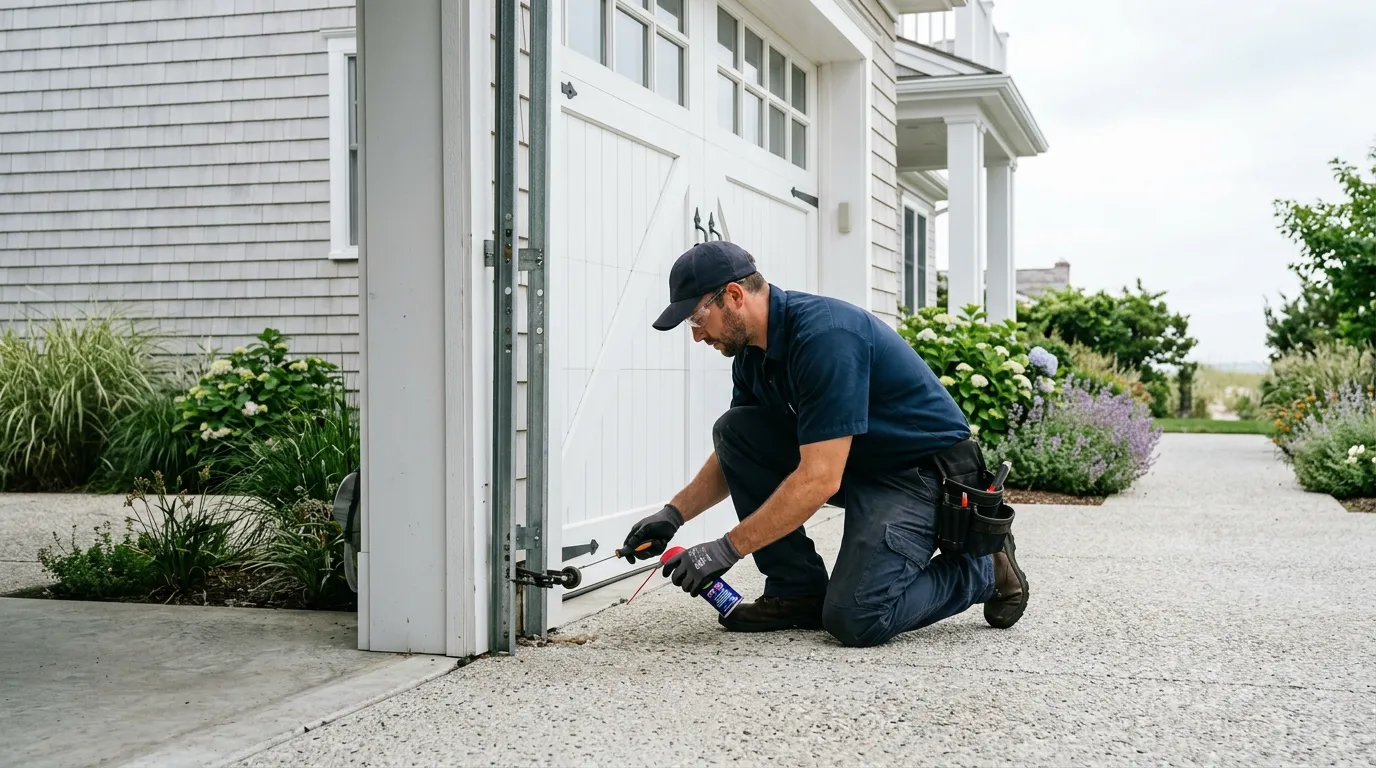
In Venice's mild but humid climate, heat and moisture break down old grease on rollers and hinges faster than in a dry climate. A door that's been fine all winter can suddenly drag once summer humidity sets in, especially if the hardware is original to a house built in the 1970s or 80s and hasn't been re-lubricated in years.
Is my spring original to the house?
If your house was built in the 1964-1999 window common across this area and nobody's mentioned a spring replacement, it's worth assuming yes. Torsion springs are rated by cycle count, and a spring from that era has almost certainly outlived its rated life even without visible damage.
Do you serve areas outside Venice proper?
Yes, we work throughout the surrounding communities including Nokomis, Venice Gardens, Laurel, South Venice, and out to Osprey and Vamo. Call to confirm your specific address is in range before you book.
Should I just replace the door instead of repairing it?
Depends on the door. If the panel is warped, delaminating, or the track is bent beyond adjustment, repair is a temporary patch and we'll say so. If it's just a spring, cable, or roller on an otherwise sound door, repair is the right call and cheaper.
Ready to get your garage door sorted?
Tell us what it’s doing and where you are in Venice - we’ll take it from there.